

Blog
Why Do Pigeons Nest on Roofs? Causes and Risks
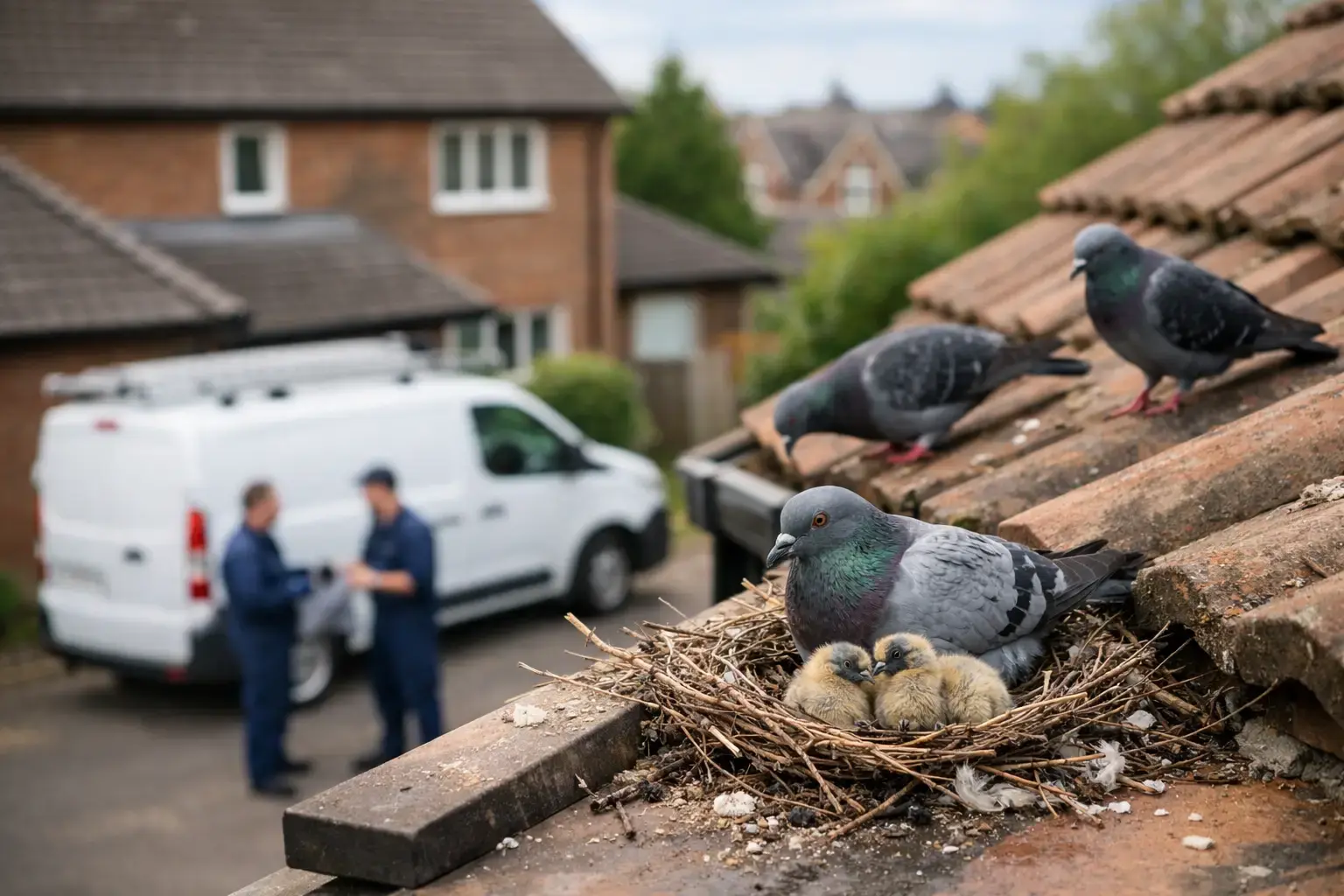
A pair of pigeons repeatedly landing beneath eaves, behind a chimney or under solar panels is rarely a one-off sighting. It is usually the start of a nesting pattern. So, why do pigeons nest on roofs? Roofs offer the three things pigeons seek most: shelter from weather, a safe vantage point away from ground-level threats and easy access to food.
For homeowners, landlords and commercial property managers, the issue is not simply the presence of birds. Once pigeons establish a regular roosting and nesting site, droppings, nesting material and persistent noise can quickly become a property maintenance and hygiene concern. Early action is far easier than dealing with an established colony.
Why do pigeons nest on roofs in the first place?
Pigeons are highly adaptable urban birds. They have learned that buildings can offer the same protection as the cliffs and ledges their ancestors used for nesting. Roof voids, parapets, chimney breasts, gutter lines, canopies and spaces beneath solar panels all provide sheltered, elevated locations with a clear view of the surrounding area.
A roof also tends to be warmer and drier than many natural sites. This matters during wet or cold weather, particularly in Greater Manchester, where a covered ledge or roof gap can be more attractive than an exposed tree. If the site is close to food sources such as overflowing bins, outdoor eating areas, bird feeders or food waste, it becomes even more valuable to a pigeon.
Pigeons are creatures of habit. If a pair has raised young successfully at a property, they may return to the same area repeatedly. Their offspring may also regard the location as a suitable nesting site. This is why a small amount of activity can develop into a recurring problem if the access point and the attraction remain unchanged.
The roof features that attract pigeons
Not every roof is equally appealing. Pigeons favour flat or low-pitched areas where they can stand securely, along with protected corners that keep wind and rain off a nest. They often choose the lee side of a chimney, the top of a bay window, loading-bay canopies and recessed rooflines on commercial premises.
Solar panels have created another common nesting opportunity. The narrow, sheltered void between panels and roof tiles can provide a protected area that is difficult for predators to reach. Birds can carry twigs, leaves and debris underneath, while droppings collect around panel edges and gutters.
Damaged or poorly sealed roof sections are particularly inviting. Missing tiles, lifted flashing, open eaves and gaps around pipework may allow pigeons into loft spaces or roof voids. Once inside, they can build nests in insulation or on stored items, creating a more difficult problem than birds nesting on an external ledge.
Food availability is the other major factor. A roof might look ideal, but pigeons are more likely to settle where food is consistently available nearby. For commercial sites, this can include unsecured waste areas, delivery yards and outdoor customer spaces. At homes, it may be food left for pets, open compost, fallen fruit or regular bird feeding that attracts larger flocks.
Why pigeon nests can become a serious property issue
A pigeon nest itself may look insubstantial, often little more than a loose platform of twigs. The wider impact, however, can be substantial. Nesting birds produce droppings every day, and a regular roost can lead to heavy build-up on roof coverings, window ledges, paths, signage, vehicles and outdoor equipment.
Pigeon droppings are acidic and can contribute to deterioration of some building materials over time. They may block gutters and downpipes when mixed with feathers and nesting debris, causing water to overflow against walls or into roof spaces. In winter, blocked drainage can create additional risks where standing water freezes.
There are also hygiene considerations. Bird fouling can contaminate surfaces, especially around food businesses, healthcare settings, schools, warehouses and shared residential entrances. It can make walkways slippery and create an unprofessional impression for customers, tenants and visitors.
Noise is another common complaint. Pigeons cooing, scratching and moving around in a loft, soffit or beneath panels can be disruptive, particularly early in the morning. A single pair may be tolerable, but multiple nesting pairs can become a persistent nuisance.
Nesting happens more often than many people expect
Unlike some garden birds with a short, clearly defined breeding window, feral pigeons can nest at various times of year when conditions are favourable. A sheltered roof with reliable food nearby can support repeated breeding attempts. Waiting for the problem to disappear on its own is therefore not always a practical solution.
That does not mean every pigeon should be treated as an infestation. One bird occasionally resting on a ridge tile may not require intervention. The concern starts when birds are carrying nesting material, using the same area daily, entering roof gaps, gathering in numbers or leaving visible fouling.
It is also essential to take a wildlife-conscious approach. Active nests, eggs and young birds must be assessed carefully before work takes place. Disturbing an active nest without proper consideration can cause unnecessary harm and may create legal issues. A professional survey identifies what is happening at the site and plans any necessary work responsibly.
Why removing a nest alone rarely solves the problem
Clearing away old nesting material may improve the immediate appearance of a roof, but it does not remove the reason pigeons chose the site. If the gap beneath solar panels remains open, the ledge remains accessible or food waste continues to attract birds, pigeons are likely to return.
Effective pigeon control combines clean-up, proofing and prevention. The right method depends on the building, the number of birds, the access routes and whether the site is domestic or commercial. On some properties, discreet netting or mesh provides the most reliable exclusion. On others, properly installed bird spikes may prevent perching on narrow ledges. Solar-panel mesh can stop birds getting underneath panels without affecting their operation.
For larger commercial buildings, a tailored bird-control system may be needed to protect rooflines, plant equipment, canopies, signs and waste areas. The objective is not to create a temporary deterrent, but to make the site unsuitable for nesting and roosting without causing unnecessary harm to birds.
What to do if pigeons are nesting on your roof
Start by observing from ground level. Look for regular flights to one point, birds carrying twigs, droppings below a ledge, gutter overflow or sounds from the loft. Avoid climbing onto the roof or attempting to block access while birds are actively using a nest. This can be unsafe for you and can worsen the issue if birds become trapped inside a void.
Check practical attractions around the property. Keep bins closed, clear food spillages promptly and avoid leaving accessible food outside. If bird feeders are attracting large pigeon numbers, consider their position and whether seed is falling onto accessible surfaces.
A professional on-site survey is the safest route where birds are entering a roof void, nesting beneath solar panels or fouling a commercial building. The survey should identify entry points, nesting activity, building vulnerabilities and the most suitable proofing method. It should also account for access, as high or awkward roof areas may require specialist equipment or a UAV survey rather than unsafe guesswork.
At AZ Environmental Service Pest Control, pigeon problems are approached as a building and behaviour issue, not simply a cleaning job. The aim is to identify why birds have selected the property, deal with the immediate concern and install practical prevention that protects the site going forward.
A roof that attracts pigeons today can become a dependable nesting site next season. Addressing the first signs of activity, before droppings and nest material build up, gives you the best chance of keeping the property clean, protected and free from repeat visits.