

Blog
Pigeon Proofing Stockport Buildings Properly
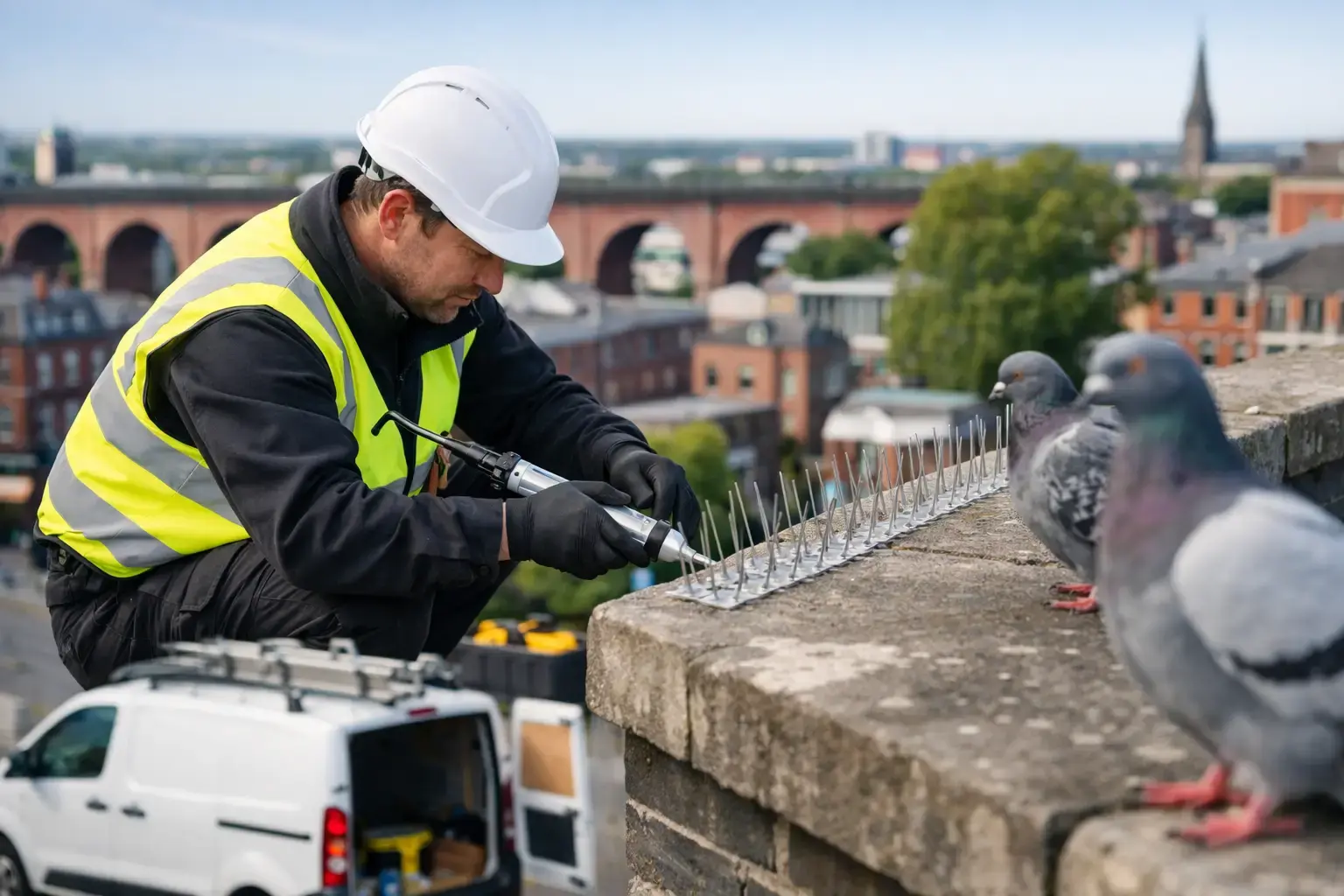
When pigeons settle on a building, the problem rarely stays small for long. In busy parts of Stockport, one or two birds on a roofline can quickly become regular roosting, blocked gutters, heavy fouling and constant complaints from tenants, staff or neighbours. Pigeon proofing Stockport buildings is not just about pushing birds away for a few days. It is about stopping repeat access, protecting the structure and doing the job in a way that is lawful, durable and proportionate.
For homeowners, landlords and commercial operators, the pressure points are usually the same. Mess builds up around entrances and walkways. Solar panels become nesting sites. High ledges and service yards turn into regular perches. Once birds recognise a building as safe, they come back. That is why effective bird control starts with understanding why the site is attractive in the first place.
Why pigeon activity becomes a building problem
Pigeons are drawn to predictable shelter. Ledges, rooftop plant areas, loading bays, canopy tops and unused upper sections of buildings all give them somewhere to land, roost and nest. In town centres and mixed-use areas, food availability makes the issue worse. If there is warmth, shelter and a reliable perch, pigeons will keep testing the same points of access.
The risks are not only cosmetic. Bird droppings are acidic and can stain or damage stonework, metal, paint and signage. Gutters can become blocked with nesting materials, causing overflow and water damage. On commercial premises, heavy pigeon activity can affect customer perception and create hygiene concerns. On residential blocks, it can lead to disputes between occupants when balconies, communal areas or parked vehicles are repeatedly fouled.
There is also the issue of escalation. A single nesting season can change the scale of the problem. Once young birds are fledged from a site, the building has effectively become part of a known pattern for that flock. Leaving it too long usually means a bigger clean-up bill and a more involved proofing job later.
Pigeon proofing Stockport buildings - what actually works
Good proofing is always site-specific. There is no single product that suits every roofline, shopfront, warehouse or block of flats. The right approach depends on the building design, the level of pressure from birds and how visible the proofing will be.
Bird netting is often the best option where you need to exclude pigeons from a larger area such as a service yard canopy, plant enclosure, loading bay or internal roof void. When it is properly tensioned and correctly fixed, it creates a physical barrier that stops access altogether. The trade-off is that it needs skilled installation. Poorly fitted netting can sag, fail at fixing points or create maintenance issues.
Bird spike systems are useful on ledges, signs, beams and parapets where birds want to land but do not have much room to move. Spikes do not harm birds. They make the surface unsuitable for perching. They are effective in the right setting, but they are not a cure-all. On very wide ledges or awkward architectural details, spikes alone may leave enough space for pigeons to settle between rows.
Post and wire systems can work well on building edges where a lower-profile finish is important. They are often chosen for properties where appearance matters, such as managed residential blocks or commercial frontages. The benefit is a more discreet visual result. The downside is that these systems need accurate placement and regular tension checks to stay effective.
For solar panels, specialist mesh is usually the right answer. The gap beneath panels offers warmth, shelter and cover from predators, which makes it highly attractive to nesting pigeons. Mesh fitted around the perimeter prevents access without interfering with the panels themselves. This is one of the most common proofing needs on modern domestic properties and it is one where delaying action nearly always makes the clean-up more unpleasant.
Why cheap fixes usually fail
Property owners often try visual deterrents first - plastic birds of prey, reflective tape or off-the-shelf gadgets. These can have a short-term effect in very light activity, but pigeons are quick to adapt. If the building still offers shelter and a stable landing place, they soon ignore anything that does not physically prevent access.
The same is true of patch repairs. Blocking one gap while leaving three other entry points nearby rarely solves the issue. Birds simply shift position. Effective pigeon proofing looks at the full pattern of movement across the building, not just the most obvious perch.
This is particularly important on larger commercial sites. Warehouses, schools, industrial units and blocks of flats often have multiple elevations and hidden roof details. What appears to be a localised issue at ground level may actually be part of a wider nesting and roosting pattern higher up.
Survey first, install second
The strongest proofing jobs begin with a proper survey. That means identifying active nesting areas, flight lines, feeding patterns, access points and the surfaces most under pressure. It also means checking practical issues such as working at height, condition of fixings and whether droppings or nesting material need to be safely removed before installation.
In some cases, especially on taller or awkward buildings, a UAV survey is the most efficient way to inspect the site properly. It gives a clear view of roof edges, gutters, plant areas and upper ledges without guesswork. That matters because missed access points are one of the main reasons proofing systems underperform.
A survey also helps avoid over-specifying the work. Not every building needs netting across large areas. Not every ledge needs spikes. A professional assessment should match the method to the real problem, keeping the solution effective without adding unnecessary cost.
Legal and welfare considerations matter
Bird control is not a job for guesswork. Pigeons may be classed as a pest species in many settings, but control measures still need to be lawful and carried out responsibly. Active nests, eggs and dependent young can change what action is appropriate and when it can be done.
That is why timing matters. If proofing is installed without checking nesting status, you can create legal and welfare issues as well as practical ones. A responsible contractor will assess activity properly, recommend the right timing and carry out the work in a way that solves the problem without creating another.
For many clients, especially schools, healthcare settings, facilities managers and landlords, that professional approach is as important as the proofing itself. It protects the building, the people using it and the reputation of the organisation responsible for the site.
Pigeon proofing Stockport buildings for homes and businesses
Domestic and commercial sites often need different solutions, even when the birds are behaving in the same way. On a house, the priority may be stopping nesting under solar panels and keeping patios, paths and cars clean. On a shop or office, the main concern may be protecting signage, preventing fouling near customer entrances and preserving a professional appearance.
Landlords and managing agents usually need something else again. They need proofing that lasts, looks tidy and reduces repeat call-outs. In multi-occupancy buildings, one untreated section can undermine the whole job, so coordinated action across the property is often the only sensible route.
For businesses, discretion also matters. Bird control work should be planned to minimise disruption, particularly where customers, staff or visitors are on site. That is one reason many clients choose a specialist local contractor with the equipment and experience to survey, clean and proof the building properly rather than relying on temporary deterrents.
AZ Environmental Service Pest Control deals with exactly these situations across Stockport, combining practical bird proofing with the technical assessment needed to resolve persistent issues that simpler measures have failed to stop.
What to expect from a proper bird proofing job
A reliable service should start with a clear site assessment and a straightforward explanation of what is causing the problem. From there, the recommended proofing should reflect the building type, the level of pigeon activity and any access or compliance issues.
Before installation, contaminated areas may need to be cleaned and nesting debris removed. That is not just about presentation. Built-up fouling can hide defects, add weight to gutter runs and make it harder to fit proofing securely. Once the area is prepared, the proofing system should be installed with suitable fixings and attention to finish, especially on visible elevations.
After the work, the real test is simple. Birds should no longer be able to use the treated area as a regular roost or nesting site. If they move to an adjacent untreated section, the original scope may need extending. That is why honest advice at the start matters more than a quick quote based on a single photograph.
If pigeons are starting to claim your roofline, solar panels, ledges or commercial frontage, early action usually means a cleaner, simpler and more cost-effective solution. The longer birds are allowed to settle, the more the building starts to work in their favour rather than yours.