

Blog
Landlord Pest Responsibilities Explained
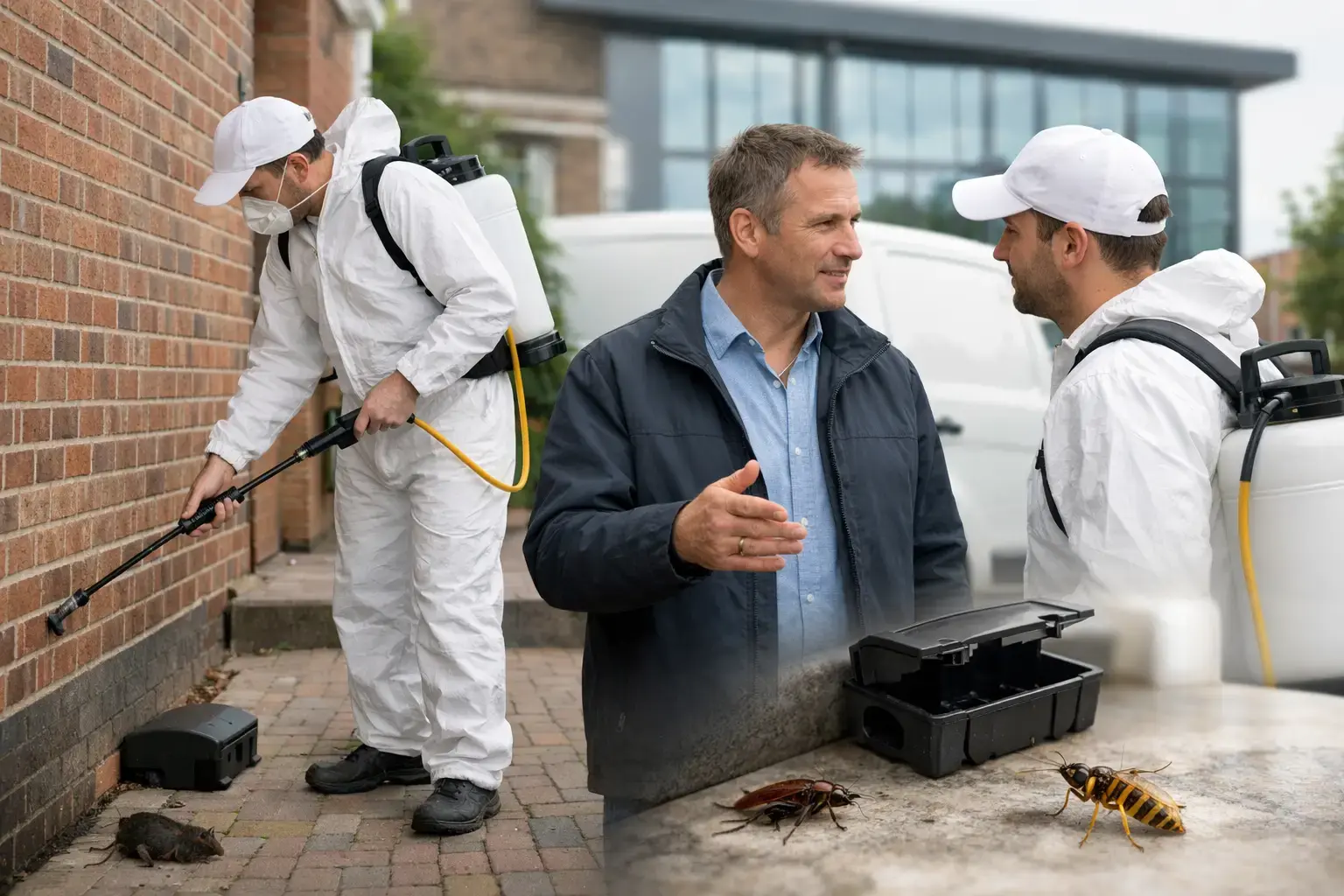
A tenant reports rats under the kitchen units, and the first question is usually the same - who is responsible for sorting it? Landlord pest responsibilities are not always as simple as people expect. The answer depends on where the pests came from, whether the property was fit to live in at the start of the tenancy, and whether disrepair has made the problem worse.
For landlords and managing agents, delay is where small pest issues become expensive ones. A few mice in a loft can turn into contamination, damaged insulation and repeated call-outs. A wasp nest in a roof void might stay manageable for a short period, then suddenly create a risk for occupants and neighbouring properties. Knowing where responsibility sits helps you act early, protect the property and avoid disputes.
What landlord pest responsibilities usually cover
In broad terms, a landlord is expected to provide a property that is safe, habitable and in a reasonable state of repair. If a pest problem is linked to the building itself, poor property condition or an issue that existed before the tenant moved in, responsibility will usually fall to the landlord.
That can include gaps around pipework, damaged air bricks, broken drains, faulty bin storage areas, missing roof tiles, defective pointing and other access points that allow pests to enter. It can also include infestations that are clearly established before the tenancy begins. If a tenant moves into a flat and there is already evidence of bed bugs, cockroaches, mice or fleas, that is not something most landlords can realistically pass back to the occupier.
This is where property condition matters. Pest activity is often a symptom, not the whole problem. Rodents enter because there is a route in. Birds roost because a structure gives them shelter. Insects thrive because moisture, waste or hidden voids give them the right conditions. Treating the pest without resolving the defect is often a temporary fix.
When the tenant may be responsible
Not every infestation is a landlord issue. If pests arise because of how the property is being occupied, the tenant may be expected to deal with it. The most common examples are poor housekeeping, food left accessible, overflowing rubbish, clutter that creates harbourage, or failing to report an issue before it escalates.
That said, these cases are not always black and white. A landlord may assume mice are present because the tenant has not kept the kitchen clean, while the real cause is an unsealed service entry behind the cupboards. Equally, a tenant may claim a wasp problem is structural when the main issue is a damaged window left open with no screening near an attractive nesting point.
The practical approach is to look at evidence rather than assumptions. A professional survey can usually establish whether the infestation is being driven by building defects, environmental conditions, occupant behaviour or a mix of all three.
Landlord pest responsibilities at the start of a tenancy
The start of a tenancy is where many disputes could be avoided with better preparation. If a property is handed over with pest activity already present, the landlord is on weak ground. Even if the infestation appears minor, it can quickly undermine tenant confidence and lead to complaints about habitability.
A proper pre-tenancy check should go beyond a cosmetic clean. It should include signs of rodent ingress, insect activity, bird nesting points, damaged vents, drain issues, proofing defects and any history of recurring infestations. If there has been a previous problem, it is sensible to make sure both treatment and prevention have been completed before new tenants move in.
For managed properties, this is especially important in houses in multiple occupation and blocks with shared waste storage. One neglected external area can trigger repeated pest pressure across several units, even if individual tenants are keeping their rooms or flats in good order.
Repair issues and pest infestations
A landlord's repair obligations often overlap with pest control more than people realise. If rats are entering through a broken drain, repairing the drain is not optional if you want the problem solved. If pigeons are roosting because netting has failed or roof defects have opened access, treatment alone will not protect the building. If cockroaches are being supported by damp conditions from a leak, the repair is part of the solution.
This is why one-off treatments sometimes fail. The infestation is reduced, but the underlying cause remains. From a landlord's point of view, repeated short-term treatments can become more costly than a proper inspection, targeted proofing and corrective repair carried out at the right time.
A reliable pest contractor should be able to explain not just what pest is present, but why it is present and what needs to change to prevent a return. That is often the difference between a quick visit and a lasting result.
Why documentation matters
If responsibility is disputed, records become important very quickly. Inventory reports, check-in photographs, repair logs, tenant communications and pest survey findings can all help show whether the issue was pre-existing or developed later.
For landlords, documenting action is just as important as documenting the problem. If a tenant reports pest activity and the response is slow or informal, it becomes harder to show that the matter was taken seriously. A prompt inspection, written findings and a clear plan of action put you in a much stronger position.
This also helps where local authority involvement becomes a possibility. If a property condition issue is contributing to infestation, landlords need to show they have acted reasonably and without unnecessary delay.
Shared buildings, blocks and external areas
Landlord pest responsibilities can become more complicated in blocks of flats, mixed-use premises and multi-let buildings. In those settings, the source of the pest issue may sit outside the tenant's own unit. Communal bin stores, service risers, loft spaces, basements and external drainage can all support infestation across multiple occupancies.
In practice, this usually means landlords, freeholders or managing agents need to look at the whole building rather than treating complaints in isolation. A mouse problem in one flat may be linked to service gaps running through several units. A cluster of wasp complaints may trace back to roof void access affecting multiple parts of the building. A bird issue on ledges and signage can affect both residential and commercial tenants in the same property.
Where responsibility is shared, coordinated action matters. Piecemeal treatment rarely delivers the standard tenants expect, and it rarely protects the asset properly either.
When to bring in professional pest control
Landlords can be tempted to treat pest issues as a minor maintenance matter, especially if the complaint seems small. That can be a false economy. By the time pests are visible in living areas, the activity is often more established than expected.
Professional pest control is particularly important where there are rodents, bed bugs, cockroaches, recurring ants, wasps in structural voids, bird activity affecting the building, or any infestation connected to disrepair. These are not just nuisance issues. They can affect hygiene, damage property, cause distress for tenants and create ongoing liability if left unresolved.
For landlords in Stockport and surrounding areas, speed and discretion usually matter just as much as treatment itself. Occupied properties need a practical response that identifies the source, resolves the infestation and reduces the chance of repeat issues. That may mean treatment, proofing, monitoring and advice for both landlord and tenant.
A sensible approach to landlord pest responsibilities
The most effective landlords treat pest control as part of property management, not just an emergency response. They inspect properly between tenancies, act quickly when problems are reported and look for root causes instead of relying on repeat call-outs.
That approach protects more than the building. It protects tenant relationships, reduces void risks and keeps minor issues from becoming formal disputes. Where the cause is unclear, an expert survey is usually the fastest route to a fair answer.
If there is one rule worth following, it is this: deal with the reason pests are there, not just the pest you can see. That is how problems get solved properly, and how rented properties stay fit to let.