

Blog
Bird Proofing for Warehouses That Lasts
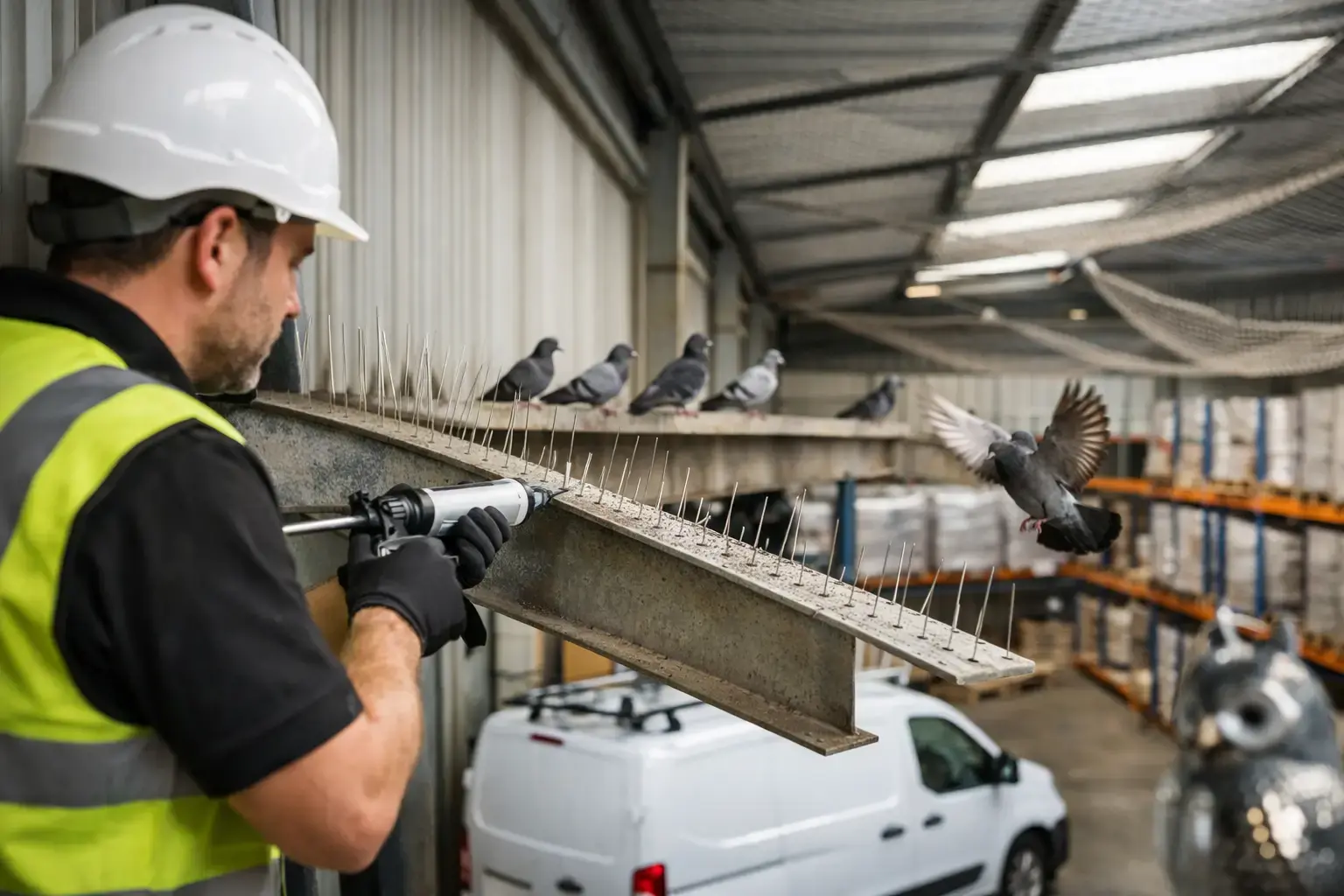
A single pigeon over a loading bay rarely stays a single pigeon for long. In warehouse settings, birds quickly turn from a nuisance into a hygiene risk, a maintenance issue and, in some sectors, a compliance problem. That is why bird proofing for warehouses needs to be treated as a practical site protection measure, not an afterthought once droppings start appearing on stock, racking or walkways.
Warehouses attract birds for simple reasons. They offer shelter, warmth, high ledges, quiet roof spaces and easy access to food sources around bins, spillages and yard areas. Once birds establish a regular roosting or nesting pattern, they are difficult to shift without a structured plan. Quick fixes might reduce activity for a few days, but they rarely solve the root issue.
Why warehouse bird problems escalate quickly
Bird activity in a warehouse is not just about mess. Droppings create slip hazards on external walkways, loading areas and access points. Internally, they can contaminate packaging, machinery and stored goods. Nesting materials block gutters, damage plant equipment and increase fire risk where ventilation systems or electrical areas are affected.
There is also the reputational side. If staff, customers, inspectors or delivery drivers can see obvious signs of bird activity, it raises immediate questions about site standards. For food handling, manufacturing, logistics and retail distribution environments, that matters. Even where stock is fully sealed, visible contamination can trigger concern and additional cleaning costs.
The longer birds are allowed to settle, the more behaviour becomes established. Pigeons in particular are loyal to roosting spots. If the structure gives them safe access to ledges, steelwork, roof voids or open bays, they will keep returning unless those access points are properly addressed.
Bird proofing for warehouses starts with the building
Effective bird proofing for warehouses is rarely about one product. It starts with understanding how birds are getting in, where they are landing and why the site suits them. A proper survey matters because large commercial buildings often have multiple problem zones that staff do not see from ground level.
Open roller shutters, damaged cladding, roof gaps, canopies, service penetrations and poorly protected loading bays are common entry points. Externally, signs, beams, rainwater goods and lighting brackets often become regular perch areas. Internally, the issue may be concentrated around high-level steel, sprinkler pipework or warm roof spaces.
This is where guesswork becomes expensive. If you only deter birds from one ledge, they usually move a short distance and continue the same behaviour elsewhere on the building. A warehouse needs a joined-up approach that considers access, pressure points and the daily pattern of site operations.
What bird proofing methods work best
The right system depends on the building design, the bird species involved and how the warehouse is used. There is no single answer that suits every site, and anyone promising one universal fix is oversimplifying the problem.
Netting for large access areas
Bird netting is often one of the most effective solutions for warehouses, especially where birds are entering under canopies, roof spaces or loading bay structures. Properly installed netting creates a physical barrier that stops birds reaching favoured roosting and nesting areas.
It works well on larger openings and high-level framework, but the quality of installation is critical. Poorly tensioned or badly fixed netting will fail early, look untidy and create maintenance issues. On a commercial site, durability and clean fitting matter just as much as immediate performance.
Spikes for ledges and beams
Spikes can be suitable for narrow ledges, signs, pipework and other perch points. They are useful where birds are landing rather than entering. That said, spikes only work when the surface width and landing behaviour are properly assessed. If the ledge is too wide, or birds can stand around the protected area, the result will be patchy at best.
They are also not the right answer for every part of a warehouse. On some structures, they simply push birds to another nearby beam or roof edge.
Wire systems for discreet control
Tensioned post and wire systems can be effective on architectural ledges and external perch points where a lower-profile finish is needed. These are often chosen for buildings where appearance matters, or where spikes are not ideal.
For warehouses, they tend to be most useful on specific external areas rather than as the main site-wide solution. They need correct spacing, tension and ongoing integrity to remain effective.
Proofing around doors and loading bays
Loading bays are one of the biggest weak points. If shutter doors stay open for long periods, birds quickly learn the pattern. In these situations, proofing may involve a combination of physical exclusion, operational changes and deterrents. Strip curtains, fast-action doors, anti-perch measures and better housekeeping can all play a part.
This is also where practicality matters. A system that interferes with forklift movement, deliveries or fire routes is unlikely to work long term, no matter how good it looks on paper.
What usually fails
Warehouse managers often try visual scarers, plastic decoys or occasional noise deterrents first. These can have a short-term effect, especially if the birds are not yet settled, but established populations adapt quickly. If food, shelter and safe roosting remain available, the deterrent loses impact.
Another common issue is partial proofing. One corner of the site is treated while several other entry points remain open. Birds do not need much encouragement to move twenty metres along a roofline and carry on as before.
Maintenance neglect is another reason programmes fail. A damaged section of net, a loose fixing or a missed gap around a service point can undermine the whole system. Warehouses are busy environments, and proofing needs to be designed with long-term wear in mind.
The importance of survey, access and compliance
Commercial bird control must be planned properly. That includes safe access to high-level structures, correct identification of active nesting issues and a method that is legal and appropriate for the species involved. Timing can matter, particularly during nesting periods, and any works need to reflect wildlife responsibilities as well as site safety.
For larger buildings, drone surveys can be especially useful. They allow rooflines, gutters, solar arrays, high cladding and inaccessible ledges to be assessed without relying on assumptions from ground level. On a warehouse site, that can save time and make the final treatment plan much more accurate.
A proper survey also helps prioritise spending. Some sites need full exclusion in one area and simple perch management in another. Without that detail, businesses either overspend on unnecessary measures or under-specify the job and end up paying twice.
Bird proofing for warehouses and day-to-day prevention
Even the best installation performs better when the site itself is less attractive to birds. Bird proofing for warehouses should therefore include some practical prevention work. That usually means tightening waste control, clearing spillages quickly, checking external bin areas, managing standing water and reviewing how often doors are left open.
Inside the building, staff should be encouraged to report bird sightings early rather than waiting until droppings or nesting materials become obvious. The earlier the response, the easier the problem is to contain. Once birds are flying regular routes through the warehouse, the job becomes more involved.
Cleaning also has a role, but only as part of the wider plan. Removing droppings without addressing access points simply resets the clock. The contamination returns because the birds never stopped using the site.
Choosing a contractor for warehouse bird control
This is specialised work. Warehouses present challenges around height, access equipment, health and safety, business continuity and legal compliance. The contractor needs to understand bird behaviour, but also how commercial buildings function. A tidy installation that allows operations to continue is not a minor detail. It is part of whether the solution holds up in the real world.
For businesses in Stockport and across the wider North West, local response also matters. Bird issues on an active warehouse site can escalate fast, especially where hygiene inspections, customer visits or staff safety concerns are involved. A contractor should be able to assess the building properly, explain the options clearly and deliver a solution that matches the site rather than forcing a standard package onto every problem.
The best bird proofing work is often the least noticeable once complete. No drama, no repeat call-outs, no obvious compromise to the building. Just a warehouse that is cleaner, safer and harder for birds to use. If birds are already testing your roofline, loading bays or internal steelwork, acting early is usually the difference between a controlled job and a much bigger one later.