

Blog
Best Pest Proofing Materials for Lasting Results
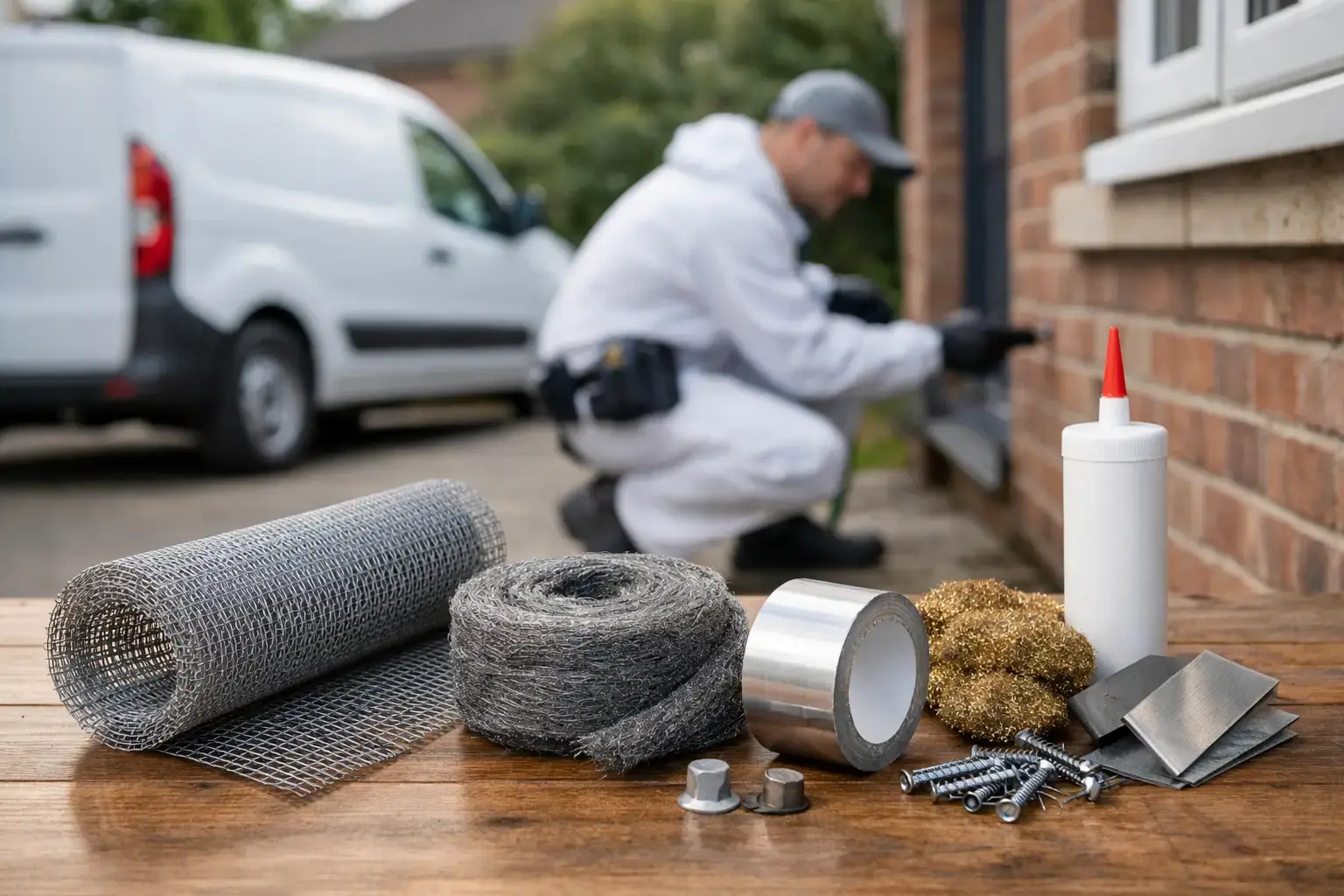
A mouse can enter through a gap little wider than a pencil. Rats exploit broken drains, damaged air bricks and poorly sealed pipework. Birds only need a sheltered ledge or roof void to create a persistent mess. Choosing the best pest proofing materials is therefore not about filling every crack with whatever is to hand. It is about matching a durable material to the pest, the size and location of the entry point, and the way the building is used.
Effective proofing removes access to food, shelter and nesting sites. It is often the work that stops a treatment becoming a repeat call-out. For homes, rental properties, kitchens, warehouses and retail premises, the right exclusion work can protect hygiene, stock, reputation and peace of mind.
Why material choice matters in pest proofing
Not all materials withstand teeth, claws, weather and everyday building movement. Expanding foam may look like a quick answer, for example, but rodents can chew through standard foam with ease. Silicone sealant is useful around small, stable gaps, but it cannot bridge a large hole or secure loose brickwork.
A professional approach starts by identifying the pest and finding the true route of entry. This may be a gap beneath cladding, an unprotected vent, a redundant pipe opening, a damaged soffit or a fault in the drainage system. Sealing only the visible hole can force pests to find another route, or trap an active infestation within the property.
The best result usually comes from combining materials. A rodent-resistant mesh may cover an opening, for instance, while mortar or a suitable exterior-grade sealant secures the edges. The finish must be strong enough to last but also practical for maintenance, ventilation and drainage.
Best pest proofing materials for rodents
Galvanised welded wire mesh
Galvanised welded mesh is one of the most dependable materials for preventing rat and mouse access. Unlike lightweight chicken wire, welded mesh has a rigid structure that is far harder for rodents to chew or pull apart. It is well suited to vents, gaps behind kitchen units, under decking, around pipe penetrations and damaged air bricks.
Mesh aperture is critical. A smaller aperture is needed for mice than for rats, as mice can pass through remarkably narrow gaps. The mesh must also be fixed securely at every edge. A well-chosen mesh installed loosely can still be pushed aside or leave gaps at the corners.
For exposed locations, stainless steel mesh may be the better option. It costs more, but it offers excellent corrosion resistance where moisture, coastal air, regular wash-downs or long-term exposure are factors.
Stainless steel wool and copper mesh
Stainless steel wool and copper mesh are useful for tightly packed, awkward openings around pipes, cables and service entries. They can be pressed into irregular voids that sheet mesh cannot cover neatly. Once in place, they should normally be finished with an appropriate sealant, mortar or repair compound to stop movement and provide a clean, durable finish.
These materials are not designed to replace structural repair. If brickwork has failed, timber is rotten or a utility entry has been poorly formed, the underlying defect should be repaired properly. Packing material into a larger void without securing it may provide only a short-term barrier.
Mortar, cement and repair compounds
For gaps in masonry, damaged pointing and voids around external pipework, a cement-based repair is often the strongest answer. Mortar restores the building fabric rather than simply masking the problem. It is particularly effective at ground level, where rats commonly gain access through defects around drains, foundations and utility routes.
The area should be cleaned and assessed before repair. Where an opening is large or vulnerable, mesh can be embedded behind or within the repair to add resistance. This provides a far more reliable result than foam alone.
Rodent-proof door strips and brush seals
A gap beneath an external door can be enough for mice, while a poorly fitting commercial shutter can create a routine entry route for rats. Heavy-duty door strips, metal kick plates and brush seals can close these gaps without preventing normal use of the door.
The material needs to suit the threshold. A seal that drags badly over uneven paving will soon wear or be removed by staff. In busy commercial environments, proofing must work with daily operations, deliveries and fire safety requirements rather than against them.
Materials for insects, vents and minor gaps
Insect proofing requires a different balance. The aim is to block access while retaining airflow, drainage and safe operation of the building. Fine stainless steel insect mesh is suitable for many vents, extractor openings and weep-hole arrangements, provided it does not interfere with the intended function of the feature.
Exterior-grade silicone or polyurethane sealant is useful for narrow, clean gaps around frames, cable entries and utility pipes. It remains flexible as building materials expand and contract. For wider gaps, use a backing material and a suitable filler or repair system rather than applying a thick layer of sealant that may split or pull away.
Care is needed around air bricks and vents. Blocking ventilation can lead to condensation, damp and timber decay, creating a more expensive problem than the one being solved. Purpose-made vent guards or properly fitted mesh protect the opening while allowing it to do its job.
Bird proofing materials need a site-specific approach
Bird proofing is not a one-material solution. Netting, wire systems, spikes and mesh can all be effective, but the correct choice depends on the bird species, the structure and the level of activity. A warehouse loading bay, a shop canopy and a domestic solar panel system all present different risks and fixing challenges.
Bird netting can exclude birds from open-sided areas, roof voids and larger structural gaps when it is correctly tensioned and fixed. Poorly installed netting can sag, create gaps and become a welfare hazard. Durable, UV-stabilised netting and professional installation are essential.
Spikes can discourage perching on suitable narrow ledges, pipes and signage, but they are not appropriate for every surface or every species. Wire systems offer a more discreet option on architectural ledges where appearance matters. Under-solar-panel mesh prevents pigeons nesting beneath panels, protecting cabling and reducing fouling without damaging the installation.
Any bird work must be carried out responsibly. Active nests, eggs and dependent young may be protected by law, so timing and assessment matter. Proofing should prevent future access, not create unnecessary harm.
Materials that often fail too soon
Some products are useful as part of a repair, but are regularly relied upon beyond their capability. Standard expanding foam is the most common example. It can fill a void and improve draught sealing, but it is not rodent proof and degrades when exposed to sunlight. It should never be the only barrier where rats or mice are involved.
Plastic mesh may be suitable for light insect exclusion in sheltered locations, but it is not a dependable rodent barrier. Thin metal mesh can also fail if it rusts, is cut too easily or is fixed with weak adhesive. Adhesives alone are rarely enough for external proofing, particularly on rough, damp or dusty surfaces.
Timber repairs need careful attention too. Replacing rotten fascia boards or soffits without addressing the access gap, roof defect or moisture source simply delays the next problem. Durable proofing considers the whole route, not just the chewed edge or visible hole.
A practical standard for long-lasting proofing
Good proofing should be discreet, secure and maintainable. It should not obstruct drainage, compromise ventilation, create sharp edges, block fire exits or prevent access to essential services. For commercial premises, it must also support hygiene controls and routine inspections.
Before any material is installed, check whether pests are currently active. Sealing a rat route while rats remain inside a wall void can cause odours, damage or further internal activity. A treatment and monitoring plan may need to come first, followed by proofing once activity is under control.
At AZ Environmental Service Pest Control, proofing recommendations are based on an on-site assessment rather than a one-size-fits-all repair. This is particularly valuable where a recurring problem points to hidden entry routes, drainage defects or roof-level access that cannot be seen safely from the ground.
The strongest material is only effective when it is fitted in the right place, with the right fixings and after the real source of pest activity has been identified. If a gap keeps attracting mice, rats, birds or insects, a professional survey can turn repeated temporary repairs into a lasting solution.