

Blog
Why Do Wasps Return Yearly?
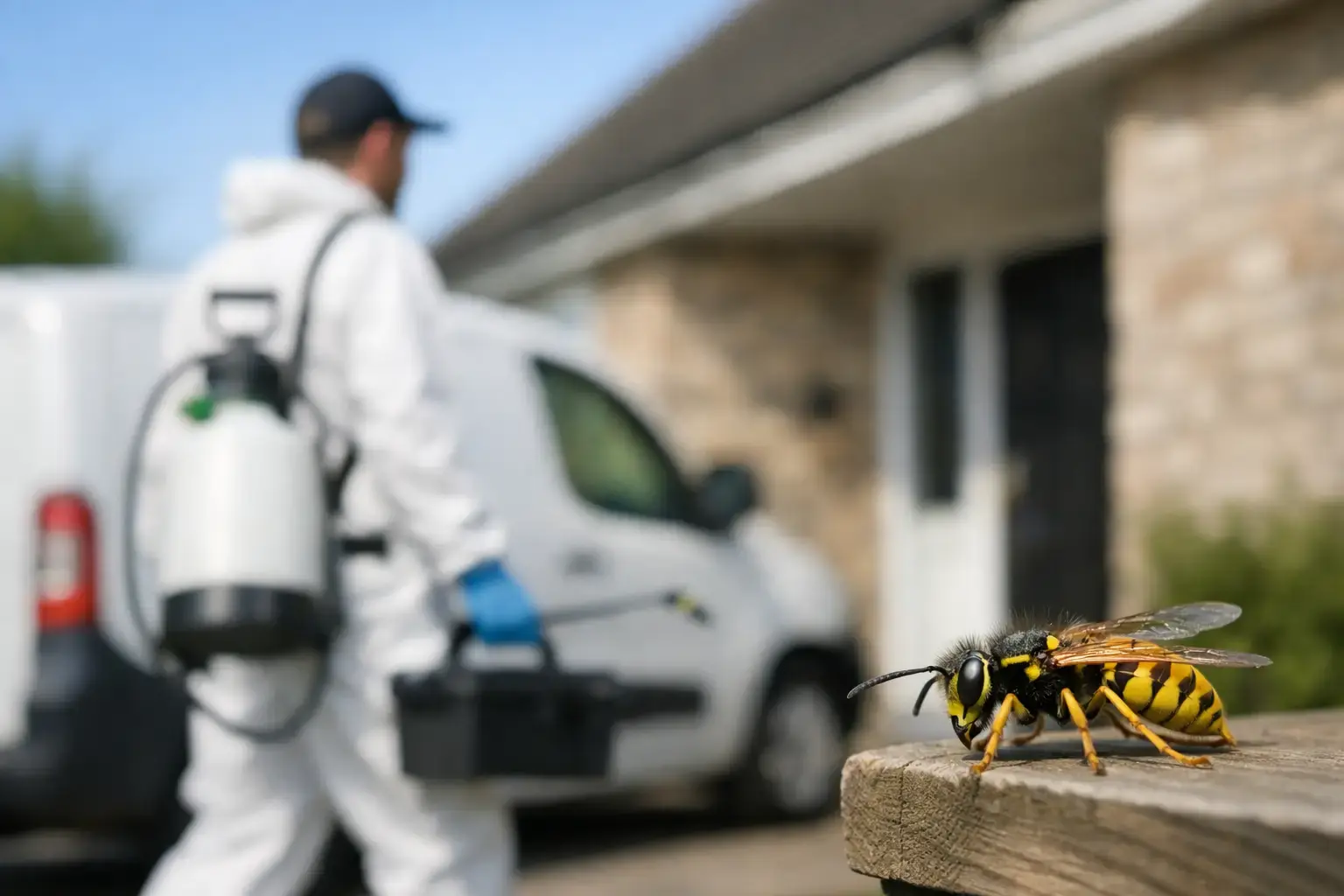
You clear a wasp problem one summer, breathe easier through autumn, and then the first warm spell arrives the next year and they are back in the same spot. If you have been asking why do wasps return yearly, the short answer is that they are not usually coming back to reuse the exact same nest. They are returning because your property still offers the shelter, access points and nearby food sources that suit them.
That distinction matters. If you assume wasps simply live in the same nest year after year, you can miss the real cause of repeat activity. In most cases, what you are seeing is a new queen selecting a familiar, favourable area and starting again nearby, or occasionally building onto parts of an old structure if conditions allow.
Why do wasps return yearly at the same property?
Wasps are opportunists. They do not need much encouragement to settle if a loft void, soffit, wall cavity, shed roof or garage gives them warmth, cover and minimal disturbance. A property that has hosted wasps once often has the same conditions the following season unless something has changed.
Spring is the key point in the cycle. Fertilised queen wasps overwinter in sheltered places, then emerge when temperatures rise. At that stage they search for a suitable nesting site. If your home or commercial premises has protected voids, small entry gaps and a quiet location away from regular footfall, it can appeal to a queen again and again.
This is why repeat wasp issues are common around rooflines, eaves, cavity walls and outbuildings. It is less about loyalty to one nest and more about a repeated preference for the same type of environment.
Old nests are not usually reused
One of the most common misunderstandings is that an old nest remains active from one year to the next. In the UK, social wasp nests are generally annual. The colony dies off as temperatures drop, apart from new queens that leave to overwinter elsewhere.
By the following spring, that original nest is normally dead and inactive. The new queen builds a fresh nest from scratch using chewed wood fibres mixed with saliva to create the familiar paper-like material.
That said, an old nest can still play a part. Its presence shows that the area has already proved suitable. In some cases a new nest may appear very close to it, or attached within the same void. So while wasps do not usually move back into the old nest as if it were a permanent home, the site itself remains attractive.
What makes one property attractive to wasps?
Shelter comes first. Wasps want a dry, protected space where the nest can develop with little disruption. Loft insulation, fascia gaps, air bricks, timber outbuildings and cladding voids can all create the right conditions.
Temperature also helps. Warm roof spaces and sun-exposed walls can encourage early nest development. If a queen can establish a nest quickly in spring, the colony has a better chance of growing strongly through summer.
Food and water are the next part of the picture. Wasps feed on sugary substances and hunt insects to support the colony. Gardens with flowering plants, fallen fruit, bins that are not tightly sealed, outdoor eating areas and ponds can all make the surrounding area more appealing. For commercial sites, food waste management is especially important. Cafes, hospitality venues, schools and industrial units with external bins can all see repeated pressure if hygiene and exclusion measures are not tight.
Why you may see wasps in the same place each summer
Sometimes the nesting site is obvious, such as a wasp flight path under roof tiles or into a shed apex. Sometimes it is not. A nest in a cavity wall or chimney void can produce heavy activity outside while remaining hidden.
If you keep seeing wasps around the same window, roof edge or garden structure each year, there is usually a reason. There may be a persistent entry point that is easy for queens to find. There may also be a void behind that area large enough to support a nest.
This is where guesswork often causes problems. Homeowners may block a visible hole after seeing activity stop in autumn, not realising there are secondary access points elsewhere. Or they may leave the old nest in place and assume that if it is inactive, the issue has gone away. In reality, the conditions that allowed the first nest may still be there.
Why do wasps return yearly even after nest removal?
Removing a nest deals with the immediate infestation, but it does not automatically remove the reason the nest was there. If the entry gap remains open, if the void is still suitable and if attractants remain around the property, another queen can choose the same area next season.
This is why treatment and prevention need to work together. A professional nest removal solves the active problem safely. A proper follow-up identifies how wasps got in, what made the site attractive and what changes will reduce the chance of recurrence.
It also depends on timing. If a nest is removed late in the season, there may already be future queens developing in the colony. Those queens will not continue using the same nest over winter, but they can contribute to broader local wasp activity the following year. That does not mean your treatment failed. It means the local breeding cycle was already well underway.
Prevention is rarely one single fix
People often want one simple answer, such as removing all old nests or spraying one area. In practice, preventing repeat wasp problems usually means tightening several weak points.
Proofing is often part of the solution, especially around soffits, fascia boards, vents, damaged brickwork and roof junctions. But sealing every possible gap without inspection can be counterproductive. If there is an active nest inside a structure, blocking access can drive wasps into other internal areas. The right approach is to treat any live nest first, confirm inactivity, and then carry out targeted proofing.
Housekeeping matters as well. Keeping bins closed, clearing fallen fruit, reducing exposed sugary residues and managing outdoor food waste can help reduce attraction. In gardens, complete removal of flowers or natural insect life is neither practical nor desirable, but reducing the easy rewards close to the building can make a difference.
For commercial premises, repeat wasp activity often needs a broader site assessment. Waste storage, delivery areas, roof voids and external seating zones may all play a role. Where reputation and compliance matter, a quick spray-and-go approach is not enough.
The role of weather and local conditions
Some years are simply worse than others. A mild spring can improve queen survival and support earlier nest building. Warm, dry periods in summer can also increase visible wasp activity around homes and businesses.
That is why one quiet year does not necessarily mean the problem has been solved permanently, and one busy year does not always mean the site has become dramatically worse. Patterns shift with weather, surrounding habitat and nearby nesting pressure.
Still, if activity is recurring on your property specifically, it is worth treating it as a site issue, not just a bad season. Consistent repeat behaviour usually points to a consistent opportunity.
When repeat wasp activity needs professional attention
If wasps are entering the same roofline, loft, cavity or outbuilding year after year, it is time to look beyond DIY measures. Store-bought products may kill visible wasps, but they rarely address concealed nests, access routes or long-term prevention. They can also make the situation more dangerous if used incorrectly near an active nest.
A professional assessment should answer three questions clearly. Where is the nest or likely nesting void? How are the wasps getting in? What practical steps will stop the pattern from repeating?
That is the difference between a one-off treatment and a proper solution. For properties in Stockport and surrounding areas, especially where wasps keep returning to the same section of a building, local knowledge of common construction types and nesting points can save time and avoid repeat call-outs.
If wasps keep coming back every summer, do not treat it as bad luck. It usually means your property is offering them exactly what they need - and once that is identified properly, it can be dealt with.