

Blog
What Attracts Wasps to Houses? Key Causes
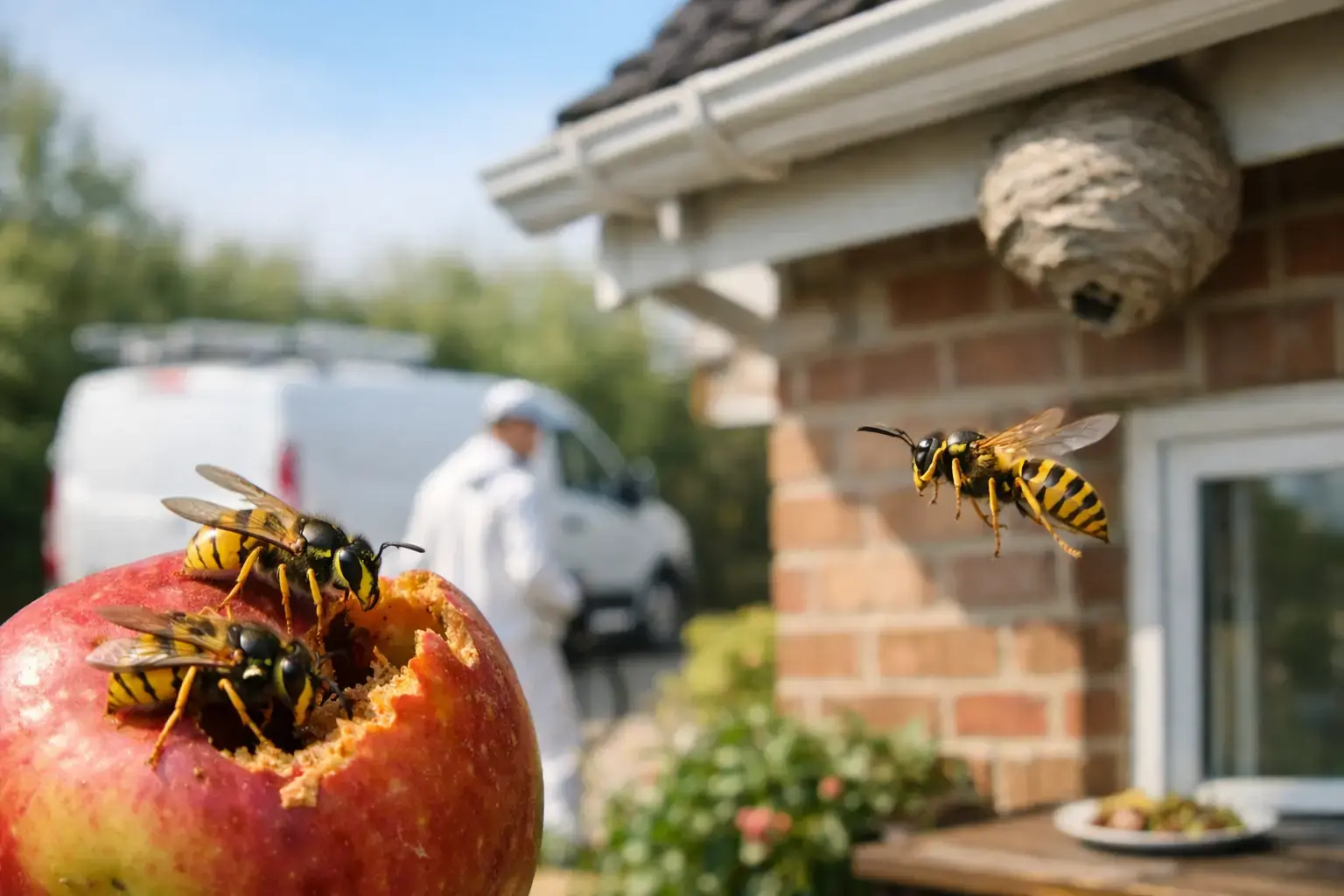
A wasp repeatedly circling the eaves, disappearing into a roof gap or gathering around a bin is rarely a random sighting. Understanding what attracts wasps to houses helps you deal with the conditions that encourage them to stay - before a small problem becomes an active nest in the loft, wall cavity or garden structure.
Wasps are useful predators in the wider environment, but they become a serious nuisance when they nest close to people, pets, customers or staff. The right response depends on where they are nesting, the species involved and how much activity there is. Prevention can reduce the risk, but an established nest needs professional assessment and treatment.
What attracts wasps to houses in the first place?
A house offers three things a queen wasp needs when establishing a colony: a sheltered nesting location, building material and reliable food nearby. Once workers emerge, the colony becomes more visible as wasps travel back and forth between the nest and food sources.
In spring, a fertilised queen looks for a dry, protected void where she can start building. Roof spaces, soffits, wall cavities, garden sheds, garages and the undersides of decking all provide the cover she needs. Small openings around pipes, damaged mortar, loose fascia boards and unsealed vents can give her access to areas that seem inaccessible from inside the property.
The nest itself is made from a paper-like material. Wasps create it by chewing weathered wood, fencing, shed panels, decking and even cardboard. This is why properties with exposed timber and quiet outbuildings can be particularly attractive during nest-building season.
Food sources that keep wasps nearby
Food does not always cause a nest to appear, but it can make an existing colony far more active around your home. Adult wasps need sugary foods, while they also hunt insects to feed developing larvae. Gardens and outdoor eating areas can therefore provide a dependable supply of both.
Sweet drinks, fallen fruit, jam, ice cream, barbecue sauces and open food waste are common draws. In late summer, this behaviour often becomes more noticeable. As the colony changes and there are fewer larvae producing sweet secretions for worker wasps, workers search more actively for sugar. This is why wasps can seem especially persistent around patios, pub gardens, bins and picnic tables in August and September.
Bins are a frequent issue, particularly where food containers are left uncovered or bags are overfilled. Rinse recyclable bottles and cans, keep wheelie-bin lids closed, and clean spillages from bin areas. For commercial premises, this is also a hygiene and reputation concern. Waste storage should be managed carefully, especially near customer entrances, staff break areas and delivery points.
Fruit trees are another regular attraction. Apples, pears and plums left to rot on the ground can support high levels of wasp activity. Collect fallen fruit promptly and avoid leaving windfall in compost heaps close to doors, windows or seating areas.
Shelter and access points around the property
Wasps do not need a large hole to reach a suitable nesting space. A gap around the width of a finger may be enough, depending on the species and location. The visible entrance is often some distance from the nest itself, particularly in cavity walls and roof voids.
Check the outside of the building for damaged pointing, gaps beneath tiles, loose cladding, broken air bricks, failed seals around service pipes and worn sections of soffit or fascia. A single wasp investigating a crack does not prove there is a nest, but regular traffic using the same route is a strong warning sign.
Lofts are attractive because they are dry, undisturbed and usually warm enough through the nesting season. Sheds and garages are also common, particularly if doors remain shut for long periods. Under decking can provide a hidden, protected space at ground level, while dense hedges, bird boxes and compost areas may support smaller outdoor nests.
It is worth recognising that sealing an active entrance too soon can make the problem worse. Wasps may find another way into the building, sometimes emerging through a bedroom, hallway or ceiling void. Treatment should take place first. Any proofing work should follow once the nest is no longer active and the right entry points have been identified.
Water, gardens and insect prey
Wasps need water, particularly in warm weather. Leaking outdoor taps, dripping gutters, open water butts, ponds and pet water bowls can all give them a convenient drinking source. Water alone will not usually create an infestation, but it adds to the appeal of a property that already offers shelter and food.
A thriving garden also contains the insects wasps hunt. Aphids, caterpillars, flies and spiders can all form part of their diet. This has a trade-off: a wildlife-friendly garden may naturally have some wasp activity, and that is not automatically a problem. The concern is concentrated activity around the home or evidence of a nest in a structure used by people.
Avoid broad, unnecessary insecticide use in gardens. It can harm beneficial insects without resolving a nest hidden in a wall or roof space. Targeted professional control and sensible proofing are more effective when wasps are established close to a building.
Why some homes get wasps every year
A recurring wasp problem does not usually mean the same nest is being reused. Most social wasp colonies die out at the end of the season, and new queens typically begin fresh nests the following spring. However, the same property can remain attractive because the access point and sheltered void have not been addressed.
A loft with an unsealed gap, a shed with deteriorating timber or a cavity wall with damaged mortar may offer ideal conditions year after year. Nearby food sources, such as fruit trees or poorly managed waste, add to the pattern. In some cases, homeowners treat the visible activity but do not investigate where the queen gained access.
This is why a proper site survey matters. It identifies the nest location, likely entry route and practical prevention work needed once treatment is complete. It also avoids guesswork - especially where activity is high around inaccessible rooflines, chimneys or commercial buildings.
Practical steps to make your home less attractive
A few routine measures can reduce the chances of wasps settling close to the house. Focus on removing easy food sources and maintaining the outside of the property before the main nesting period.
- Keep household and commercial waste contained, with lids shut and spillages cleaned promptly.
- Clear fallen fruit regularly and cover sweet food and drinks when eating outside.
- Repair damaged pointing, soffits, fascia boards, cladding and seals around pipes.
- Fit suitable mesh to vents where it will not affect ventilation, and repair damaged insect screens.
- Check sheds, garages, loft access areas and decking in early spring for queen wasp activity.
- Fix persistent leaks and avoid leaving standing water beside frequently used doors or patios.
Do not block every ventilation opening indiscriminately. Buildings need adequate airflow, and unsuitable materials can create damp or ventilation problems. Where proofing is needed, it should be matched to the structure and carried out after activity has stopped.
When a wasp nest needs professional treatment
A nest well away from doors, paths and occupied areas may sometimes be left alone, particularly late in the season. But this is not a sensible option where there is heavy activity around an entrance, children’s play area, loft hatch, workplace, school, care setting or food preparation area. People with a known sting allergy should take particular care and avoid approaching the nest.
Do not attempt to burn, flood, knock down or seal an active nest. Consumer sprays can also be ineffective when the colony is deep inside a cavity, and disturbing it increases the risk of multiple stings. A visible nest is not always the whole problem: many are concealed behind brickwork, under tiles or within roof spaces.
Professional treatment is designed to address the colony at its source, including nests in difficult or high-level locations. At AZ Environmental Service Pest Control, we assess the activity, apply an appropriate treatment plan and advise on sensible proofing once the nest is inactive. For properties in Stockport and the surrounding area, early action is the safest way to keep a small access issue from becoming a disruptive wasp problem.
If you can see a steady line of wasps entering one gap, keep people away from the area and resist the temptation to investigate closely. That simple observation provides the clearest starting point for resolving the problem safely.