

Blog
Wasp Nest Removal Stockport: What to Do Fast
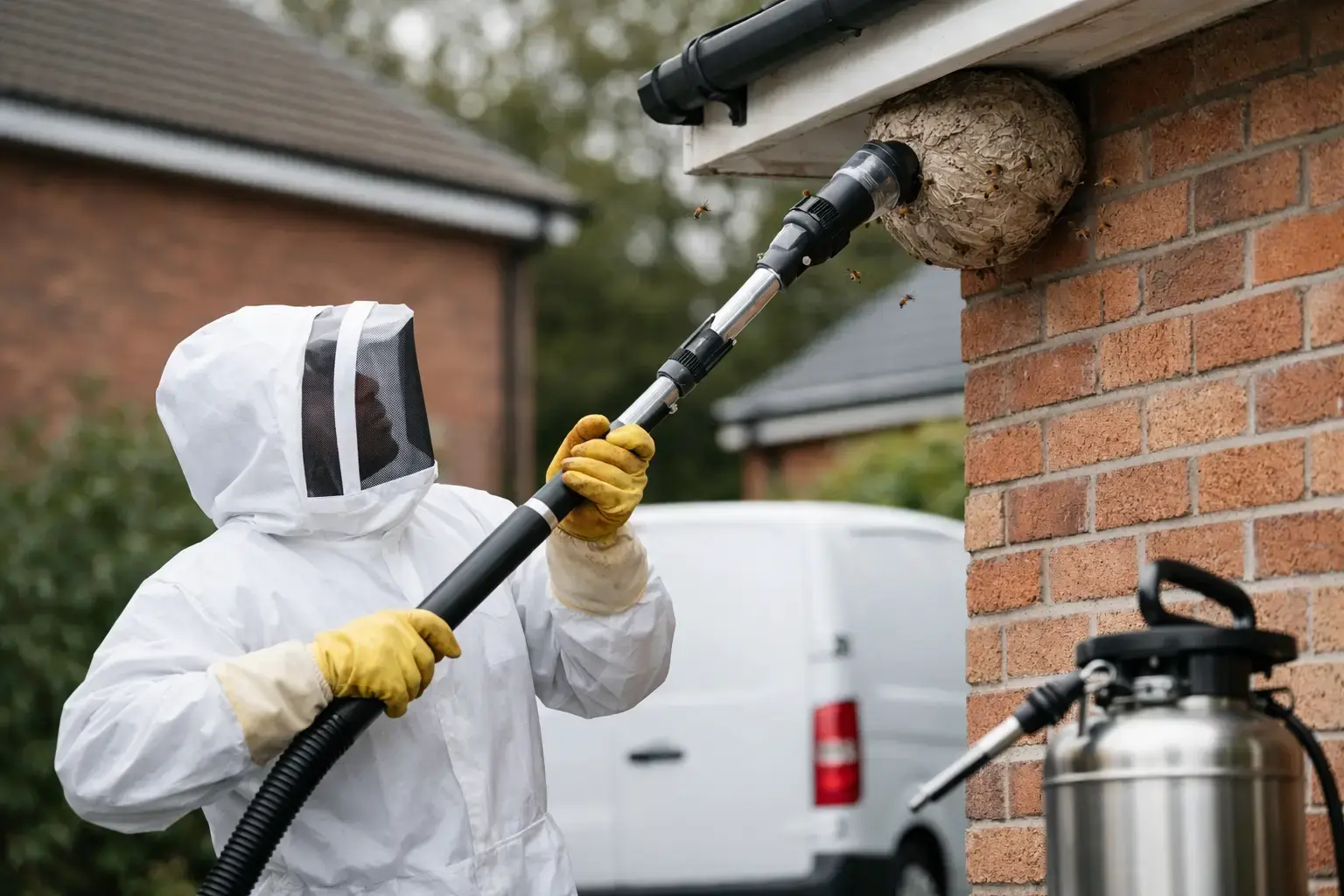
A wasp nest usually gets noticed at the worst possible moment - when the garden is in use, the loft hatch comes down, or staff start spotting wasps around an entrance. If you need wasp nest removal Stockport, speed matters, but so does getting the treatment right first time.
Wasps are more than a seasonal nuisance. A single nest can grow quickly through the warmer months, and the problem often becomes obvious only when activity is already high. For homeowners, that can mean repeated stings, anxious children and pets, and parts of the property becoming difficult to use. For landlords and commercial premises, it can turn into a safety issue, a complaint issue and, in some settings, a reputational problem.
When a wasp nest becomes a real problem
Not every wasp sighting means there is a nest on your property. Wasps travel, especially in summer, and they may simply be foraging. The pattern to watch for is repeated movement to and from one fixed point. That might be under roof tiles, through air bricks, into a cavity wall, behind cladding, inside a loft, or from a shed roof or fence post.
Once that flight path starts becoming obvious, the nest is established. At that stage, people often try to judge the size of the problem by the visible opening. That is rarely reliable. The entry point may be tiny while the nest itself is substantial and hidden well inside the structure.
The risk depends on location as much as nest size. A nest high in a tree at the far end of a large garden is a different issue from one above a front door, near a school run path, or inside a business loading area. If the nest is close to routine footfall, pets, customers, residents or staff, treatment should not be delayed.
Why DIY wasp nest removal often goes wrong
People usually attempt DIY for one reason - they want the problem gone quickly. That is understandable. The trouble is that rushed action around wasps can make activity worse before it makes it better.
Sprays bought off the shelf may have limited reach and may not penetrate deeply enough to treat the nest properly. If the product does not get where it needs to go, the colony survives. In some cases, disturbed wasps become aggressive and start swarming around the access point, creating a more immediate hazard than before.
There is also the issue of access. Nests are commonly found in loft spaces, rooflines, wall cavities and awkward external elevations. Reaching those areas safely is one challenge. Applying treatment accurately is another. Where ladders, fragile roof sections or confined spaces are involved, what looks like a straightforward job can become risky very quickly.
For commercial sites, DIY is usually the wrong route altogether. If a nest affects customer areas, hospitality settings, care environments, schools, warehouses or communal access, the priority is not just removing the nest. It is managing the risk properly and doing so in a way that is discreet, professional and effective.
Wasp nest removal in Stockport - what a professional service should involve
Professional wasp nest removal in Stockport should start with identifying exactly what is happening on site. That means confirming whether there is an active nest, locating the likely nesting area, assessing the safest treatment point and looking at environmental factors that could affect results.
A proper treatment is not guesswork. The product, method and approach depend on where the nest is, whether access is internal or external, how active the wasps are, and whether there are children, pets, vulnerable occupants or members of the public nearby.
In many cases, the visible wasp activity drops after treatment fairly quickly, but it is important to understand that complete cessation is not always instant. Returning worker wasps may still appear for a short period because they were away from the nest when treatment was applied. That does not necessarily mean the treatment has failed. It means the nest needs time to collapse fully.
This is where experience matters. A trained pest controller knows the difference between normal post-treatment activity and signs that a follow-up is required. That judgement is one of the main reasons professional treatment tends to resolve the problem faster and more reliably than a trial-and-error approach.
Common nest locations around homes and businesses
In Stockport and surrounding areas, wasp nests are regularly found in lofts, eaves, soffits, garages, sheds, cavity walls and garden structures. Older properties can be especially vulnerable because small gaps and ageing building materials create easy access points. Newer properties are not immune either, particularly where vents, boxed-in roof details or cladding leave concealed voids.
Commercial premises bring a different set of challenges. Roller shutter housings, service yards, roof voids, signage, external plant areas and warehouse edges can all provide sheltered nesting spots. Where food handling, hospitality or customer-facing operations are involved, even low-level wasp activity can become unacceptable very quickly.
What matters is not whether the nest is technically indoors or outdoors. What matters is whether people are likely to cross its flight path. A nest tucked behind fascia boards may still affect the driveway, entrance or smoking area. A loft nest may seem contained until wasps begin entering occupied rooms through light fittings or ceiling gaps.
Timing matters more than most people think
Wasp problems usually build from late spring into summer and often peak in late summer, when colonies are larger and more visible. That is also when people are more likely to spend time outside, open windows, use garden spaces and notice increased aggression around food and drink.
Early treatment is usually simpler than waiting. A smaller, earlier-stage nest is often easier to manage than a mature nest with heavy traffic in and out. Delaying can also increase the chance of repeated disturbance, especially if people continue using the affected part of the property.
There is an important trade-off here. Some nests in low-risk positions may not need urgent intervention if they are well away from people and nearing the natural end of the season. But that is very much a case-by-case decision. If there is any realistic chance of stings, blocked access, staff concerns or customer complaints, prompt treatment is the safer option.
What property owners should do before the technician arrives
The best first step is simple - keep clear of the nest area and avoid blocking or sealing the entrance. People often think sealing the hole will trap the wasps. In reality, that can drive them into other parts of the structure or cause them to find another exit inside the property.
Keep children and pets away from the immediate area. If the nest affects a doorway or work zone, reduce use of that area where possible until treatment is carried out. Indoors, keep windows near the activity point closed if wasps are entering living or working spaces.
It also helps to note what you have seen. If you can identify the main flight path, the time of peak activity and the likely entry point without going close, that information can speed up attendance and treatment. There is no need to probe the nest or test it. A calm, undisturbed site is easier and safer to deal with.
Choosing a local specialist for wasp nest removal Stockport
When you are dealing with wasps, local knowledge and practical field experience count for a lot. Properties vary, rooflines vary, and access issues vary. A local specialist is more likely to understand the types of buildings in the area and the common nesting points that get overlooked.
You should also expect a service that is clear and professional from the first call. That means practical advice, realistic expectations and no vague promises. If the nest is active and accessible, the aim should be straightforward - identify it, treat it properly and reduce the risk quickly.
For many customers, discretion matters too. Homeowners do not always want a marked vehicle outside the house drawing attention. Commercial clients often need the issue handled without disruption to customers or staff. A service-led pest control company should understand both.
AZ Environmental Service Pest Control works with domestic and commercial customers across Stockport and applies that same no-nonsense approach to wasp problems - assess the risk, carry out the right treatment and solve the issue properly.
After treatment - what happens next
After a nest has been treated, you may still see some wasp activity for a short time. That is normal in many cases. The key is that traffic should reduce rather than intensify. If the nest was hidden within a structure, removal of the physical nest material is not always necessary, especially once it is inactive. The priority is stopping the live colony.
Longer term, prevention comes down to property condition. You cannot make a building completely wasp-proof, but you can reduce the number of easy access points. Damaged soffits, gaps around roof edges, broken vents and unsealed service penetrations are all worth checking once the immediate issue is resolved.
If you have recurring seasonal activity in the same area, that is often a sign the property offers a reliable nesting opportunity. In those cases, treatment should be paired with practical proofing advice rather than treated as a one-off nuisance.
A wasp nest rarely improves by being ignored. The sooner the problem is assessed, the sooner the risk to your home, tenants, staff or customers can be brought under control - and that usually makes the whole job simpler.