

Blog
Top Signs of Mouse Infestation at Home
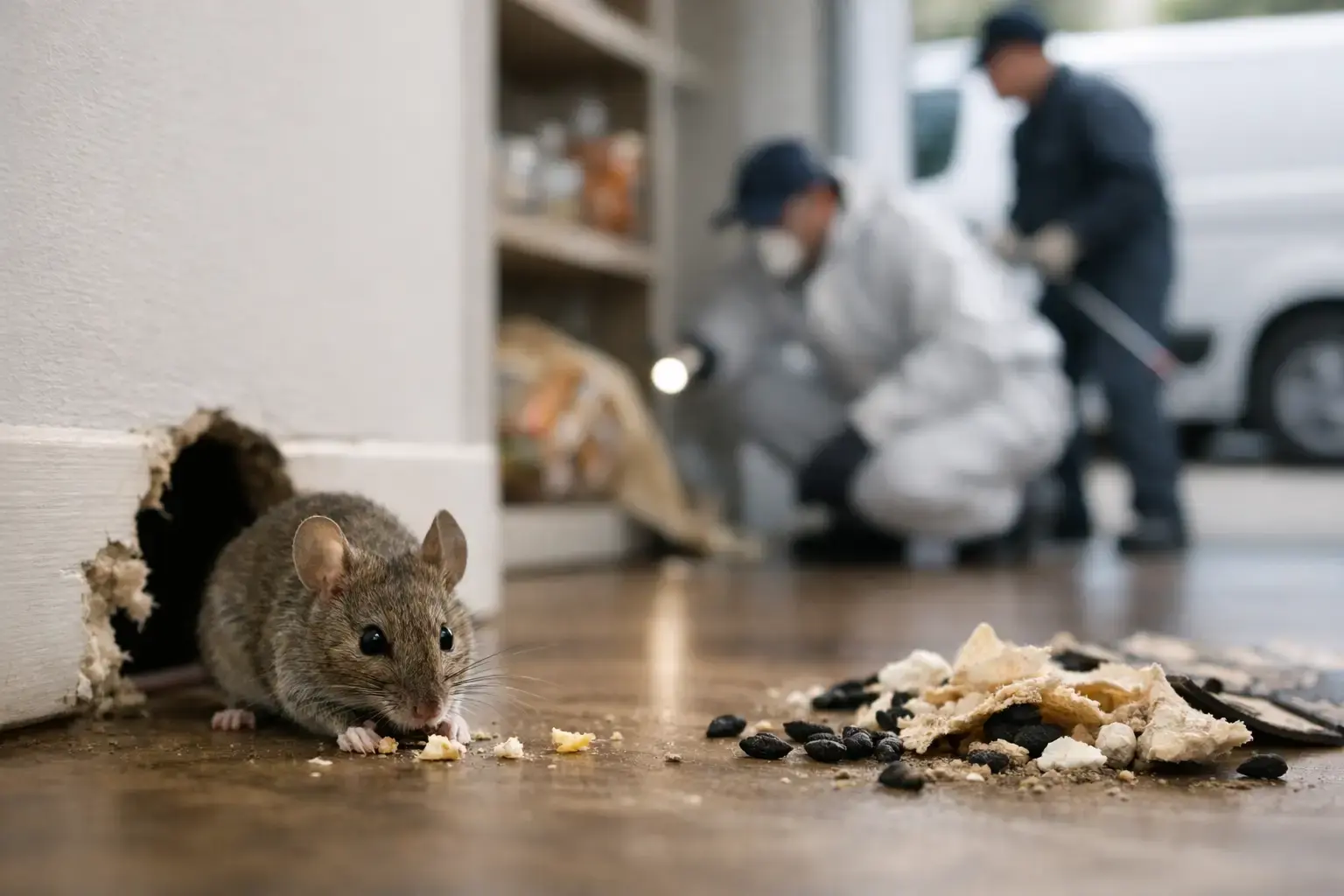
A few black droppings under the sink. A rustling sound behind the plasterboard after dark. A cereal packet with a neat hole chewed into the corner. The top signs of mouse infestation are often easy to miss at first, but once mice settle in, the problem rarely stays small for long.
Mice are not just an occasional nuisance. They contaminate food, damage insulation, chew wiring and breed quickly. For homeowners, landlords and businesses, early action matters because a minor issue can become a full infestation in a short space of time.
The top signs of mouse infestation
The clearest sign is usually droppings. Mouse droppings are small, dark and shaped a bit like grains of rice. Fresh droppings tend to look moist and black, while older ones dry out and turn grey. You are most likely to find them along skirting boards, inside cupboards, under kitchen units, in loft spaces and near food storage areas because mice prefer to move along edges rather than crossing open rooms.
Chew marks are another strong indicator. Mice need to gnaw constantly to keep their teeth down, so they will chew cardboard, plastic, wood, plaster and even electrical cables. You might notice damaged food packaging in a kitchen cupboard, gnawed corners on stored boxes in a loft, or bite marks around pipe entries and cable routes. This is one of the more serious signs because chewing can create a genuine fire risk where wiring is involved.
Noises at night are common in active infestations. Mice are most active after dark, so scratching, scurrying and light tapping sounds in walls, ceilings or under floorboards often become noticeable when the house is quiet. It does depend on the property. In older homes with voids, suspended floors or loft insulation, sound carries differently, so activity may seem louder than it is. In commercial premises, particularly restaurants, shops and storage units, these noises may be missed entirely during busy hours.
A musky ammonia-like smell can point to a longer-standing problem. In enclosed areas such as cupboards, lofts, basements or unused rooms, mouse urine builds up and leaves a stale odour. On its own, smell is not enough to confirm an infestation because drains, damp and other issues can create similar odours. But if the smell appears alongside droppings or gnawing, mice move much higher up the list of likely causes.
Signs of mice that people often overlook
Smears and rub marks are easy to dismiss, but they matter. As mice travel the same routes repeatedly, the grease and dirt from their fur can leave dark marks along skirting boards, pipework and wall edges. These marks usually appear close to holes, behind appliances or in tight runs where mice squeeze through regularly.
Nests are another overlooked clue. Mice build nests from shredded paper, loft insulation, fabric, dried plant matter and other soft materials. These are often hidden behind kitchen plinths, in airing cupboards, inside boxed-in pipework, in loft corners or under stored items in garages. If you find a nest, the infestation is already established.
Pets can also alert you before you see physical evidence. Dogs may become unusually interested in a cupboard, appliance gap or section of wall. Cats often stare at or paw near suspected entry points. Pets are not a diagnostic tool, but sudden focused behaviour in one area can be worth checking, especially if other signs are present.
Where mice usually show up first
In homes, kitchens are usually the starting point because they offer warmth, water and easy access to food. Under sinks, behind cookers, beneath dishwashers and inside pantry cupboards are all common hotspots. Utility rooms and boiler cupboards are also attractive because they stay warm and often contain hidden access points around pipework.
Lofts are another common area, especially in colder months. Mice use insulation for nesting and can move between adjoining properties or wall cavities without being seen. In garages and sheds, pet food, bird seed and stored clutter make ideal harbourage.
In commercial settings, mice often turn up around stock rooms, suspended ceilings, plant rooms, bin areas and staff kitchens. Businesses sometimes assume a clean front-of-house means no issue exists, but mice tend to exploit hidden spaces where food debris, warmth and cover come together.
Why early signs matter more than most people think
A single sighting is rarely just a single mouse. Mice are cautious and mostly nocturnal, so if one is seen in daylight, there is often pressure on the nest site or competition for food. That can mean numbers are already growing.
Female mice can breed quickly, which is why delays are costly. What begins as a few droppings in a cupboard can turn into recurring activity across multiple rooms. For landlords, that can lead to tenant complaints and property damage. For businesses, it can affect hygiene standards, reputation and compliance.
There is also the question of proofing. Mice can squeeze through very small gaps, and unless those access points are identified and sealed properly, treatment on its own may not solve the issue for long. This is where infestations are often mishandled. People focus on the visible signs inside the property but miss the routes that allowed the mice in to begin with.
What to do if you notice the top signs of mouse infestation
Start by checking likely hotspots carefully and methodically. Look under sinks, behind appliances, in food cupboards, loft spaces and around service entries where pipes or cables pass through walls. Use a torch and pay attention to edges, not just open floor areas.
Next, remove easy food sources. Store dry goods in sealed containers, clear crumbs promptly, keep bins shut and avoid leaving pet food out overnight. This will not eliminate an infestation, but it does reduce what is attracting and sustaining it.
Then look at proofing. Small holes around pipes, gaps beneath doors, damaged air bricks, broken vents and poorly sealed cable entries all give mice access. Effective proofing needs the right materials and the right approach. Blocking holes without understanding how mice are moving can simply push activity elsewhere within the building.
Traps can play a part, but results depend on placement, monitoring and correctly identifying the scale of the infestation. This is where many DIY attempts fall short. If traps are set in the wrong locations, if access points remain open, or if nesting sites are not found, the problem continues in the background.
Rodenticides are not always the right first step and should be handled carefully. In some environments, especially around pets, children, food premises or wildlife-sensitive areas, professional assessment is the safer and more responsible option.
When to call in professional help
If you are finding repeated droppings, hearing activity at night, seeing damage to packaging or wiring, or noticing signs in more than one area, it is time to act properly. The same applies if the problem keeps returning after traps or shop-bought products.
Professional pest control is not just about treatment. It is about identifying the species correctly, locating harbourage, assessing the level of activity, finding entry points and putting a prevention plan in place. That matters even more in commercial premises, rented properties and larger homes where mice can move through voids and neighbouring areas without obvious signs.
For customers across Stockport and surrounding areas, a proper survey can save time and repeat cost because it deals with the cause, not just the symptom. Discreet attendance, clear reporting and tailored proofing all make a difference when speed and confidence matter.
Don’t ignore the small clues
The biggest mistake people make is waiting for certainty. They want to see a mouse in full view before taking the issue seriously. In practice, droppings, gnaw marks, scratching sounds and odd smells are usually the warning signs that count.
If something feels off in the property, trust the evidence in front of you and act early. A mouse problem is always easier to resolve before it becomes established, and the sooner you deal with it, the less damage, disruption and stress it causes.