

Blog
Top Signs of Moth Infestation in Your Home
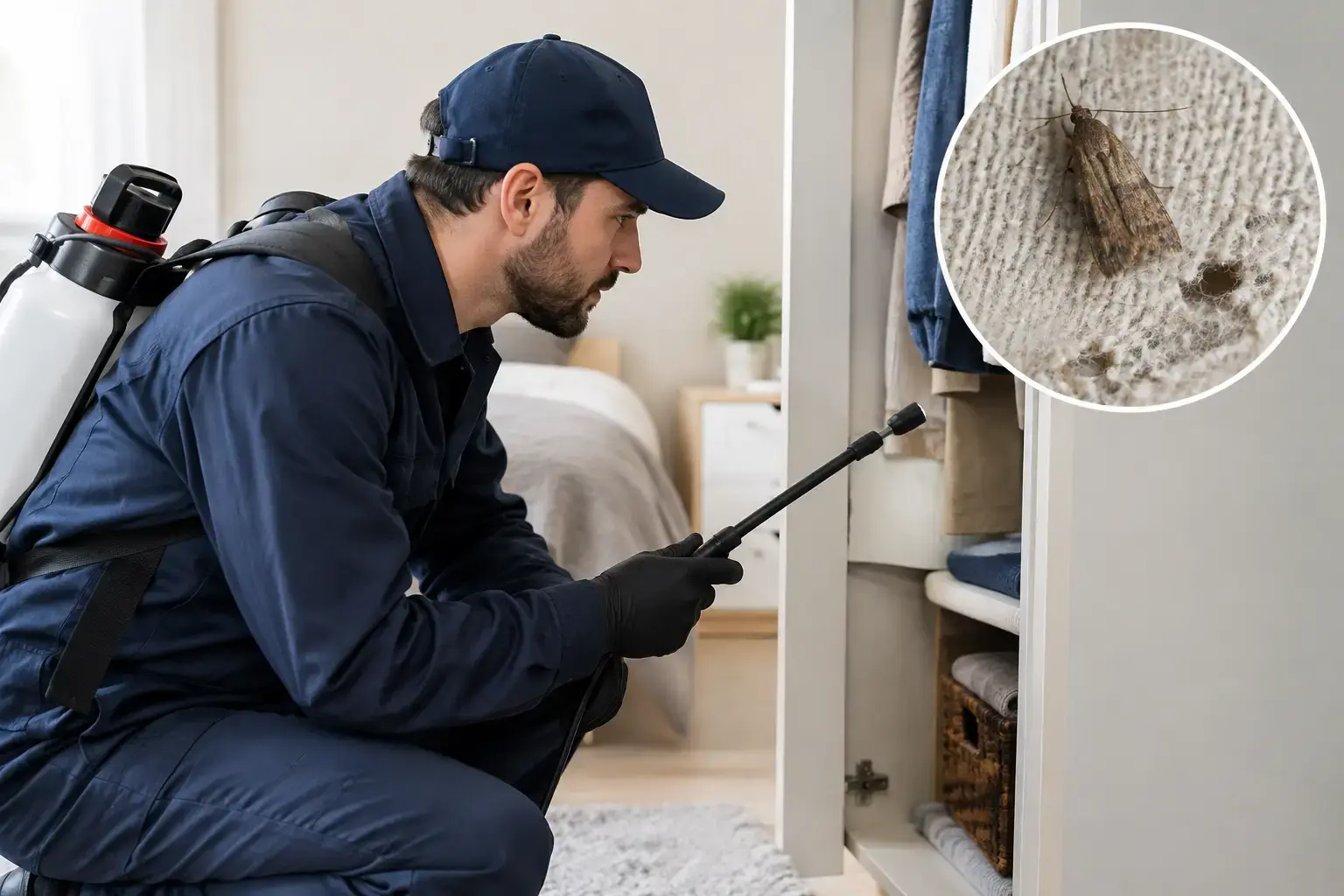
A moth flying around a bedroom light is frustrating, but it is not always proof of a serious problem. The top signs of moth infestation are usually found much closer to the source: damaged natural-fibre fabrics, webbing in food cupboards, larvae in hidden areas and small moths repeatedly appearing in the same room.
Moths are often discovered after damage has already occurred. That is because adult moths do not usually cause the issue. Their larvae feed quietly in undisturbed cupboards, wardrobes, lofts and pantry storage, often staying out of sight until a garment, rug or packet of food gives the problem away.
For homes, landlords and businesses, early identification matters. A small, localised issue can often be dealt with quickly. An established infestation may require a full inspection, professional treatment and practical proofing to stop the problem returning.
The top signs of moth infestation to look for
The most obvious sign depends on the type of moth involved. Clothes moths target animal-based fibres, while stored-product moths infest dried food. Both can spread through a property if the source is missed.
Holes in clothing, carpets and soft furnishings
Irregular holes in wool jumpers, cashmere, silk, fur, leather and feather-filled items are a classic indication of clothes moth larvae. The damage is often found in items that have been stored for a long time, particularly at the back of a wardrobe, in drawers or inside vacuum bags that were not fully sealed.
Moth larvae are attracted to fibres containing keratin. They are also drawn to traces of sweat, food and skin cells on clothing. A clean-looking wool rug or coat can therefore still be at risk, especially if it is rarely moved or cleaned.
Look beyond clothing. Larvae can damage wool carpets around the edges of rooms, beneath furniture, on staircases and in dark corners. They may also feed on upholstered furniture, blankets, cushions and taxidermy. If holes appear in several items or in more than one room, the infestation may be more widespread than it first appears.
Silky webbing, cases and loose fibres
Clothes moth larvae leave fine, silky webbing around affected fabrics. You may find this on garments, beneath rugs, along carpet edges or within stored textiles. Some species create small portable cases made from fibres, lint and debris. These can resemble tiny grains of rice or small cigar-shaped shells attached to fabric.
Webbing is a stronger warning sign than seeing one adult moth. It shows larvae have been feeding in the area. Check seams, folds, hems and the underside of collars, as well as the dark gaps between furniture and skirting boards.
Small cream-coloured larvae or pupal cases
Larvae are usually more useful evidence than adult moths. Clothes moth larvae are small, pale and worm-like, with a darker head. They avoid light and may be tucked into fabric, carpet pile or dusty cracks.
You may also find pupal cases, which are the protective coverings larvae form before becoming adult moths. These can be stuck to walls, ceilings, wardrobe interiors or stored materials. Finding larvae or cases confirms the moths are breeding on site rather than simply flying in through an open window.
Adult moths in wardrobes, kitchens or storage areas
Adult clothes moths are generally small, buff or golden in colour and tend to flutter rather than fly strongly. They avoid bright light, so they are often noticed when a wardrobe is opened or when furniture is moved. Pantry moths may be more patterned and are commonly seen around kitchen cupboards or dried-food storage.
A single adult moth does not automatically mean there is an infestation. However, repeated sightings over several weeks, especially in the same area, should be investigated. Adults are a sign that larvae may already be hidden nearby.
Moth traps can help monitor activity, but they are not a complete treatment. They catch male moths and can indicate whether activity is continuing, yet they do not remove eggs or larvae from the affected materials.
Signs of pantry moths in food cupboards
Stored-product moths can contaminate dry food and spread between packages. They are frequently introduced through food brought into the property, then establish themselves in quiet cupboards, utility rooms or stock areas.
Check flour, cereal, rice, pasta, oats, dried fruit, nuts, pet food, bird seed, spices and baking ingredients. The most common signs are fine webbing inside packets, clumps in food, larvae crawling on shelves and small moths near cupboard doors.
Do not assume the opened packet is the only affected item. Larvae can move away from the food source to pupate in shelf joints, ceiling corners, cracks, behind appliances and the folds of packaging. In commercial kitchens, cafés, food stores and rental properties, this can create a hygiene concern as well as an ongoing pest issue.
Any food showing evidence of moth activity should be sealed before disposal. Emptying the cupboard and wiping visible surfaces is a sensible first response, but it may not be enough where larvae have travelled into gaps or unopened packaging. A thorough inspection is the best way to identify the true extent of the problem.
Why moth infestations are easy to miss
Moths favour undisturbed places. Seasonal wardrobes, spare bedrooms, loft storage, stock rooms and cupboards beneath worktops give larvae time to feed without interruption. Central heating also means many properties remain suitable for breeding throughout the year.
The source is not always where the damage is found. A moth may emerge in a bedroom, while larvae are established under a nearby carpet or in a box of stored blankets. Equally, pantry moths seen in a kitchen may have originated in pet food kept in a utility room.
This is why spraying an adult moth or throwing away one damaged jumper rarely resolves the issue. Effective control depends on locating the breeding areas, treating the right spaces and removing the conditions that allow larvae to remain undetected.
When a professional moth survey is the right step
Professional help is worthwhile when damage is increasing, moths keep returning after cleaning, valuable fabrics are affected or you cannot identify the source. It is particularly important for landlords, managing agents and commercial premises where repeated pest activity can affect tenants, stock, hygiene standards or reputation.
A qualified pest controller should inspect the property carefully rather than offer a one-size-fits-all treatment. The right approach depends on the moth species, the location of larvae, the materials at risk and whether children, pets, food preparation or sensitive environments are involved.
Treatment may include targeted insecticidal application to harbourage areas, monitoring, advice on laundering or disposing of affected items, and proofing recommendations. For some situations, environmental measures such as deep cleaning, reducing clutter and moving stored fabrics are just as important as the treatment itself.
AZ Environmental Service Pest Control provides discreet moth inspections and tailored treatment programmes across Stockport and the surrounding area. A proper survey helps distinguish an isolated sighting from an active infestation, so action can be proportionate and effective.
Preventing moths after treatment
Prevention is practical rather than complicated. Wash or dry-clean clothes before long-term storage, particularly woollens and occasionwear. Store clean textiles in properly sealed containers and vacuum wardrobes, carpet edges and the spaces beneath furniture regularly. Rotate stored items where possible, as disturbance makes hidden larvae easier to spot.
For food cupboards, transfer dry goods into sealed containers, check new packets before storing them and avoid leaving old ingredients forgotten at the back of a cabinet. Clean spillages promptly and inspect pet food or bird seed, as these are common overlooked sources.
If you are seeing moths repeatedly or finding fresh damage, do not wait for the problem to spread through more rooms or stock. Identifying the source early is the most reliable way to protect your property and stop moths becoming a recurring issue.