

Blog
Top Signs of Carpet Beetles in Your Home
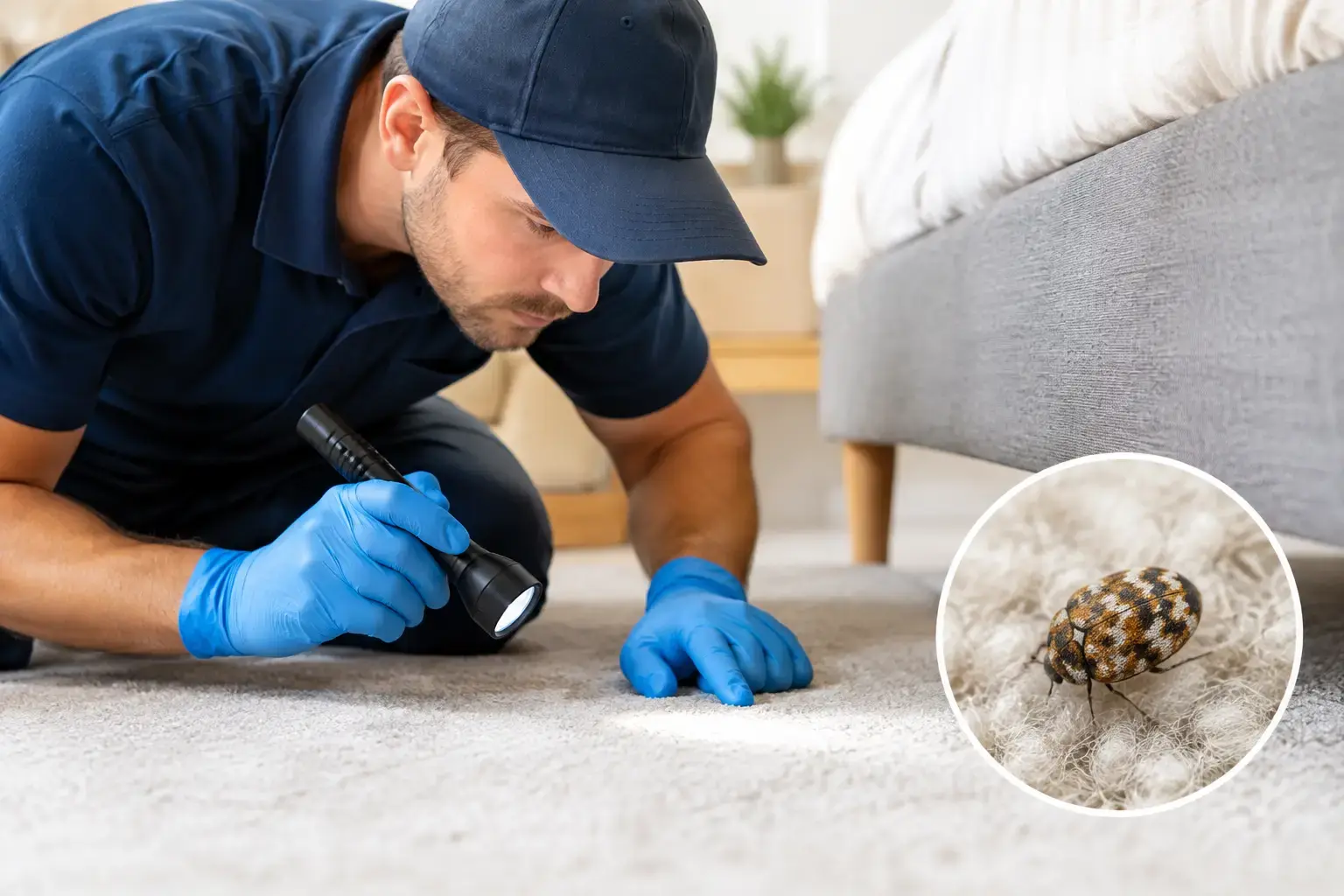
Carpet beetles rarely announce themselves with a large, obvious infestation. More often, the first clue is a small patch of damaged fabric, a shed larval skin beneath a radiator or tiny beetles gathering near a window. Knowing the top signs of carpet beetles helps you act before they spread through wardrobes, carpets, stored textiles and soft furnishings.
Despite their name, carpet beetles do not only live in carpets. Their larvae feed on natural animal-based materials, which means wool, silk, leather, feathers, fur and some stored food products can all be at risk. A prompt, accurate identification is the difference between dealing with a small local problem and replacing valuable belongings.
What do carpet beetles look like?
Adult carpet beetles are small, rounded beetles, usually around 2-4mm long. Depending on the species, they may appear dark brown or black, or have a mottled pattern of brown, cream and white scales. Adults are often found on window sills because they are attracted to light. They may also enter properties from outside during warmer months.
The larvae are the damaging stage. They are small, brownish and covered in short bristles, which gives them a distinctly hairy or striped appearance. They are sometimes called woolly bears, although they should not be confused with caterpillars. Larvae avoid disturbance and light, so they are more likely to be found in quiet, undisturbed areas than in the middle of a busy room.
Top signs of carpet beetles to look for
Irregular damage to natural fabrics
Carpet beetle larvae do not leave the clean, consistent holes often associated with clothes moths. Instead, they tend to create irregular bare patches, thinning material and rough-edged holes. Damage may appear on wool carpets, rugs, blankets, curtains, upholstered furniture, cushions and clothing made from wool, silk or leather.
Check areas that are rarely moved or cleaned, including beneath furniture, along skirting boards, behind radiators and inside wardrobes. A carpet may look sound from above while larvae are feeding around its edges or underneath heavy furniture.
Shed larval skins
As larvae grow, they shed their skins several times. These dry, bristly skins are one of the clearest signs of an active or recent carpet beetle issue. They are usually found where larvae feed or hide, such as wardrobe corners, carpet edges, loft spaces, airing cupboards and beneath upholstered furniture.
It is easy to mistake these skins for general dust or debris, particularly in neglected areas. Look closely for small, oval, hairy-looking casings rather than loose fibres alone.
Small beetles at windows or near light sources
Seeing one adult beetle does not always mean there is an infestation indoors. Adult carpet beetles can fly in through open windows and doors. However, repeated sightings around window sills, light fittings or conservatories should not be ignored, especially if there are also signs of fabric damage or larvae elsewhere in the property.
Adults do not cause the damage, but their presence can indicate that eggs have been laid in a suitable food source. A female can lay eggs in hidden locations, allowing larvae to develop unnoticed for months.
Hairy larvae in quiet, hidden areas
Finding live larvae is a strong indication that action is required. They may be seen moving slowly along carpet edges, inside drawers, beneath beds or around pet bedding. Because they feed on lint, hair, dead insects and natural fibres, areas where dust and debris collect can provide an ideal food source.
Properties with wool carpets, taxidermy, feather-filled items, stored blankets or rarely used rooms can be particularly vulnerable. Empty properties, rental homes between tenancies and commercial premises with stock storage also need careful inspection, as long periods without disturbance allow larvae to develop.
Damage to stored clothing and textiles
Carpet beetles often target items that have been stored away for long periods. Seasonal clothing, boxed blankets, spare bedding, vintage garments and items kept in lofts or under-bed storage are common locations. Clothing that has been worn but not cleaned before storage can be more attractive because skin cells, hair and food residues add to the available food source.
Inspect seams, folds and the base of storage boxes as well as the fabric itself. Larvae can remain hidden in these protected areas while causing gradual damage that may not be discovered until the item is needed again.
Unexplained skin irritation
Carpet beetles do not bite people. However, the hairs on larvae and shed skins can cause irritation in some individuals, especially where they come into contact with bedding, clothing or upholstered furniture. This may present as an itchy rash or small raised bumps.
Skin irritation alone is not enough to confirm carpet beetles, as it has many possible causes. But when it occurs alongside larval skins, fabric damage or beetle sightings, it supports the need for a thorough inspection.
Carpet beetles or clothes moths?
Both pests can damage natural fabrics, but the evidence they leave is different. Clothes moth larvae may leave webbing, silken tubes or thread-like material around damaged textiles. Carpet beetle larvae do not create webbing. Instead, you are more likely to find their bristly shed skins and see damage in dusty, undisturbed areas where lint, pet hair and dead insects have accumulated.
Correct identification matters because treatment needs to address the source of the infestation, not simply the visible insects. Treating for the wrong pest can waste time and allow damage to continue.
Where carpet beetle infestations start
An infestation can begin when adult beetles enter from outdoors, but the indoor conditions determine whether larvae thrive. Bird nests in roof spaces, dead insects in wall voids, pet bedding, wool insulation, accumulated debris and forgotten natural-fibre items can all provide a food source.
In some cases, the source is not in the affected room at all. Larvae may be developing in a loft, beneath floorboards, inside a chimney breast or within a void where old nesting material is present. This is why simply spraying a visible area is rarely a reliable solution.
For landlords, managing agents and commercial operators, a carpet beetle problem can also become a property-condition issue. Affected furnished lets, care environments, retail stockrooms and hospitality premises need a measured response that protects contents while reducing disruption.
What to do if you spot the signs
Start by vacuuming thoroughly, paying close attention to carpet edges, under furniture, wardrobes, drawers and upholstered items. Empty the vacuum outside immediately afterwards, as eggs and larvae may survive in the collected debris. Wash suitable affected fabrics at the highest temperature recommended on their care label, or arrange professional cleaning for delicate or valuable items.
Reduce potential food sources by removing lint, hair, dead insects and unused natural-fibre materials from storage areas. Check pet bedding regularly and avoid storing unwashed clothing for extended periods. Vacuuming is useful, but it may not reach larvae or eggs hidden in gaps, voids and inaccessible areas.
Avoid relying on a shop-bought aerosol as the whole solution. These products may kill exposed insects but usually do not deal with eggs, hidden larvae or the original source. They can also be unsuitable for use around certain fabrics, pets, children or sensitive environments.
When professional carpet beetle treatment is needed
Professional help is advisable when you have found larvae, shed skins, repeated adult beetle sightings or ongoing damage to fabrics. It is also the right step where the source cannot be identified, infestation levels appear widespread or valuable stock and furnishings are at risk.
A proper survey should establish the extent of activity, likely entry points, harbourage areas and the materials being attacked. Treatment can then be tailored to the property, with advice on preparation, laundering, proofing and prevention. The aim is not just to remove visible insects, but to break the breeding cycle and prevent recurrence.
AZ Environmental Service Pest Control provides discreet, targeted pest control for homes and businesses across Stockport and the surrounding area. If you are seeing the top signs of carpet beetles, early action will protect more than your carpet - it can prevent lasting damage to clothing, furnishings and stored belongings.