

Blog
Top Signs of Bedbugs You Shouldn’t Ignore
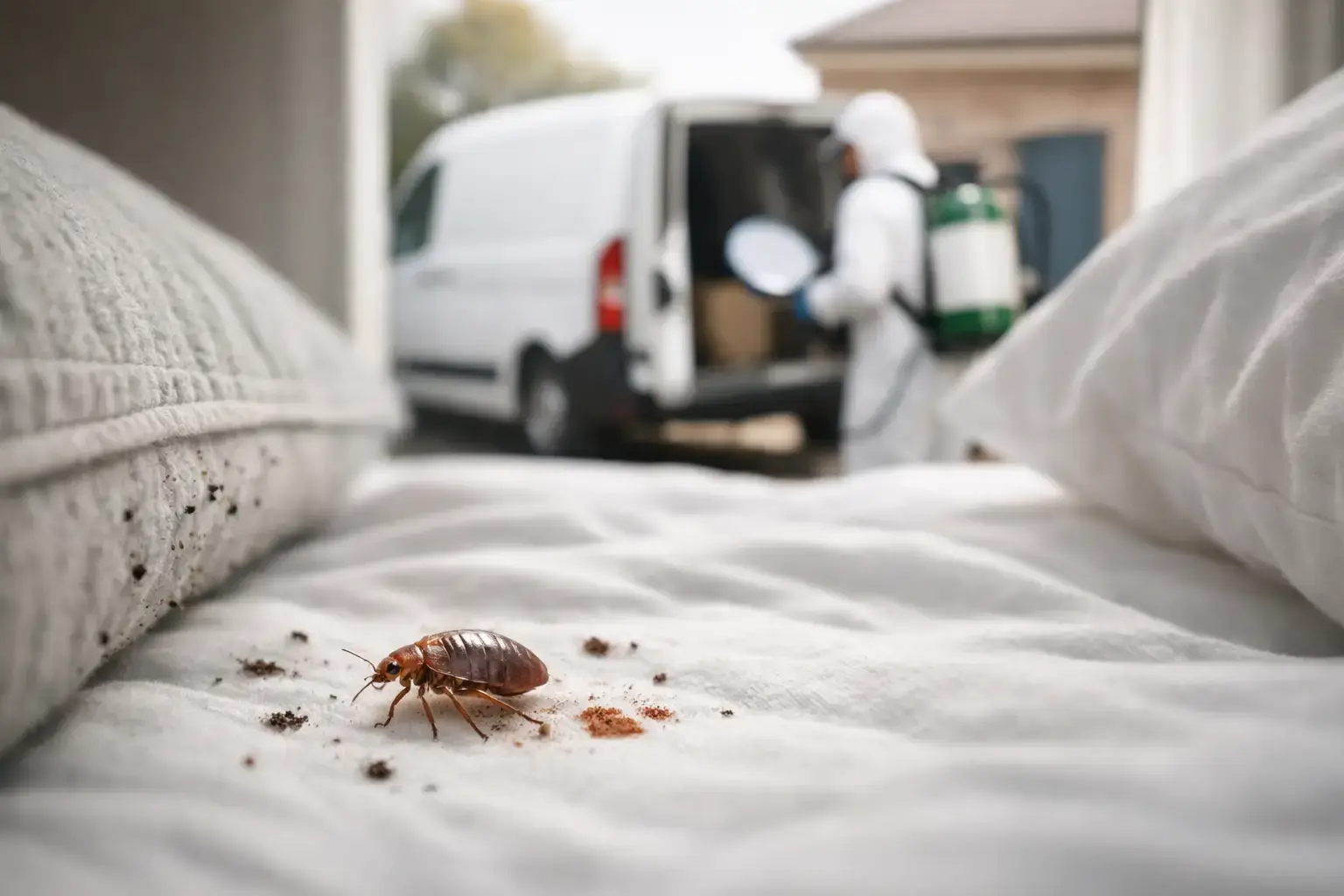
You usually do not see bedbugs first. You notice something is off. Fresh bites after sleep. Tiny dark marks on the sheets. A room that suddenly makes you uneasy at night. The top signs of bedbugs are often subtle in the early stages, which is exactly why infestations are missed until they become harder to control.
Bedbugs are expert hiders. They do not care whether a property is spotless or cluttered, domestic or commercial. They are drawn to people, warmth and regular resting places. Once established, they spread through bedrooms, soft furnishings, luggage, shared walls and neighbouring rooms. Early identification matters because the longer the activity goes on, the more time they have to breed and disperse.
The top signs of bedbugs in a property
The clearest warning signs tend to appear around where people sleep or rest for long periods. That usually means mattresses, bed frames, headboards, sofas and upholstered chairs. Bedbugs stay close to a food source, so the first evidence is often found within a metre or two of where someone spends the night.
One of the most common signs is black spotting on bedding, mattresses or furniture. These marks are often mistaken for general dirt or pen marks, but they are actually bedbug droppings. They tend to appear along seams, around mattress piping, on the slats of a bed, behind the headboard and in the joints of furniture. If the spots smear reddish-brown when wiped with a damp cloth, that adds to the suspicion.
Another strong indicator is the presence of shed skins. Bedbugs moult as they grow, leaving behind pale brown or translucent outer casings. These are often found tucked into cracks, mattress edges or under furniture. Eggs may also be visible in heavier infestations, although they are much harder to spot because they are tiny, pale and usually hidden deep in harbourage areas.
A sweet, unpleasant smell can develop when activity is more advanced. Not every infestation produces a noticeable odour, so the absence of a smell does not rule anything out. But where there is a strong, musty scent in a bedroom or sleeping area with no obvious cause, it is worth taking seriously.
Bite patterns can help, but they do not prove it
People often search for bedbugs after waking with bites, and that makes sense. Bites are one of the first things people notice. The difficulty is that bites alone are not reliable proof. Skin reactions vary from person to person. One individual may react strongly, while another in the same bed shows no marks at all.
Bedbug bites often appear as small, itchy red welts on exposed skin such as arms, shoulders, back, neck or legs. They may appear in lines or clusters, especially where several bugs have fed in the same area. Even so, similar marks can be caused by other insects, skin conditions or allergic reactions.
That is why we always advise looking for physical evidence as well as bites. If there are unexplained bite marks together with black spotting, shed skins or signs around the bed frame, the picture becomes much clearer. If there are only bites and no other evidence, it needs a more careful inspection before assumptions are made.
Blood smears on sheets and pillowcases
Small blood marks on bedding are another common sign. These can happen when a bug is accidentally crushed after feeding, or when a bite continues to bleed slightly during sleep. A single mark does not mean an infestation, but repeated spotting on sheets, especially alongside other signs, should not be ignored.
Activity around bed frames and headboards
Mattresses get the attention, but bed frames often tell the real story. Bedbugs favour cracks, screw holes, joints and tight spaces where they can stay hidden during the day. Wooden frames, divan bases and upholstered headboards all offer ideal harbourage. In many cases, the heaviest activity is not on the sleeping surface itself but in the structure supporting it.
Where bedbugs hide besides the bed
Despite the name, bedbugs do not stay only in beds. In a domestic setting they are commonly found in bedside tables, behind skirting boards, under loose wallpaper, inside plug socket areas, in curtain seams and inside sofas or armchairs. In shared buildings and commercial environments, they may also move between rooms through wall voids, service points and adjoining furniture.
This matters because people often carry out a quick mattress check, find nothing obvious and assume the problem must be something else. Bedbugs can remain out of sight in surprisingly small harbourages. A light infestation may leave very little visible evidence unless the inspection is thorough.
In flats, HMOs, hotels, staff accommodation and care environments, there is also the question of spread. What starts in one room does not always stay there. If there has been recent travel, tenant turnover, second-hand furniture brought in, or reports from neighbouring units, the risk goes up.
Why early signs are often missed
Bedbugs are largely nocturnal and avoid light. They flatten themselves into narrow gaps and stay hidden between feeds. If numbers are low, you may not see a live insect at all. That does not mean the problem is minor. It only means it has not yet become obvious.
Another reason infestations are missed is misidentification. Black spotting is dismissed as general staining. Bites are blamed on mosquitoes. Shed skins are mistaken for ordinary debris. In some cases, people wash bedding repeatedly and vacuum the area, which removes some evidence without addressing the infestation itself.
There is also a reluctance factor. Bedbugs carry a stigma that they do not deserve. They are not linked to poor hygiene and they can turn up in very well-kept homes and professionally managed premises. Delaying action out of embarrassment usually gives them more time to spread.
When the top signs of bedbugs mean you need professional help
If you have found more than one indicator, such as bites plus spotting or spotting plus shed skins, it is time to act quickly. The same applies if you have seen a live bedbug, especially around a bed frame, mattress seam or upholstered furniture. DIY sprays and shop-bought foggers often make matters worse by scattering the insects deeper into the property without eliminating the source.
Professional treatment is usually the right route because successful control depends on accurate identification, a proper survey and treatment of all affected harbourages, not just the areas people can see. Bedbugs are persistent. Missing one room, one item of furniture or one crack in the frame can allow the infestation to continue.
For landlords and commercial operators, speed matters even more. Bedbug reports can affect tenant confidence, guest satisfaction, staff welfare and business reputation. A discreet, methodical response is the safest option, particularly where there are multiple rooms, frequent occupancy changes or compliance concerns.
What to do if you suspect bedbugs
Start by reducing movement of bedding, clothing and soft items between rooms. Do not move mattresses or furniture into hallways or shared spaces unless advised to do so. That can spread activity. Strip the bed carefully, bag affected linen, and wash items on a hot cycle if suitable for the fabric. Vacuuming can help remove some insects and debris, but it is not a complete treatment.
Most importantly, avoid guessing. If the signs point towards bedbugs, a proper inspection will confirm whether that is what you are dealing with and how far it has spread. In areas such as Stockport and across surrounding parts of Greater Manchester and Cheshire, fast local attendance can make the difference between a contained issue and a wider infestation.
The right response is not panic. It is evidence, action and a treatment plan that deals with the problem at source. If something in your bedroom or property does not look right, trust that instinct and get it checked before a small warning sign becomes a much bigger job.