

Blog
Sustainable Pest Control Trends That Work
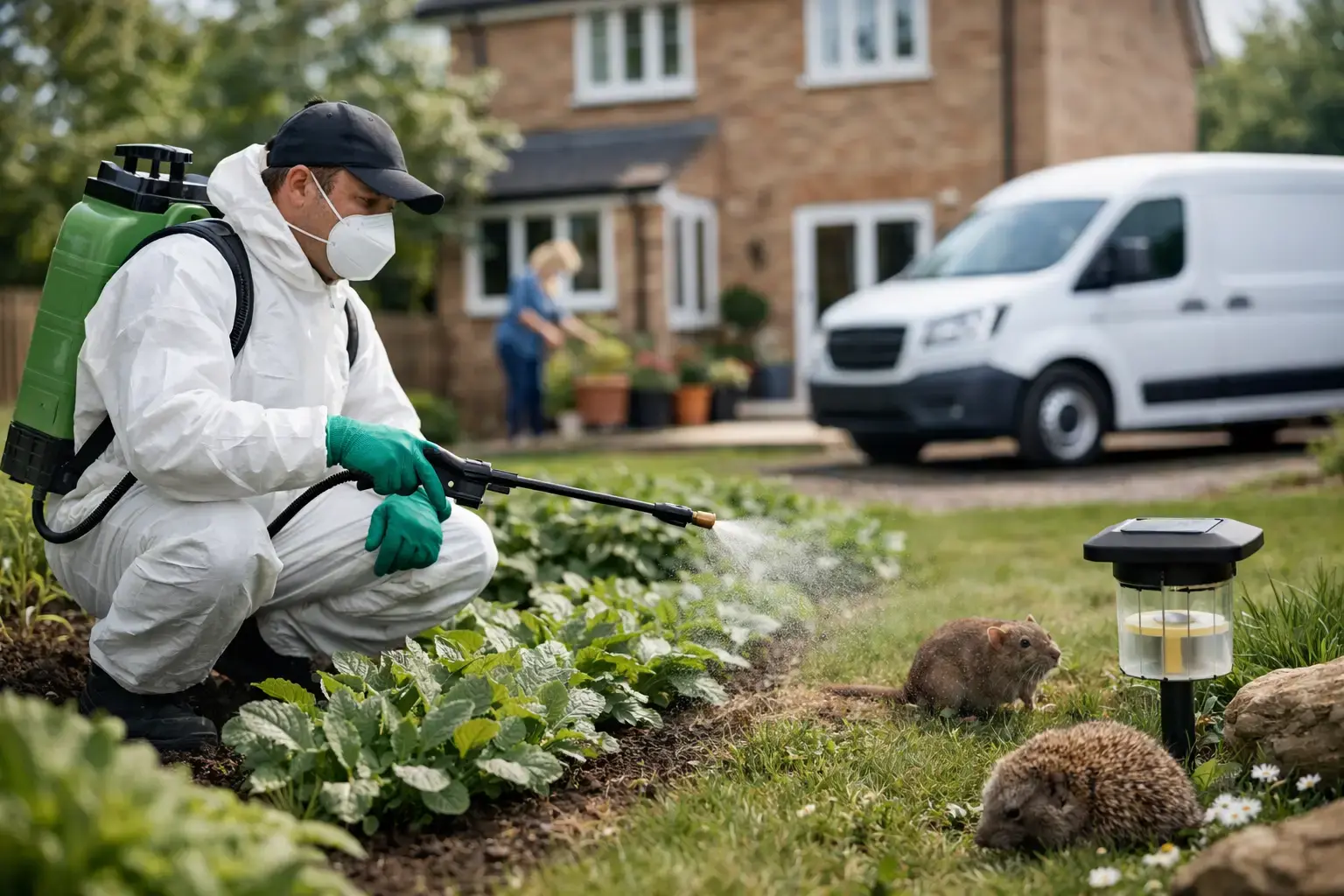
A wasp nest in a loft, rats under decking, pigeons damaging a commercial unit - most people want the problem sorted quickly, but they also want to know the fix is sensible, safe and built to last. That is exactly why sustainable pest control trends are getting more attention from homeowners, landlords and businesses. The focus has shifted from repeated blanket treatments to smarter prevention, accurate identification and targeted control that reduces unnecessary chemical use.
For customers, this is not about choosing between effectiveness and environmental responsibility. Good pest control should deliver both. If a treatment works in the short term but leaves the causes of the infestation untouched, the problem often returns. A sustainable approach aims to solve the issue properly, with less waste, less disruption and better long-term control.
Why sustainable pest control trends matter now
Pest activity has not stood still. Milder winters, denser urban living, food waste pressures and changes in building use all affect how infestations develop. At the same time, property owners are under more pressure to show they are managing risk responsibly, especially in commercial settings where hygiene, compliance and reputation all matter.
This is where sustainable pest control trends are making a real difference. The industry is moving away from routine over-application and towards evidence-based decisions. That means understanding which pest is present, why it is there, how it is gaining access and what level of intervention is actually needed.
For a homeowner, that might mean proofing entry points and removing attractants rather than relying on repeated call-outs. For a restaurant, warehouse or care setting, it may involve continuous monitoring, detailed reporting and a treatment plan that protects operations without creating unnecessary risk.
Prevention is taking priority over repeated treatment
One of the clearest changes in pest management is the move towards prevention-first strategies. This is not new in principle, but it is being applied far more seriously. Instead of treating the same issue again and again, pest professionals are focusing on what allows pests to settle in the first place.
In practical terms, that means proofing gaps around pipework, repairing damaged air bricks, improving waste storage, managing vegetation, adjusting cleaning routines and addressing moisture issues. These steps are not always as visible as a treatment visit, but they often have a bigger impact over time.
There is a trade-off here. Prevention work can require more inspection time and, in some cases, upfront investment. Some customers still want an immediate treatment and nothing more. But where recurring infestations are involved, prevention is usually the more cost-effective route. It reduces repeat activity and cuts down the need for heavier intervention later.
Smarter monitoring is replacing guesswork
Another major development is the use of digital and intelligent monitoring systems. In the past, many pest programmes relied heavily on periodic checks and visible signs. That still has value, but modern systems allow activity to be tracked more precisely and responded to faster.
For commercial premises in particular, this can be a significant improvement. Connected monitoring devices help identify where activity is happening, when it starts and whether control measures are working. That supports a more targeted response instead of broad treatment across an entire site.
It also improves record keeping. For businesses facing audits or internal compliance checks, accurate monitoring data is no longer a nice extra. It is part of responsible site management. For domestic customers, the same principle matters on a smaller scale. Better monitoring means fewer assumptions, better diagnosis and less disruption.
Targeted treatments are preferred to broad chemical use
The phrase sustainable pest control is sometimes misunderstood as meaning no treatment at all. That is not realistic. If a property has an active infestation, action is needed. The difference is that modern best practice favours targeted treatment based on inspection findings, pest biology and site conditions.
That may mean using a specific product in a specific area, at the right time, rather than treating every possible location as a precaution. It may also mean choosing non-chemical measures first where they are suitable, or combining methods so that treatment pressure is reduced overall.
This matters because unnecessary chemical use is rarely the best answer. It can be wasteful, less precise and, in some cases, encourage poor habits in pest management. A carefully planned treatment programme is usually more effective than a heavy-handed one.
Wildlife-conscious methods are becoming standard practice
A more sustainable approach also means being clear about the difference between pest control and harm for its own sake. Not every animal on or around a property should be treated in the same way. The right response depends on the species, the legal position and the actual risk being created.
Bird control is a good example. Where pigeons are creating fouling, health risks or damage to a building, action may be necessary. But the solution should be lawful, proportionate and focused on deterrence, proofing and site management. The same principle applies more widely across pest control. Identification comes first, then the most appropriate response.
This is where qualified advice matters. A rushed or untrained approach can create bigger problems, including ineffective treatments, repeat infestations or action that is not compliant with current regulations.
Pest proofing is no longer an afterthought
For years, proofing was often treated as something separate from pest control. Now it is increasingly seen as part of the job. That is a positive shift because proofing is one of the most practical ways to reduce recurring issues.
Rodents do not need much of a gap to gain entry. Insects exploit tiny cracks, voids and service penetrations. Birds return to reliable roosting spots if access remains open. A treatment may remove current activity, but if the route in is still there, the property remains vulnerable.
Good proofing is not about blocking every hole in sight. It needs to be done properly, with an understanding of pest behaviour, airflow, drainage and the building itself. Poor proofing can simply move the problem elsewhere or interfere with normal building function. Done well, it supports a long-term result.
Commercial clients are demanding lower-disruption solutions
Many of the strongest sustainable pest control trends are being driven by commercial expectations. Businesses need pest management that is effective but also discreet, auditable and compatible with day-to-day operations. A heavy treatment approach can create problems of its own, especially in food handling areas, hospitality settings, offices, healthcare premises and multi-occupancy sites.
That is why lower-disruption solutions are becoming more common. Better survey work, more precise treatment plans, discreet attendance and ongoing prevention all help businesses stay protected without unnecessary operational impact.
This approach also benefits landlords and managing agents. In flats, HMOs and mixed-use buildings, the right answer often involves coordination across access points, waste areas, structural defects and tenant behaviour. Sustainable control in these settings is rarely about a single visit. It is about solving the conditions that keep feeding the issue.
Technology is improving surveys and access planning
One area that often gets overlooked is inspection technology. Better surveys lead to better decisions, and that supports more sustainable outcomes. Rooflines, upper elevations, solar panel areas and other difficult access points can hide entry routes, nesting sites and structural faults that standard ground inspections miss.
Using modern survey methods can reduce guesswork and help plan the correct intervention from the start. That matters because every failed attempt adds cost, delay and disruption. It is far better to diagnose properly at the beginning than to keep repeating measures that do not address the source of the problem.
For customers, the benefit is simple. The more accurate the survey, the more likely the treatment plan is to work first time.
What these trends mean for property owners
For most customers, the practical message is straightforward. If you are choosing a pest control provider, ask how they inspect, how they identify the root cause and what they do to prevent the problem returning. A sustainable service should not mean a softer service. It should mean a more precise one.
That includes honest advice. Sometimes a minor issue can be managed with proofing and hygiene changes. Sometimes an established infestation needs direct treatment without delay. It depends on the pest, the property and the level of risk. The important point is that the response should match the reality on site, not a one-size-fits-all process.
Across Stockport and the wider North West, this shift is especially relevant for older housing stock, busy commercial premises and properties with recurring access issues. Sustainable pest control trends are not just industry language. They reflect a better way of protecting buildings, occupants and day-to-day operations.
The best pest control has always been about solving the problem properly. Now the methods are getting sharper, cleaner and more accountable - which is exactly what customers should expect.