

Blog
Stored Product Infestation Signs and Control
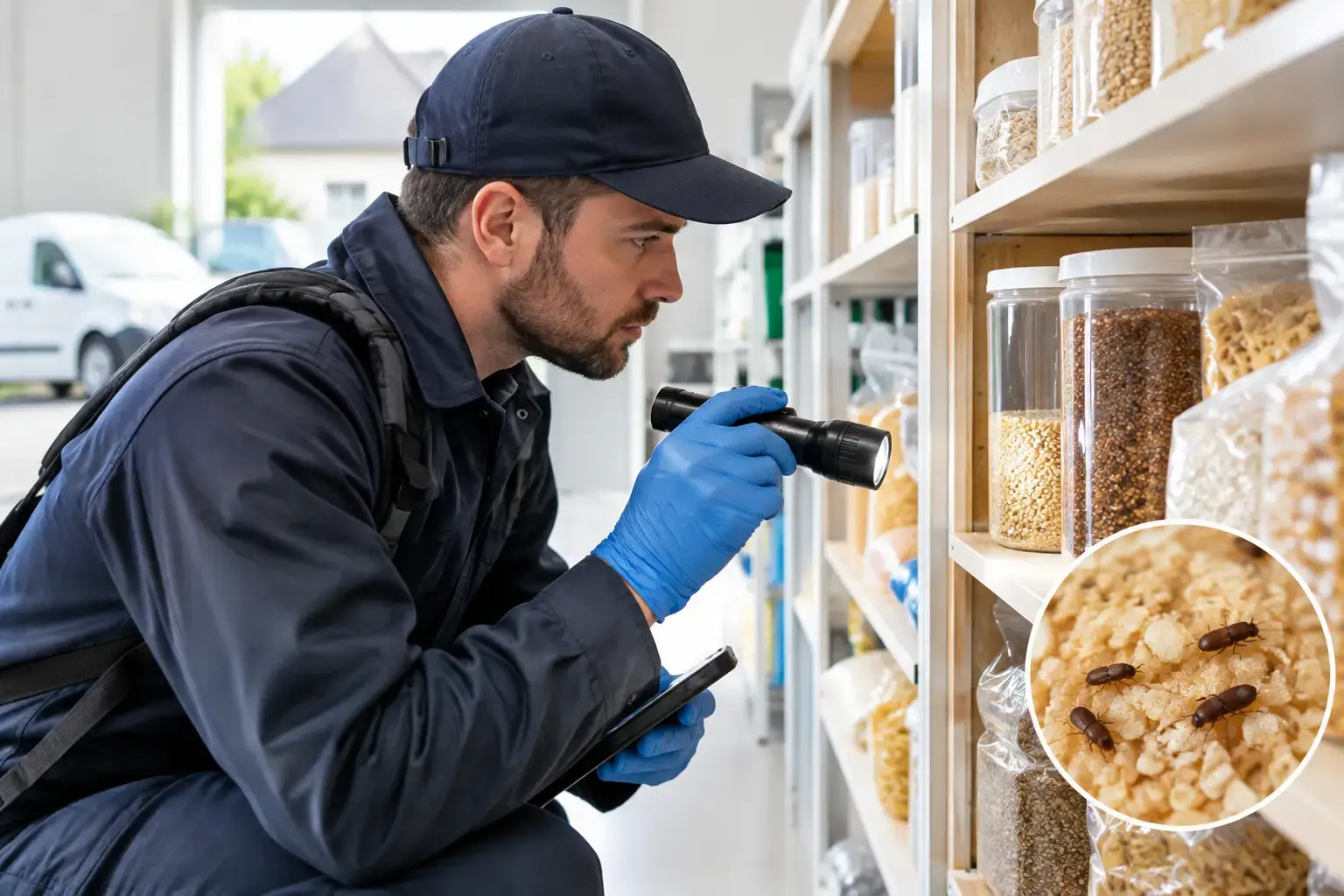
A packet of flour with a pinhole in the seam, webbing around cereal flakes or small beetles crawling near a dry-food cupboard can point to a stored product infestation. These pests are easy to overlook at first, but they can spread through a kitchen, warehouse, café storeroom or retail stock area quickly when there is a reliable food source.
The key is not simply killing the insects that are visible. Effective control means finding the source, removing contaminated material, treating the affected area where appropriate and preventing pests from returning. For homes, that protects food and avoids a persistent nuisance. For commercial premises, it helps protect hygiene standards, stock, reputation and day-to-day operations.
What is a stored product infestation?
Stored product pests are insects that feed on dried food, ingredients and organic goods kept in cupboards, pantries, stores and production areas. Common sources include flour, rice, pasta, cereals, nuts, dried fruit, spices, pet food, bird seed, animal feed and baking ingredients. Depending on the species, pests may feed on whole grains, damaged goods, powders or residues that have built up in cracks and around shelving.
The term covers a range of insects, including flour beetles, grain beetles, saw-toothed grain beetles, weevils and pantry moths. Their appearance and habits differ, which is why accurate identification matters. A moth problem can require a different inspection approach from beetles found in a bag of rice or beneath shelving in a food store.
A property does not need to be unclean for this problem to occur. Pests can arrive in an infested packet, bag or bulk delivery, then breed unnoticed. However, food spillages, poorly sealed containers, long-held stock and hard-to-clean storage areas give them more opportunity to establish.
Signs of stored product infestation
The most obvious sign is live insect activity in or around dry goods. Adults may be seen inside packets, on shelves, near window sills or at the edges of cupboards. Pantry moths may fly around food storage areas, particularly in the evening, while beetles are more likely to be found crawling close to their food source.
Check packets carefully for small holes, damaged seams and insects trapped beneath labels or folds. In cereals, flour and similar products, you may see webbing, clumping, fine dust, shed skins or larvae. Food may have an unusual smell or appear to have been disturbed, although some infestations are not apparent until a packet is emptied.
In commercial settings, the signs are often less dramatic but more consequential. Pest sightings around ingredient storage, repeated activity in one location, damaged sacks, larvae in stock rotation areas or insects caught in monitoring devices all require investigation. One sighting may indicate a local issue, but it may also be the first visible evidence of activity deeper within stored stock or structural voids.
Why simply throwing one packet away may not work
Discarding an infested item is necessary, but it does not always solve the wider problem. Eggs, larvae or adults can be present in nearby products, behind shelving, beneath cupboard liners or in small food residues. If the original source was a bulk bag, a forgotten packet or spilled ingredients beneath a unit, pests can continue breeding after the visible item has gone.
This is particularly common where dry food is decanted into containers without checking it first. A container may be clean, but placing infested ingredients inside can restart the problem. Reusing cardboard packaging or moving affected goods to another cupboard can spread pests further through the property.
Commercial premises face an additional risk: stock movement. Deliveries, returns, packaging stores and ingredient transfer points can carry pests from one area to another. A quick spray without a source investigation may reduce visible activity temporarily, but it will not provide dependable control if infested stock remains on site.
How to deal with a stored product infestation
Start by stopping the spread. Avoid moving suspect food around the building and inspect all opened and unopened dry goods stored nearby. Check best-before dates, forgotten packets at the back of cupboards and products stored in garages, utility rooms or pet-food areas. In a business, isolate the affected batch or location in line with site procedures.
Dispose of confirmed infested food in a sealed bag and take it outside promptly. Do not put contaminated products into an indoor bin and leave them there. Then empty the affected cupboard, drawer or storage unit completely. Vacuum joints, corners, shelf supports and gaps around units, then clean thoroughly to remove food dust and residues. Empty the vacuum outside afterwards.
Once the area is dry, only return food that has been checked and is free from signs of activity. Transfer suitable dry goods into clean, airtight containers made from glass, metal or durable plastic. This does not guarantee that pests will never be introduced, but it limits access, makes inspection easier and prevents insects moving freely between packets.
For a small, isolated household issue, these measures may be sufficient. If activity continues, pests are appearing in several areas or the source cannot be identified, a professional survey is the sensible next step. Repeated sightings generally mean there is still food available or that insects are breeding in an overlooked location.
Professional inspection and treatment
A proper stored product pest inspection focuses on more than the insects in view. A technician will assess the pest type, likely source, extent of activity, vulnerable stock and conditions allowing the infestation to persist. In a home, this may include kitchen units, utility areas, pet food stores and adjacent rooms. At a commercial site, it can extend to delivery points, racking, ingredients, packaging, waste areas and production or staff facilities.
Treatment is tailored to the findings. Source removal and intensive cleaning are often central to the work. Where necessary and suitable for the environment, targeted pest control treatments may be used in non-food areas, cracks, voids and other appropriate locations. Food safety, site procedures and the nature of the premises must guide every decision, particularly in kitchens, food manufacturing, hospitality and retail environments.
Monitoring can also be valuable. It helps identify ongoing activity, supports species identification and shows whether control measures are working. For businesses, documented inspections and monitoring provide useful evidence that risks are being managed rather than ignored.
At AZ Environmental Service Pest Control, we investigate the cause as well as treating the visible problem. That approach is vital when an infestation keeps returning after cupboards have been cleaned or when a commercial site needs a discreet, planned response with minimal disruption.
Prevention that stands up to everyday use
Prevention is most effective when it fits the way a property actually operates. At home, avoid overbuying dry food that will sit untouched for months. Use older products first, clean spills promptly and inspect packets before placing them in cupboards. Keep pet food and bird seed in sealed containers too, as these are often missed during a kitchen clear-out.
For landlords and property managers, clear communication is useful where tenants report insects in food cupboards. The immediate priority is identifying whether the issue is localised to stored goods or whether it needs a wider property inspection. Damp, gaps and general maintenance problems may not cause stored product pests directly, but they can make cupboards harder to clean and pest activity harder to detect.
Commercial prevention requires consistent stock control. First-in, first-out rotation, delivery checks, clean storage racking, prompt removal of spillages and suitable container management all reduce risk. Staff should know what early signs look like and who to report them to. Pest activity is far easier to control when it is reported at the first sign rather than after stock has been moved across several areas.
When to call for help
Arrange a professional inspection if you cannot find the source, see insects after cleaning, find activity in multiple food types or have moths and beetles appearing repeatedly. Commercial operators should act promptly after any suspected activity in food, feed or ingredient storage, especially where customer safety, audit requirements or stock losses are involved.
Stored product pests are rarely solved by guesswork. A careful inspection, decisive source removal and practical prevention give you the best chance of clearing the issue properly. If you are seeing repeat activity in a Stockport home or business, dealing with it early can prevent a small food-cupboard problem becoming a wider infestation.