

Blog
How to Stop Squirrels Entering Roof Spaces
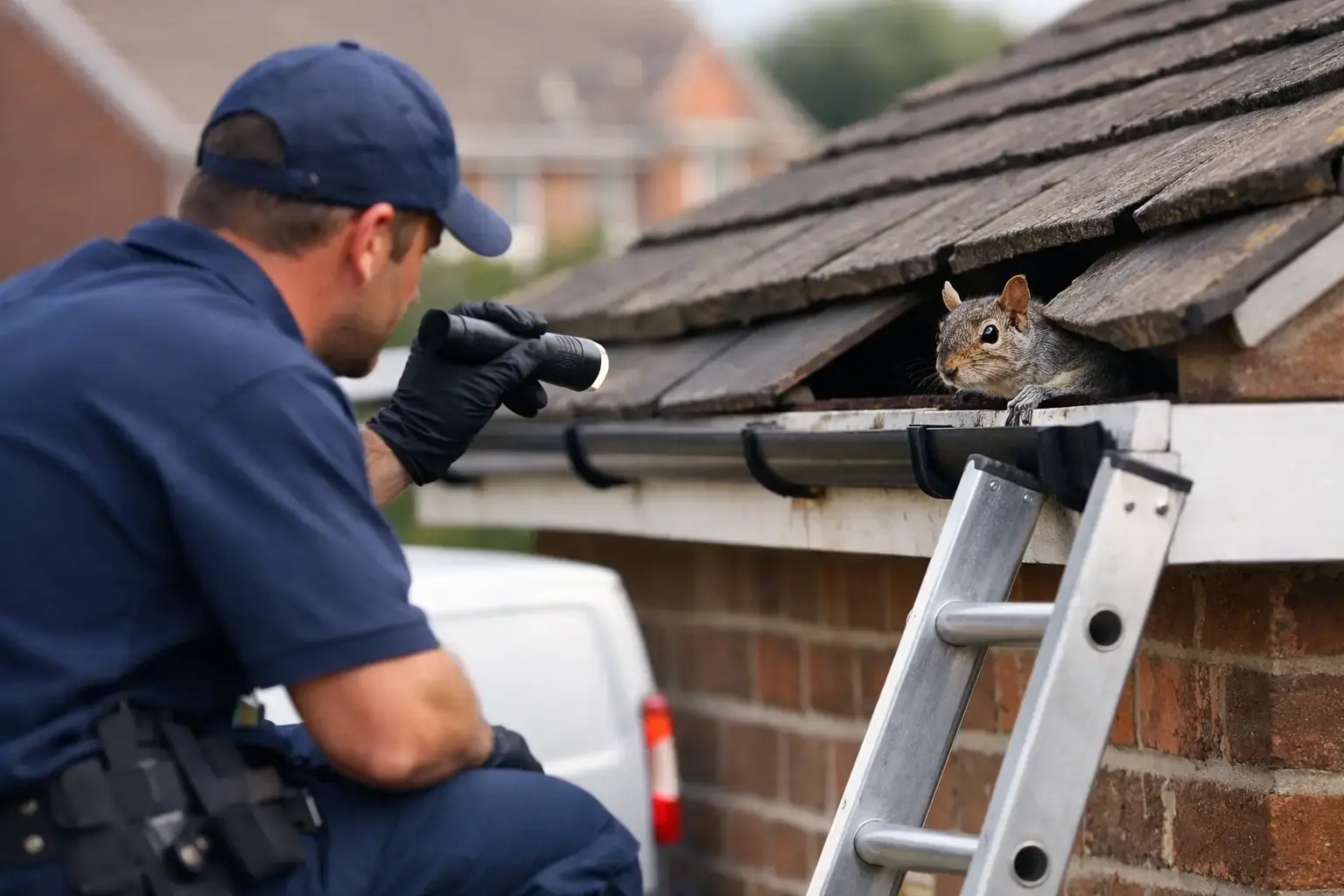
You usually hear squirrels in the roof before you see them. Scratching at first light, quick movement above the ceiling, and the odd thump across the loft are all classic signs. If you need to stop squirrels entering roof spaces, speed matters. A small access point can turn into torn insulation, chewed cables and a much larger repair bill if it is left alone.
Squirrels are agile, persistent and surprisingly destructive once they get into a property. In many cases, the real issue is not just the animal itself but the weakness in the building that allowed it in. Effective control means dealing with both. Remove the immediate problem, then make sure the roof cannot be used again.
Why squirrels target roof spaces
Roof spaces offer exactly what squirrels want - shelter, warmth and security from predators. During colder weather and breeding periods, lofts become especially attractive. A quiet domestic roof void gives them somewhere dry to nest and store food, and once one squirrel has found a route in, others may follow the same path.
In parts of Stockport and the wider North West, mature trees, gardens and older housing stock often create ideal conditions. Branches close to rooflines act like bridges. Ageing soffits, loose tiles and gaps at the eaves make access easier than most property owners realise.
The damage is rarely limited to noise. Squirrels can chew timber, pipe lagging, insulation and electrical wiring. They also contaminate loft spaces with urine and droppings. That is why any plan to stop squirrels entering roof areas needs to go beyond simple deterrents.
The signs you have a squirrel problem
The timing of the noise is often the first clue. Squirrels are active during the day, especially early morning and late afternoon. If the sound is heavy, fast and intermittent rather than constant, squirrels are more likely than mice or rats.
You may also notice disturbed insulation, nesting material such as leaves and shredded loft lining, or visible gnaw marks around timber and access points. Outside, look for damage around fascia boards, soffits, vents and tile edges. In some cases, you can see greasy marks or worn entry routes where the same gap has been used repeatedly.
A strong inspection matters here because misidentification leads to the wrong treatment. Birds, rats and squirrels can all cause loft noise, but the proofing approach is not always the same.
How to stop squirrels entering roof voids
The most reliable way to stop squirrels entering roof voids is to identify every active and potential access point, remove the squirrel issue properly, and then proof the structure with durable materials. Miss one stage and the problem often returns.
Start with a proper inspection
Many access points are not obvious from ground level. Gaps under tiles, lifted leadwork, broken vents, weak soffits and uncapped roof junctions can all be used. Squirrels do not need a large opening, especially if timber around the gap can be enlarged by gnawing.
This is where a close inspection of the roofline is essential. On taller or awkward properties, professional surveys can save time and prevent guesswork. The key is to confirm exactly where squirrels are getting in before any proofing work begins.
Do not seal the roof too early
This is one of the most common mistakes. If you block an entry hole while squirrels are still inside, they may force their way into other parts of the property or die in the void. If there are young present, the situation becomes more complicated and needs to be handled with care.
The right timing depends on occupancy, breeding activity and the layout of the building. In some cases, one-way exit methods and controlled exclusion are appropriate. In others, a more managed approach is needed to avoid welfare issues and prevent re-entry.
Use proofing materials that last
Expanding foam, plastic mesh and quick patch repairs are rarely enough. Squirrels can chew through weak materials with ease. Long-term prevention usually involves galvanised steel mesh, secure fixings and repairs to the roof fabric itself.
If a soffit is rotten, it needs replacing rather than covering. If tiles have slipped, they need to be reset. If vents are vulnerable, they should be protected without restricting airflow. Good proofing work should look like part of the building, not a temporary barrier added in a hurry.
What household deterrents can and cannot do
People often try scent repellents, ultrasonic devices or bright lights in the loft. These methods may create short-term disturbance, but they do not solve the root problem if access remains open. A determined squirrel looking for shelter will often ignore deterrents once it has established a nesting site.
Pruning back branches can help reduce access. It is sensible to cut overhanging limbs away from the roof where possible, and to keep ivy growth under control if it is helping squirrels climb. Bins should be kept shut, and bird food should not be left where it encourages repeated visits close to the property.
These steps are useful, but they work best as part of a wider prevention plan. On their own, they are rarely enough to stop an active roof infestation.
Why DIY work often fails
The difficulty with squirrel control is that the visible gap is not always the only gap. A homeowner may patch one corner of the eaves, only for squirrels to reappear a week later through a higher tile junction or another weak point along the roofline.
There is also the safety issue. Working at height carries obvious risk, and roof-level proofing needs to be secure. Poorly fitted mesh or makeshift repairs can come loose, damage the property further or leave an animal trapped inside.
For landlords and commercial operators, there is an added pressure. Delayed action can lead to tenant complaints, electrical hazards and more expensive repairs later. A fast, professional response is often the most cost-effective route, especially where repeated failed attempts have already wasted time.
When to bring in a pest control specialist
If you can hear activity in the loft, have found visible damage, or have already tried basic proofing without success, it is time to get the issue assessed properly. The aim is not just removal. It is to stop recurrence.
A specialist will usually inspect the loft, roofline and surrounding environment, identify the entry route, assess the extent of damage and recommend the safest route to exclusion and proofing. In more complex cases, especially on commercial buildings or awkward domestic roofs, technology such as UAV surveys can help pinpoint defects without delay.
For properties in and around Stockport, where tree cover and mixed housing styles can make squirrel access more likely, local knowledge matters. A practical understanding of how these buildings fail at roof level often makes the difference between another temporary fix and a permanent result.
Preventing future squirrel access
Once the immediate issue is resolved, ongoing prevention is straightforward if it is done properly. Roofs should be checked periodically for slipped tiles, cracked soffits and worn junctions. Any new gap should be repaired quickly before wildlife turns it into an entrance.
Trees should be managed sensibly rather than aggressively. You do not need to strip the garden bare, but you do need to reduce direct routes onto the roof. Feeders placed too close to the house can also increase squirrel activity where you least want it.
For some properties, especially larger homes, rental stock and commercial premises, a preventative inspection schedule is worth considering. Catching defects early is always cheaper than dealing with established access and the internal damage that follows.
Stop squirrels entering roof problems before they escalate
The longer squirrels remain in a roof space, the harder and more expensive the problem becomes. Noise is only the first warning. Behind that, there may already be chewed wiring, damaged insulation and entry points getting worse every day.
If you want to stop squirrels entering roof spaces for good, the solution is simple in principle even if the work itself is technical: identify the access point, deal with the infestation correctly, and carry out proofing that can stand up to repeat pressure. Done properly, that gives you a quiet loft, a protected property and one less problem to think about.
If you are hearing activity overhead, act sooner rather than later. Roof pests rarely sort themselves out, but they can be resolved quickly when the right action is taken.