

Blog
Solar Panel Bird Proofing That Works
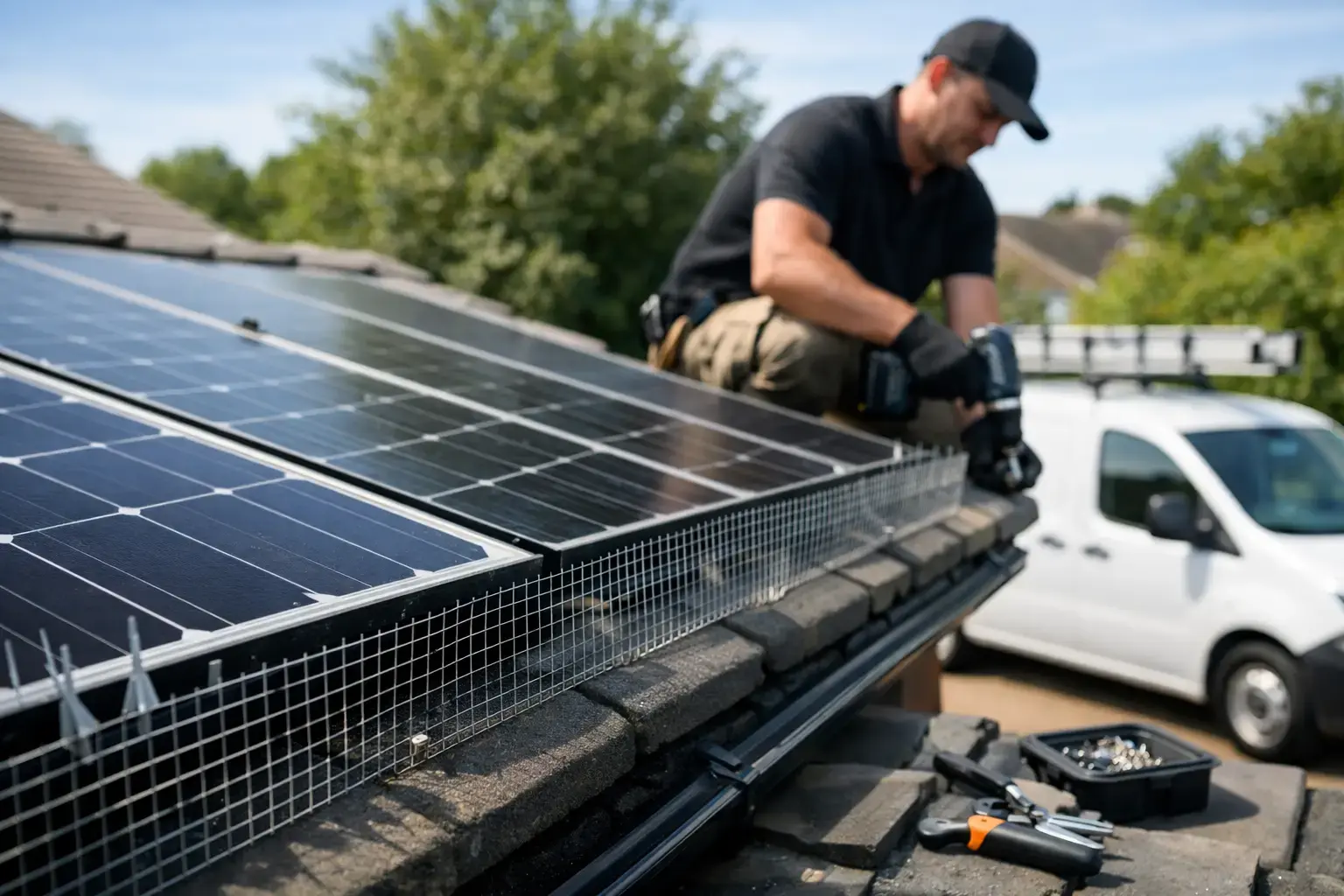
If you can hear scratching, cooing or fluttering from the roof, the problem is usually already established. Solar panel bird proofing is not a cosmetic extra. It is a practical way to stop pigeons and other birds nesting beneath panels, fouling the roof, damaging wiring and turning a quiet property into a recurring pest issue.
Once birds find shelter under a solar array, they tend to return. The space is warm, raised off the roof and protected from wind and rain, which makes it ideal for nesting. For homeowners, landlords and commercial sites, that can quickly lead to mess, blocked gutters, persistent noise and costly maintenance.
Why birds target solar panels
Solar panels create a sheltered void that birds can access from the roof edge. Pigeons are the most common issue, particularly in built-up areas, but smaller species may also investigate. The attraction is simple. The panels provide cover, the roof offers height and safety, and once nesting material builds up, the site becomes even more appealing.
This is where the problem moves beyond nuisance. Nest debris can build beneath the array and around the roofline. Bird droppings can stain surfaces and create hygiene concerns. In some cases, pecking and movement around cables may contribute to wear. Even when there is no direct panel damage, the build-up underneath can make future cleaning, inspection and repair work more difficult.
There is also a timing issue. During nesting season, legal and wildlife considerations matter. Some birds, nests and eggs are protected, so the right response depends on what is present and when it is found. A rushed approach can make the problem worse.
What effective solar panel bird proofing looks like
Good solar panel bird proofing does one thing very well. It closes off access beneath the panels without damaging the system, restricting ventilation or creating future maintenance problems.
In most cases, that means fitting purpose-made mesh around the perimeter of the solar array. The mesh is secured with panel-safe fixings designed for solar installations, rather than drilled into the panels themselves. This matters because poor fitting methods can affect warranties, create weak points or lead to corrosion over time.
The aim is not to trap birds in or to patch one visible gap while leaving others open. It is to create a full barrier around the vulnerable edges after the area has been properly checked and cleared. If nesting material remains under the panels, or if active bird activity is still present, simply covering the edges is not a proper solution.
The best installations are neat, durable and barely noticeable from ground level. They should also allow the panels to continue performing as intended. Bird proofing should protect the system, not interfere with it.
Signs you need solar panel bird proofing
Some properties show obvious signs. You may see pigeons repeatedly landing at the same roof section, carrying twigs or disappearing beneath the panels. You may also hear movement early in the morning or at dusk, when birds are most active.
Other signs are less obvious at first. Droppings on patios, driveways and walls below the roofline often point to regular roosting above. Nest material in gutters or around downpipes is another common clue. If your panels were installed some time ago and have open edges, it is worth checking before a minor issue becomes a larger one.
For landlords and managing agents, tenant reports of roof noise should not be dismissed as a one-off. The longer birds stay in place, the more established the nesting site becomes.
What to avoid
Not every fix sold as bird control is suitable for solar arrays. DIY netting, foam fillers and improvised barriers often fail because they are not designed for roof exposure or for the shape of the panel gap. They may detach in bad weather, trap debris or leave enough access for birds to push through.
There is also a temptation to rely on visual deterrents such as plastic birds of prey, reflective tape or noise devices. These rarely solve an established nesting issue under panels. At best, they may unsettle birds briefly. At worst, they waste time while the nesting site becomes more entrenched.
Another mistake is treating the problem as purely external. If birds are already under the panels, proofing should only happen after the area has been assessed properly. If there are active nests, eggs or dependent young, the work may need to be timed carefully and carried out with wildlife law in mind.
Why professional installation matters
Roof work always carries risk, but solar panel bird proofing adds another layer of complexity. The installer needs to understand pest behaviour, roof access, safe working practice and how solar systems are constructed.
A proper service starts with inspection. That may involve checking the extent of bird activity, identifying access points and confirming whether there is nesting material or protected activity beneath the array. On some sites, especially larger or awkward roofs, a UAV survey can help assess the installation safely before work begins.
The fitting itself needs to be precise. Poorly secured mesh can bow, rattle or leave entry gaps. Overly tight or badly placed fixings can affect the panel frame. There is a balance between strong exclusion and preserving the integrity of the system.
For commercial properties, schools, blocks of flats and managed sites, there is also the issue of compliance, access planning and minimising disruption. A discreet, organised service matters when residents, staff or customers are on site.
Timing matters more than most people think
The best time to install bird proofing is before birds settle beneath the panels. Prevention is always simpler and usually less expensive than dealing with a live nesting problem.
That said, many people only act once the noise starts. If that is the case, the right response depends on the species involved and whether nesting is active. There is no single answer that suits every roof on every date. Sometimes the work can proceed quickly after removal of old debris. Sometimes it needs to be planned around legal restrictions and the condition of the site.
This is one of the clearest reasons to avoid guesswork. A quick look from the ground does not tell you enough.
What property owners can expect
When bird proofing is done properly, the result should be straightforward. Birds lose access to the sheltered void, the roof becomes less attractive for nesting, and the constant return traffic under the panels stops.
You should also expect cleaner roof edges, less fouling around the property and fewer maintenance issues linked to blocked gutters or accumulated nesting material. If the problem has been present for some time, cleaning and clearing may be needed as part of the overall job.
No responsible company should pretend that every bird control situation is identical. Roof design, panel layout, height, surrounding structures and bird pressure all affect the work. A detached house in a quiet road is different from a town-centre commercial unit with ongoing pigeon activity. The right method stays the same in principle, but the detail of the installation can vary.
Choosing the right specialist
If you are arranging solar panel bird proofing, look for a company that understands both pest control and prevention. This is not just about attaching mesh. It is about identifying the issue correctly, working safely at height, respecting wildlife law and fitting a long-term solution rather than a short-term patch.
Ask how the panels will be protected during installation, whether the area beneath the array will be checked and cleared, and what type of proofing system will be used. A professional should be able to explain the method clearly, without overcomplicating it.
For property owners in Stockport and surrounding parts of Greater Manchester and Cheshire, local knowledge can help too. Bird pressure varies by area, and experience with the property types common across the North West often makes inspections and recommendations more accurate.
If birds are already using the space beneath your panels, leaving it for another season rarely ends well. The earlier the issue is inspected, the more options you usually have, and the easier it is to protect the roof before a nuisance turns into a persistent problem.