

Blog
Snap Traps vs Bait Stations for Rat Control
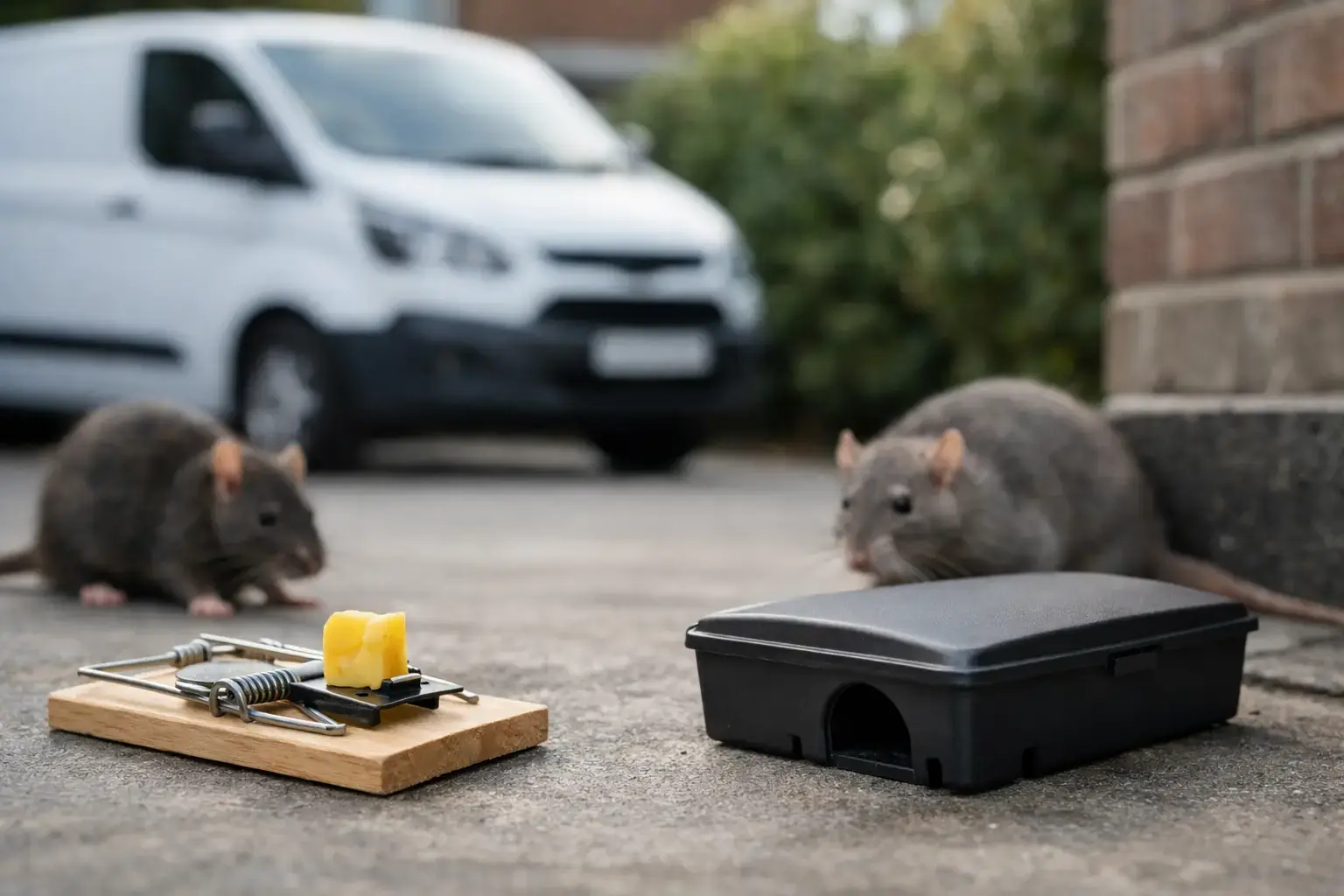
A single rat sighting beside the shed or a mouse dropping in the kitchen creates an understandable urge to buy the quickest-looking product. But snap traps vs bait stations is not simply a question of which one catches more rodents. The right choice depends on the species, the scale of activity, where the rodents are travelling and, crucially, who else can reach the treatment area.
For homes, rental properties and businesses, effective rodent control is about removing the current problem without creating a risk for children, pets, wildlife or customers. It also means finding and dealing with the access point that allowed the problem to start.
Snap traps vs bait stations: the key difference
A snap trap is a mechanical device designed to kill a rodent immediately when it triggers the mechanism. It may be used openly in a suitably secure location, or inside a protective trap box. It gives a fast, visible result and allows the operator to remove the rodent promptly.
A bait station is a lockable, tamper-resistant box. It is not automatically a poison box. Stations can hold rodenticide bait, non-toxic monitoring bait, tracking material or, in some setups, a trap. Their purpose is to protect the treatment from weather and non-target animals, while allowing rodents to feed or travel through safely.
That distinction matters. Comparing a snap trap directly with a bait station can be misleading, because a bait station is often the secure housing for a chosen control or monitoring method. A professional treatment plan may use both: traps indoors where quick confirmation is needed, and secured stations externally to monitor or control rat activity around the building perimeter.
When snap traps are the better option
Snap traps are often highly effective for a small, localised mouse problem indoors. Mice tend to follow established edges, behind kitchen units, along skirting boards and around pipe entries. Correctly positioned traps on these routes can produce rapid results without placing rodenticide inside a food preparation area.
They are also valuable where a dead rodent must be found quickly. With rodenticide, a rat or mouse may die away from the bait point, sometimes in an inaccessible void. A trap allows for immediate removal and helps prevent odour, flies and secondary contamination.
For sensitive commercial locations, mechanical trapping can support a low-tox approach. Food premises, care settings and sites with frequent public access may benefit from targeted traps alongside proofing and regular inspection. Modern electronic monitoring can also alert a pest technician when a device has activated, reducing the time a catch remains on site.
However, snap traps only work when they are selected, placed and checked properly. A trap positioned in the middle of an open floor is unlikely to perform well. Rodents prefer cover and generally travel close to walls. The trap must also be matched to the target species, kept out of reach of children and animals, and checked frequently enough to deal with catches humanely.
Traps can be less practical where there is widespread rat activity outdoors. One or two traps rarely resolve a colony with several feeding and nesting areas. They may also be avoided by rats that are cautious around new objects, particularly where there is plentiful food elsewhere.
When bait stations make more sense
Bait stations are particularly useful for monitoring and managing rat activity around external boundaries, bin stores, garages, outbuildings and service yards. A secured station protects bait from rain and limits access by pets, wildlife and unauthorised people. It also gives a technician a fixed point to inspect for feeding, droppings, damage and signs of repeat activity.
For larger or established infestations, baiting may reach rodents that are moving through several harbourage areas and will not readily approach a trap. This can make it an efficient part of a carefully managed programme, especially where activity is taking place beneath decking, in drains, under storage areas or around commercial waste facilities.
Yet bait stations are not a fit-and-forget solution. Rodenticides must be used responsibly, in line with the product label and current stewardship requirements. Leaving bait down indefinitely can increase risks to wildlife and may mask an unresolved proofing issue. A station should be inspected, recorded and removed when the treatment is complete.
There is another limitation: bait does not overcome competing food. If a property has overflowing bins, bird feed, pet food, fallen fruit or accessible food waste, rodents have little reason to feed from a bait station. Removing these food sources is often what turns a slow treatment into a successful one.
Safety is not an optional extra
The safest method depends on the setting. In a family home, an exposed snap trap behind a washing machine can still be a risk if a child or pet can reach it. Outdoors, loose bait can pose a serious threat to non-target animals. Both methods need secure placement and routine inspection.
A professional technician considers the full environment before choosing a device. That includes the presence of dogs and cats, children, neighbouring properties, wildlife corridors, drainage runs, public access, food handling and the likelihood that rodents will move into wall cavities.
For landlords and commercial duty holders, records matter as much as treatment. Clear site plans, inspection reports, device locations and follow-up visits demonstrate that the issue is being managed responsibly. This is especially relevant for food businesses, managed blocks, warehouses and workplaces where hygiene, audit requirements and reputation are at stake.
The deciding factor is often the infestation, not the product
A mouse heard in one kitchen ceiling void requires a different response from rats feeding around communal bins. The first may call for targeted trapping, proofing around pipework and a check of the loft or underfloor areas. The second may require a survey of waste management, drainage, vegetation, neighbouring activity and external access routes before any control device is installed.
Look for the evidence. Fresh droppings, gnaw marks, greasy rub marks, burrows, damaged air bricks and repeated sightings all help identify the scale and location of the activity. Rats are usually associated with larger droppings, burrows and outdoor harbourage, while mice can exploit tiny gaps and establish themselves inside kitchens, lofts and cupboards.
The most common reason rodent problems return is not that the wrong trap or bait was used. It is that the entry point, food source or nesting opportunity was left in place. Gaps around pipes, broken drain covers, damaged vents, gaps beneath doors and poorly stored waste can all undermine an otherwise effective treatment.
A controlled approach delivers better results
For straightforward, isolated activity, a correctly installed trap may be the quickest and most appropriate answer. For persistent external rats or more extensive infestations, lockable bait stations can provide safer monitoring and controlled treatment. In many cases, the strongest option is a combined programme rather than choosing one method exclusively.
At AZ Environmental Service Pest Control, treatments are based on a site assessment, not a one-size-fits-all product choice. That means identifying the rodent, locating its routes, selecting proportionate control methods and advising on proofing so the problem does not simply move or return.
If you are unsure whether you have mice or rats, avoid moving bait or traps around at random. Keep food sealed, secure waste, prevent pets from reaching the affected area and arrange a professional survey where activity is ongoing. The most effective rodent control is the method that solves the immediate issue while making the property a far less inviting place for the next one.