

Blog
Signs of a Wasp Nest Around Your Property
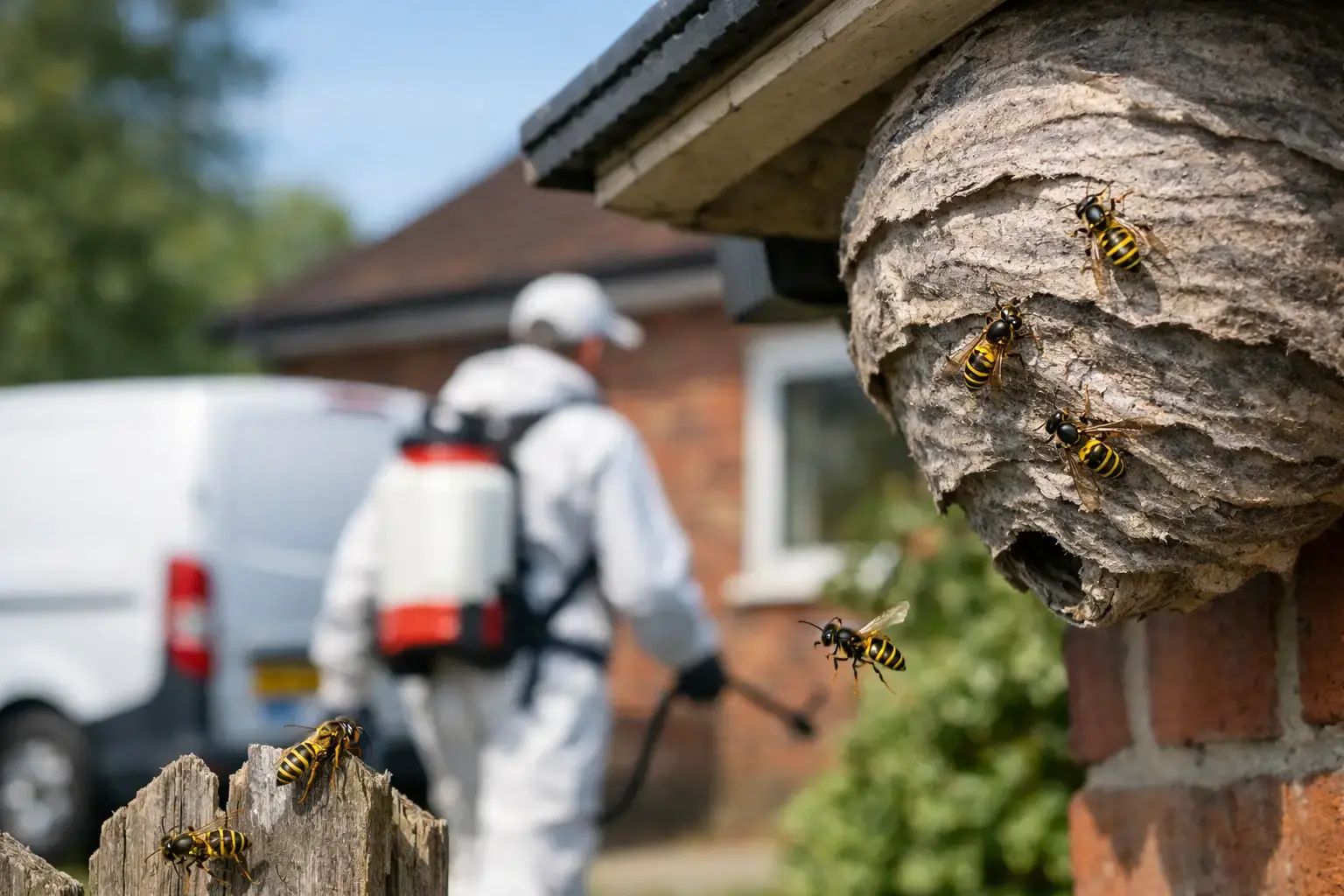
You usually notice the signs of a wasp nest before you ever see the nest itself. It might be a steady stream of wasps disappearing under roof tiles, activity around a loft vent, or insects gathering near a shed roof at the same time every day. When that pattern starts, there is usually a reason - and ignoring it rarely makes the problem smaller.
Wasps are not just a nuisance. For homeowners, they can turn gardens, lofts and outbuildings into areas people avoid. For landlords and commercial premises, they can quickly become a health and safety issue. The key is knowing what normal seasonal wasp activity looks like, and what suggests an established nest nearby.
The clearest signs of a wasp nest
A single wasp in the garden does not automatically mean there is a nest on your property. In summer, worker wasps travel widely in search of food and can appear anywhere. What matters is repeated, purposeful movement.
If you are seeing several wasps flying to and from the same spot, that is one of the strongest signs of a wasp nest. They tend to follow a consistent flight path and enter through small gaps that most people would overlook. Common entry points include fascia boards, air bricks, soffits, roof edges, vents, wall cavities and gaps around garages or sheds.
Another clear sign is activity increasing during the warmer part of the day. Wasps are more active when temperatures rise, so a quiet-looking area in the morning may show regular traffic by late morning or afternoon. If you stand back at a safe distance and watch for a minute or two, patterns become obvious.
You may also hear the nest before you see it. A wasp nest inside a loft, cavity wall or ceiling void can produce a faint but steady buzzing sound. People often describe it as a low papery rustling or an electrical hum coming from behind plasterboard or above a ceiling.
Where nests are most often found
In domestic properties, wasps prefer sheltered spaces that are dry, protected and undisturbed. Lofts are a common location because they offer warmth, cover and easy access through tiny external gaps. Sheds, garages and roof spaces are also frequent nesting areas, especially where timber structures create quiet corners.
Wall cavities are another problem area because they hide the nest completely. In these cases, the only visible clue may be wasps repeatedly entering through a crack in brickwork or around pipework. Under decking, inside compost areas and within dense hedging can also attract nesting wasps, although aerial access points around buildings are more common.
On commercial sites, nests often appear in loading bays, warehouse roof spaces, service yards, signage voids and plant areas. These are difficult spots because they can affect staff, customers and routine operations without being immediately obvious.
Signs of a wasp nest in the loft or wall cavity
Some nests stay hidden for weeks because they are tucked away behind structures rather than hanging in open view. When that happens, the signs are more indirect.
In a loft, you may notice wasps around the roofline outside but none inside the main living space. That often means they are entering externally and nesting above the ceiling. A steady buzzing noise in warm weather is another clue, particularly if it seems localised to one side of the property.
In a wall cavity, look for a small but busy point of entry. Wasps do not need much room. A narrow gap around a vent, a crack near a window frame or an opening beside pipework can be enough. If wasps are crawling in and out of one fixed point every few seconds, there is a strong chance a nest is established behind it.
You may also find small amounts of chewed wood nearby. Wasps scrape weathered timber and fence panels to create the paper-like material used to build their nests. On its own, this does not prove nesting on site, but combined with regular flight activity it adds to the picture.
What a visible nest looks like
If a nest is exposed, it usually has a grey or brown papery appearance with a layered texture. Early nests can be surprisingly small, sometimes no bigger than a golf ball. Later in the season, they can grow much larger depending on species, location and how long they have gone undetected.
Open nests in sheds, roof voids or eaves may hang from a single attachment point and appear rounded or slightly pear-shaped. You should not go close to inspect them. The closer you get, the more likely the colony is to react defensively.
A common mistake is assuming a small visible nest is a minor issue. Size at the surface does not always reflect colony activity, especially if part of the structure extends into a cavity or hidden void.
When wasp activity becomes a problem
It depends on the location, the number of wasps, and who is using the space. A nest at the far end of a large garden may be less urgent than one above a front door, beside a children's play area or inside a school, office or hospitality site. If people are regularly passing close to the nest, the risk rises quickly.
The time of year also matters. In spring and early summer, nest activity is often lower because the colony is still developing. By mid to late summer, worker numbers increase and so does the likelihood of repeated contact with people. Wasps also become more noticeable later in the season when food-seeking behaviour ramps up.
For businesses, even moderate activity can be enough to justify action. Food premises, care settings, schools, warehouses and customer-facing environments need to manage risks early, not after someone has been stung.
Signs you should not ignore
Some warning signs call for prompt professional help rather than watch-and-wait.
If wasps are entering the structure of the building, if the nest is near a doorway or walkway, or if anyone at the property has a known allergy to stings, it should be treated as urgent. The same applies if you are seeing a sudden increase in numbers indoors, as this can happen when a hidden nest expands or becomes disturbed.
You should also take care with nests in difficult access points such as high rooflines, chimneys, cavity walls or commercial premises with public access. These are not situations for improvised treatment.
Why DIY treatment often makes things worse
People often try to deal with a wasp issue using shop-bought sprays or by blocking the entry hole. That can create bigger problems. If the nest remains active, blocking an entrance may force wasps to find another route out - sometimes into loft spaces, internal rooms or occupied areas.
Spraying without proper access, protective equipment or identification can also agitate the colony without eliminating it. Wasps defend the nest aggressively when threatened, and a poorly timed attempt can escalate the risk very quickly.
The right approach depends on where the nest is, how established it is, and whether there are access limitations. That is why professional identification and treatment matter, particularly when the nest is hidden or attached to the structure of the building.
What to do if you spot signs of a wasp nest
Start by keeping your distance and observing from a safe position. Do not poke, block, spray or try to remove anything yourself. Keep children and pets away from the area and, if possible, avoid using the immediate space until the issue has been assessed.
If the activity is around an entrance, path, work area or communal part of the property, act sooner rather than later. The longer an active nest is left, the more established it can become.
For property owners and managers in Stockport and surrounding areas, fast treatment is often the difference between a straightforward visit and a more disruptive problem. A qualified pest control specialist can confirm whether you are dealing with a wasp nest, identify the access point, treat it safely and advise on prevention if the location is likely to attract repeat nesting.
AZ Environmental Service Pest Control handles wasp nest problems with the same approach it applies across all pest issues - clear identification, safe treatment, and practical action to stop the problem continuing.
If something about the wasp activity around your property feels too regular to be random, trust that instinct. Catching the signs early gives you more control, less disruption and a safer outcome for everyone using the building.