

Blog
Rat Traps Versus Professional Treatment Compared
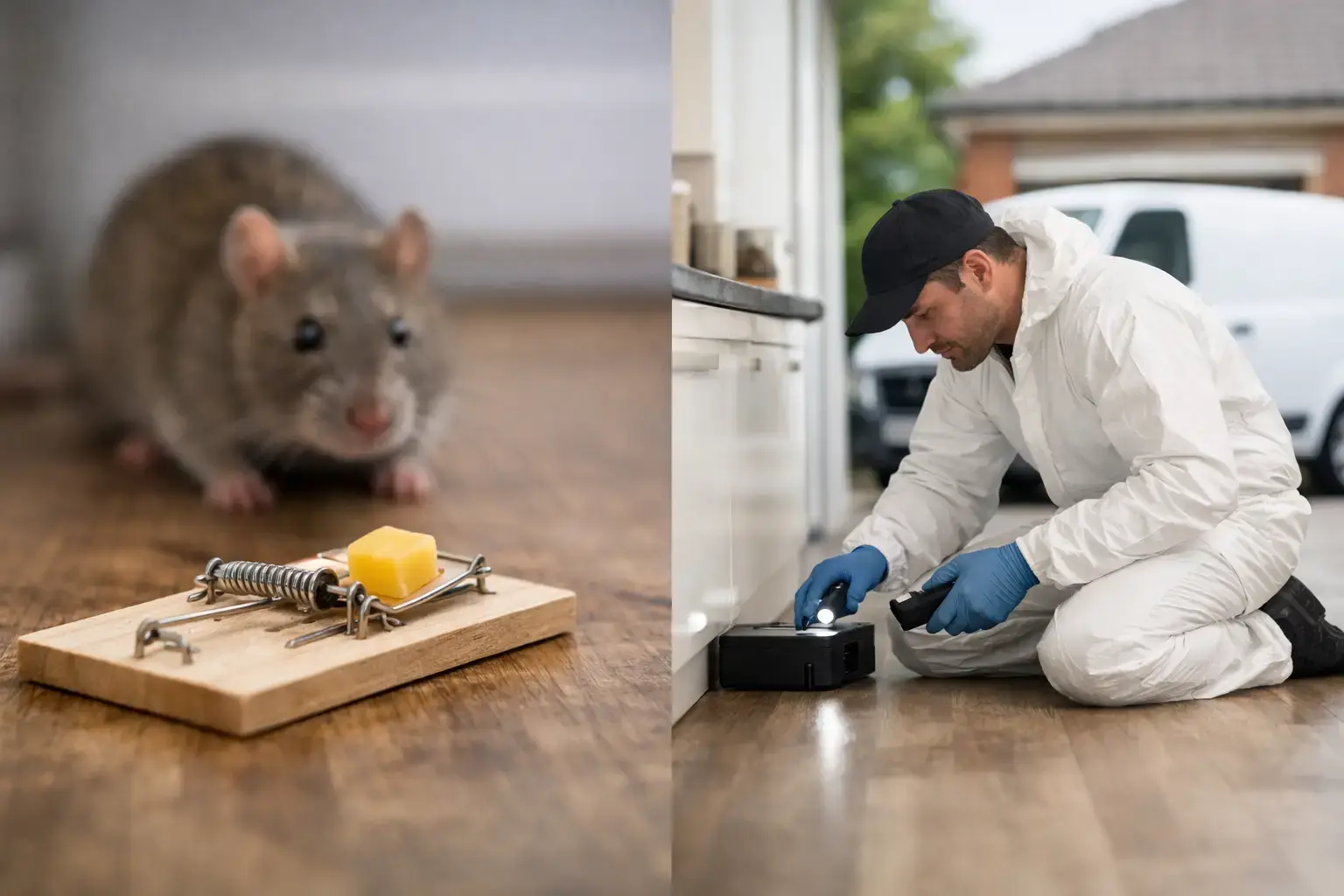
A rat seen in the kitchen, loft or bin store is rarely an isolated issue. The real decision behind rat traps versus professional treatment is whether you are dealing with a single rat passing through or an established infestation with a reliable food source, shelter and entry point. Choosing the wrong response can allow the problem to grow quietly behind walls, under floors or around a commercial premises.
For some situations, a correctly placed trap can be a sensible first measure. For others, especially where there are repeated sightings, droppings, damage or activity in more than one area, professional control is the faster and more reliable route. The difference is not simply the equipment used. It is the inspection, proofing and follow-up that turn a short-term catch into a resolved rat problem.
When rat traps can be the right choice
Traps can work well when the evidence suggests one or two rats have entered from outside and there is no sign of wider activity. A homeowner may spot fresh droppings in a garage after a door has been left open, for example, or hear occasional movement around an accessible shed. In these cases, a quality trap set carefully along a wall run may deal with the immediate issue.
Rats tend to travel along edges rather than crossing open spaces. Traps placed randomly in the middle of a room are therefore far less likely to succeed. They also need to be positioned safely, checked regularly and kept away from children, pets and non-target wildlife. A trap that is left unchecked is not a control plan.
DIY trapping has a clear advantage: it can be quick to start and may be sufficient for minor, contained activity. It also avoids the unnecessary use of rodenticide where it is not needed. However, its limits become clear when a trap remains untouched, catches one rat but activity continues, or the source of entry cannot be found.
A rat is cautious around unfamiliar objects, particularly in a location where it has been feeding undisturbed. This behaviour can make a trap appear ineffective when the issue is really placement, the presence of competing food or a larger infestation elsewhere on the property.
Rat traps versus professional treatment: the key difference
Professional treatment starts with finding out why rats are present. Catching or removing a rat matters, but it does not stop the next one entering through a damaged air brick, a gap around pipework, an open drain defect or a poorly managed waste area.
A qualified pest controller assesses the evidence on site. This includes identifying runs, droppings, gnaw marks, harbourage, food sources and likely access points. In a home, the focus may be on the kitchen, utility room, loft void, sub-floor and external boundaries. At a business, inspections often extend to bin stores, loading areas, staff facilities, roof lines, plant rooms and surrounding grounds.
The treatment plan is then matched to the risk and the environment. It may include trapping, secure baiting methods where appropriate, proofing recommendations, monitoring and repeat visits. The aim is targeted control, not a one-size-fits-all response.
This is particularly important in premises where hygiene, safety and reputation are at stake. Restaurants, food businesses, landlords, warehouses, schools and offices need more than an occasional trap behind a cupboard. They need documented, discreet pest management that protects people, stock and operations.
Proofing is often the missing piece
Rats can enter through surprisingly small gaps and exploit defects that are easy to overlook. They may travel through broken drains, under decking, along overgrown boundaries or through gaps created during building work. If access remains available, trapping alone can become a repeating cycle.
Professional proofing focuses on practical vulnerabilities. That could mean sealing gaps around service pipes, repairing damaged vents, improving door thresholds, fitting suitable mesh or addressing waste storage. Not every recommendation needs to be completed at once, but priority risks should be dealt with promptly.
In older properties across Stockport and the wider Greater Manchester area, drainage faults and hidden voids are common reasons for recurring rodent activity. A proper survey can prevent money being spent repeatedly on traps while the underlying route remains open.
Signs that professional help is the sensible option
One sighting does not always mean a major infestation, but certain signs should not be ignored. Fresh droppings appearing day after day, scratching noises at night, greasy rub marks along skirting boards, chewed food packaging and gnaw damage to cables all suggest active and potentially established rat activity.
The same applies when rats are seen in daylight. Rats are generally more active after dark, so daytime sightings can indicate that numbers are increasing, food is scarce or their nesting area has been disturbed. It is not proof on its own, but it warrants a prompt inspection.
Professional treatment is also advisable if you have tried traps without success, caught a rat but still hear movement, or cannot safely identify where activity is coming from. Never assume that a lack of visible rats means they have gone. Rats are skilled at remaining out of sight while continuing to feed and breed nearby.
For landlords and commercial operators, acting early is especially important. A tenant report, a single rat in a bin store or evidence near a food preparation area should be investigated before it becomes a complaint, contamination concern or business disruption.
Safety, welfare and responsible control
Rat control must be effective, but it must also be carried out responsibly. Poorly used poisons can create risks for pets, children and wildlife. Incorrectly placed traps can cause unnecessary suffering or injure non-target animals. This is why professional pest control considers the full setting before selecting a method.
A responsible approach follows the principle of using the least-risk method that can solve the problem. Trapping may be appropriate in some homes. In other cases, controlled professional baiting and monitoring may be necessary, particularly where rats are nesting in inaccessible areas. Any treatment should be checked, managed and removed as required rather than simply put down and forgotten.
The presence of a dead rat can create a further issue if it is inaccessible in a wall or floor void. A professional will consider this risk when planning treatment and explain what to expect during the programme. Clear communication is part of good pest management, not an extra.
What a professional rat treatment programme involves
A proper programme is not usually a single visit. The first visit identifies the scale of activity and starts the right control measures. Follow-up visits check results, replenish or adjust treatments where necessary, and confirm whether activity has stopped.
The timeline depends on the size of the infestation, the condition of the property and how quickly proofing or housekeeping changes can be made. A straightforward issue may resolve quickly. A long-running problem linked to drainage, neighbouring land or multiple entry points will require more investigation and persistence.
AZ Environmental Service Pest Control takes a tailored approach because difficult rat issues are rarely solved by placing one product in one location. Discreet attendance, technical inspection and practical prevention measures give households and businesses a clearer route to lasting control.
Make the decision based on evidence, not cost alone
A packet of traps may cost less than a professional visit, but the cheaper option is not always the economical one. If rats continue to damage wiring, contaminate food, undermine insulation or affect a tenant or customer experience, delay can become expensive. There is also the time spent moving traps, checking them and trying to locate an entry point without the right equipment or experience.
That does not mean every rat sighting requires a full treatment programme. If the situation is clearly isolated, a safe, well-positioned trap combined with better waste control may be enough. The sensible test is simple: if there is repeated evidence, uncertain access, activity inside the building or any concern for hygiene and safety, arrange a professional assessment.
Early action gives you more options. Deal with food waste, remove clutter around external walls, keep doors and vents in good repair, and do not wait for a small sign of activity to become a persistent problem behind the scenes.