

Blog
Proofing Entry Points for Rodents
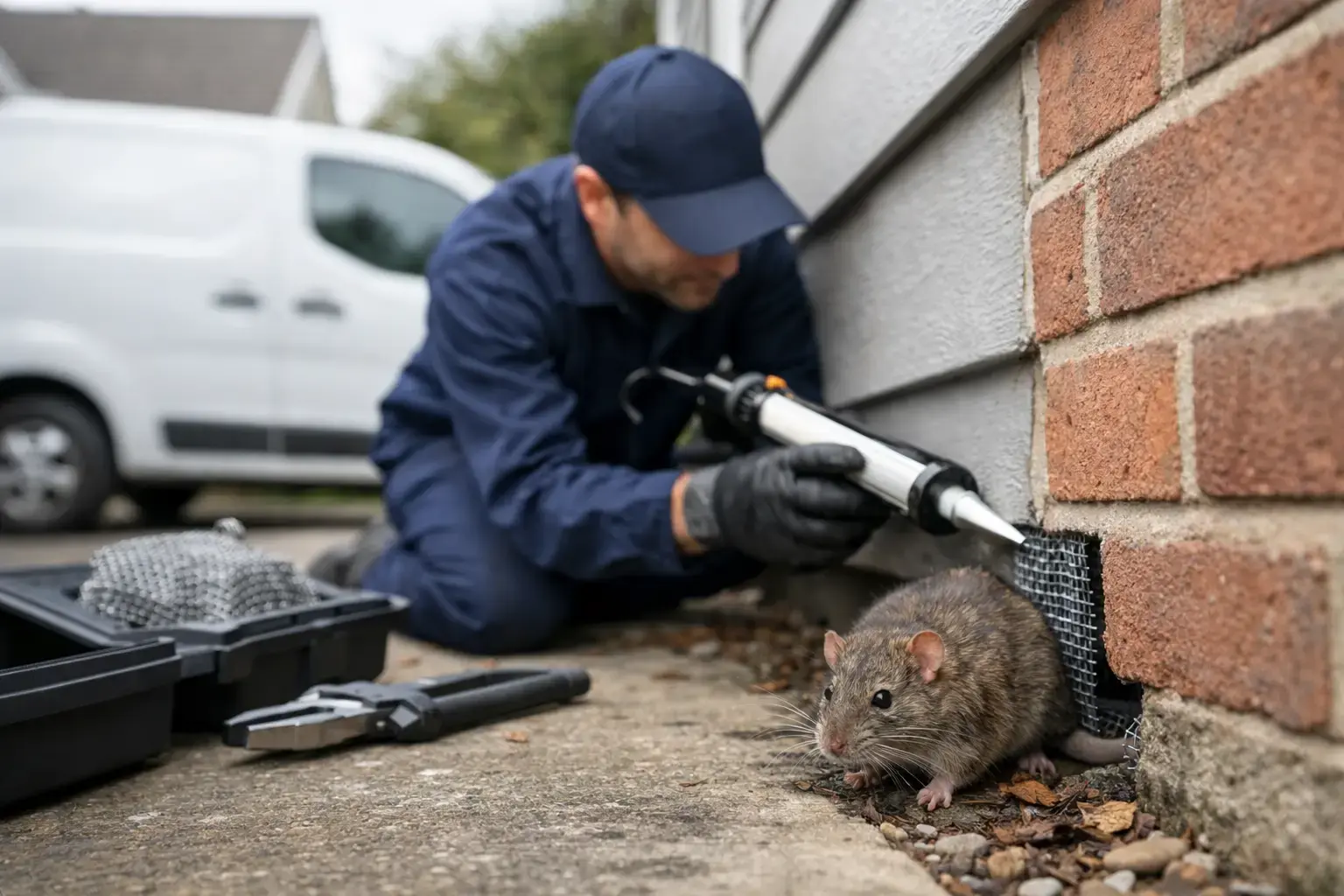
A mouse does not need much space to turn a quiet loft, kitchen void or stockroom into an ongoing problem. A rat needs even less than most people think. That is why proofing entry points for rodents is one of the most effective parts of any long-term pest control plan. Treatment removes activity. Proofing stops the next round.
Rodents are persistent, opportunistic and very good at exploiting weak spots in a building. If there is warmth, food, water and a gap to use, they will keep testing until they find a way in. For homeowners, that can mean noise in the walls, contamination in cupboards and damage to insulation or wiring. For landlords and commercial operators, it can also mean complaints, failed inspections, stock loss and reputational risk.
Why proofing entry points for rodents matters
Rodent proofing is not a cosmetic job. It is a practical barrier that reduces the chance of infestation returning once treatment has dealt with the current issue. Without it, even a successful baiting or trapping programme can become a temporary fix.
Mice and rats do not enter buildings at random. They follow scent trails, move along edges and repeatedly use routes that feel sheltered and safe. If a gap under a door, a broken air brick, damaged drain connection or poorly sealed pipe run gives them access once, they are likely to keep using it. Over time, that traffic becomes established behaviour.
This is why proofing must be targeted. Filling visible holes without understanding how rodents are moving through the property often leaves the real access points untouched. The result is wasted time and a false sense of security.
Where rodents usually get in
Most rodent entry points are not dramatic. They are small defects, wear-and-tear issues or overlooked service penetrations that sit at ground level, around utility lines or in hidden voids.
External doors are a frequent problem, especially where there is daylight visible underneath or where brush strips have worn away. Garages, side passages and rear access doors are common weak spots because they get heavy use and are not always sealed properly after years of wear.
Pipework is another major route. Gas, water and waste pipes often pass through walls leaving gaps that were never properly finished, or have widened over time. Rodents are excellent climbers, so access is not limited to the base of a building. A pipe rising vertically to a boiler flue area or roofline can still become part of the route.
Air bricks and vents need particular attention. They must remain functional for ventilation, but if they are damaged or poorly protected they can become easy access points. The same applies to gaps around extractor fans, cable entries and ageing utility boxes.
At roof level, broken soffits, lifted tiles and gaps around eaves can allow mice into loft spaces. In commercial settings, roller shutter doors, loading bays and service entry points are often the areas that let rodents exploit operational gaps.
The difference between mice and rats
Proofing needs to match the species involved. Mice can squeeze through very small openings and often nest indoors close to heat and food. They are more likely to use cavity walls, suspended ceilings, loft insulation and the backs of kitchen units. A property can look sound from the outside and still have several internal routes that support a mouse infestation.
Rats usually need slightly larger access points, but they are more destructive and more likely to exploit drains, damaged gullies, subfloor voids and external defects at low level. If rats are present, it is worth looking beyond the obvious wall gaps and considering whether there is a drainage issue, broken cover or structural defect helping them move unseen.
That distinction matters. A building can be well sealed against one species and still vulnerable to the other.
What good rodent proofing looks like
Effective proofing is not about stuffing any available material into a hole and hoping it holds. Rodents will chew through weak fillers, dislodge poor repairs and work around badly planned seals.
A proper repair uses suitable materials for the location and the level of pressure likely from the pest activity. Depending on the access point, that may involve metal mesh, rodent-resistant sealants, sheet metal, concrete-based repairs or purpose-made door protection. Ventilation must still function, drainage must not be obstructed and fire safety should never be compromised just to close a gap.
This is where experience matters. The right repair for an air brick is not the right repair for a drain defect. The right approach for a domestic kitchen is not always suitable for a food premises, school site or warehouse. Proofing must work with the building, not against it.
Common proofing mistakes
The biggest mistake is sealing entry points before the extent of activity is understood. If rodents are already established inside wall cavities, lofts or subfloors, blocking one route can force them deeper into the property or into new escape paths. That can make the problem harder to monitor and slower to resolve.
Another common issue is using unsuitable materials. Expanding foam on its own is rarely enough. General filler, plastic trims and lightweight mesh often fail quickly when exposed to gnawing, weather or repeated use around doors and service areas.
There is also the temptation to focus only on the obvious hole where droppings were found. In reality, rodents often have multiple routes in and out. One repaired gap may reduce activity for a week, while the main access point remains active elsewhere.
For commercial premises, proofing can also fail when operational realities are ignored. A rear door that is left open for deliveries or a damaged dock leveller seal will undo a well-finished repair if the site procedure does not support it.
Proofing in homes, rentals and business premises
In domestic properties, the priority is often stopping repeat access around kitchens, extensions, lofts, garages and garden-facing elevations. Older housing stock can be particularly vulnerable because small defects build up over time and may not be obvious until activity starts.
For landlords and managing agents, rodent proofing is part of protecting the asset as well as resolving the immediate complaint. A quick treatment may calm the issue, but recurring access points can lead to repeated call-outs and avoidable tenant dissatisfaction.
Commercial settings require a more structured approach. In shops, cafes, offices, warehouses and care environments, proofing is closely tied to hygiene standards, audit expectations and business continuity. A discreet, technically sound repair matters because the cost of ongoing rodent activity is rarely limited to the pest problem itself.
When a survey is the sensible first step
Not every building needs major proofing work, but every persistent rodent issue needs proper assessment. A survey helps identify where rodents are entering, what is attracting them and which defects are genuinely high risk.
This is especially useful where the signs are inconsistent - noise in one area, droppings in another, and no clear hole visible. It also matters when previous treatments have reduced activity but not stopped it. In those cases, the real issue is often access, not the treatment product.
A professional survey can also pick up things that property owners understandably miss, such as drain-related vulnerabilities, hidden service penetrations or external routes obscured by vegetation, stored items or extensions.
Proofing works best with prevention, not on its own
Proofing entry points for rodents is a major part of prevention, but it is not the only part. If food waste is accessible, drains are damaged, clutter creates harbourage or staff habits leave doors open, rodents will keep testing the building. Good pest prevention combines proofing with housekeeping, monitoring and fast corrective action.
That is why the best results usually come from an end-to-end approach rather than a single repair. Where treatment, proofing and prevention work together, the outcome is stronger and more durable.
For properties across Stockport and surrounding areas, this often means looking at the whole picture rather than chasing symptoms room by room. AZ Environmental Service Pest Control deals with rodent problems this way because long-term control depends on solving the cause, not just reducing the signs.
If you suspect rodents are getting into your property, the right next step is not guesswork. It is finding the access, repairing it properly and making sure the conditions that allowed the problem in the first place are brought under control. A well-proofed building gives rodents far fewer chances, and that is usually where lasting progress starts.