

Blog
Professional vs DIY Pest Control - Which Works?
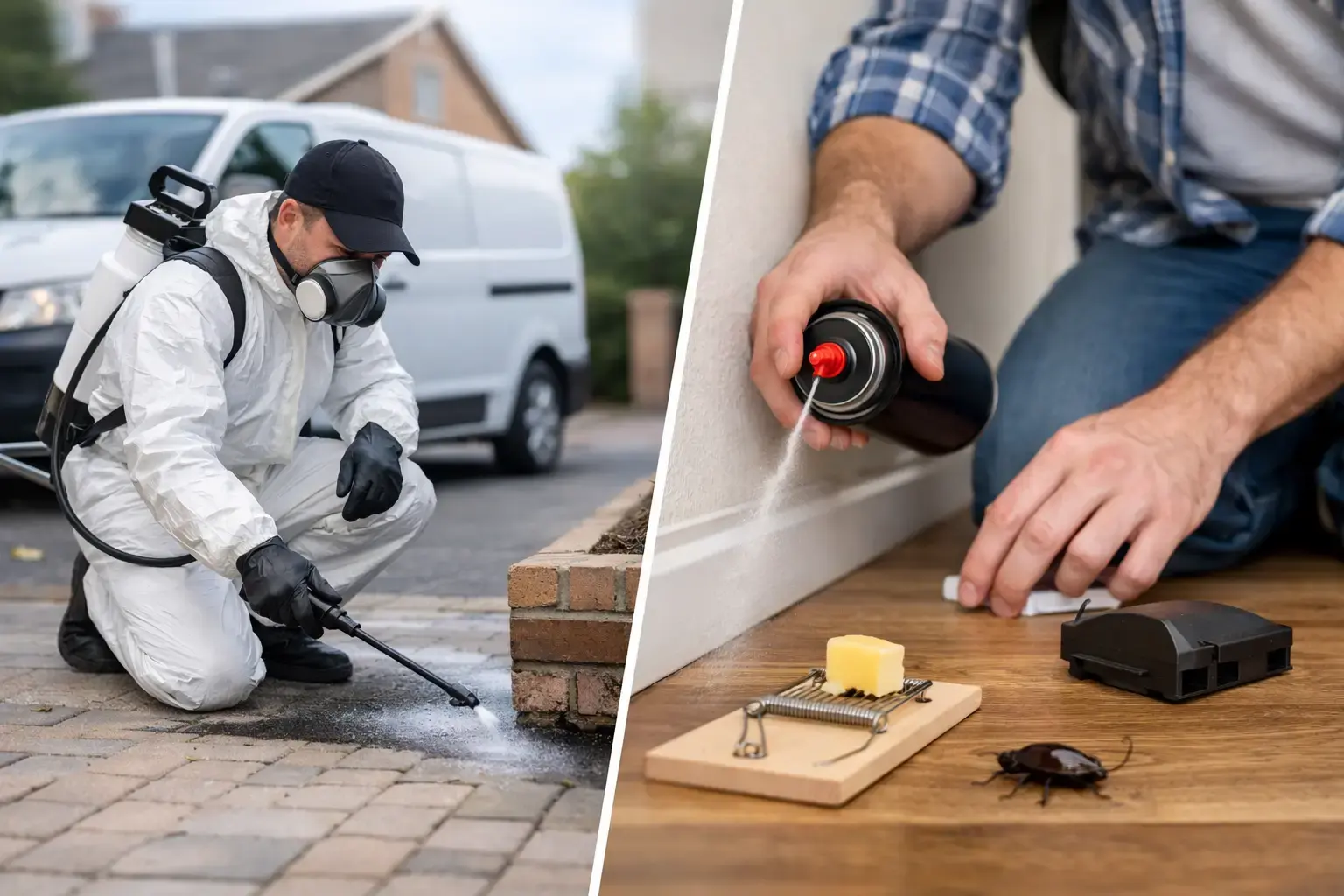
A mouse seen at skirting-board level, a wasp nest above the bedroom window or droppings behind a commercial kitchen unit rarely stays a small problem for long. The decision between professional vs DIY pest control affects not only cost, but how quickly the issue is resolved, whether the treatment is safe and whether the pests return.
DIY products can be useful in the right circumstances. However, pest control is not simply a matter of putting down bait or spraying an insecticide. Effective treatment starts with identifying the pest correctly, understanding its behaviour and removing the conditions that allow it to thrive. For established, recurring or high-risk infestations, professional support is usually the more reliable route.
Professional vs DIY Pest Control: The Real Difference
The main difference is diagnosis. A shop-bought product is designed to deal with a broad pest category, while a qualified technician assesses the specific species, the scale of activity, entry points, food sources and nesting locations before choosing a treatment.
That matters because different pests need different methods. Rats and mice may leave similar signs, but their movement patterns, bait preferences and access points can differ. Fleas may continue appearing after treatment if pet bedding, carpets and soft furnishings have not been managed correctly. A visible wasp nest may be only part of the issue if there is activity in a roof void or wall cavity.
Professional pest control also treats the cause, not just the evidence. If rodents are entering through damaged air bricks, gaps around pipework or an unsecured bin area, removing the current population without proofing those access points often leads to another infestation. The same applies to cockroaches, bed bugs, squirrels and stored-product insects.
For homes, this means less uncertainty and fewer repeat attempts. For landlords, property managers and businesses, it also means a clearer record of what was found, what action was taken and what prevention measures are required.
When DIY Pest Control Can Be Sensible
DIY pest control can be appropriate where the issue is minor, clearly identified and caught early. For example, a small number of flies around an indoor bin may be resolved through better waste management and thorough cleaning. Ant activity around a patio can sometimes be reduced by removing food sources and using a suitable product precisely as directed.
DIY can also support prevention. Sealing food in containers, repairing a loose door brush, clearing clutter from a garage and keeping outdoor bins closed all make a property less attractive to pests. These practical steps are worthwhile whether or not professional treatment is needed.
The key is to recognise the limits. A product may kill the insects or rodents that come into contact with it, but it may not reach the nest, breeding site or point of entry. It can create the impression that the problem has gone away when activity has simply moved elsewhere.
Avoid mixing products, using more than the label recommends or placing treatments where children, pets or non-target wildlife can access them. Inappropriate use can reduce effectiveness and create unnecessary risk. If you are unsure what pest you are dealing with, do not guess. Accurate identification should come first.
The Hidden Cost of Repeated DIY Attempts
DIY treatment often appears cheaper because the first purchase is inexpensive. The true cost can rise quickly when several products are bought, treatments are repeated and the infestation continues to develop.
A mouse problem is a good example. One or two traps may catch an individual mouse, but repeated sightings, scratching sounds, gnaw marks or droppings usually point to an access issue or an established population. Delaying proper action can allow contamination, damaged wiring and structural damage to build up. In a business, it can also create hygiene concerns, stock loss and reputational risk.
Bed bugs are another pest where repeated DIY treatment can be particularly frustrating. They hide in narrow cracks around beds, furniture and skirting boards, and eggs may survive an incomplete treatment. A quick spray on the mattress rarely deals with the full harbourage. The longer the problem is left, the more rooms and belongings may become involved.
Professional treatment has an upfront cost, but it should include a planned method, appropriate products and follow-up where required. That provides a more realistic chance of ending the problem rather than managing it week by week.
What a Professional Pest Control Visit Should Include
A competent pest control service should begin with an on-site inspection or a detailed assessment of the circumstances. The technician should look for signs of activity, establish the likely species, identify risks to people and animals, and explain the recommended action clearly.
Treatment is then tailored to the pest and property. This may involve monitored bait stations, targeted insecticidal treatment, trapping, proofing work, nest removal or a programme of regular visits. Commercial sites may also need documented monitoring, trend reporting and measures that support hygiene and audit requirements.
Prevention should be part of the conversation. There is little value in removing rodents from a building if gaps under doors, damaged drain covers or accessible food waste remain unchanged. Likewise, bird control needs to be designed around the building, the species involved and legal wildlife considerations rather than relying on a one-size-fits-all approach.
Discretion can matter too. For restaurants, offices, landlords and householders who value privacy, unmarked vehicles and a professional on-site approach help keep the process straightforward and confidential.
Safety, Wildlife and Legal Responsibilities
Pest control is not only about removing a nuisance. Some species, treatments and locations carry legal and environmental responsibilities. Birds, bats and other wildlife may be protected, and work around nesting sites or roof spaces needs careful assessment. Rodenticide use must also be managed responsibly to reduce the risk to pets, wildlife and the wider environment.
A qualified technician understands how to select and place treatments safely, when non-chemical control is preferable and when a different approach is required altogether. This is especially relevant in homes with young children or pets, food premises, schools, care settings and shared residential buildings.
For commercial operators, professional pest management helps demonstrate that the issue has been handled responsibly. A documented service programme can be vital where inspections, hygiene standards and operational continuity matter.
Signs It Is Time to Call a Professional
Call for professional help when activity is recurring, when you cannot identify the pest with confidence or when DIY treatment has not worked after a reasonable attempt. Immediate support is sensible where there is a wasp nest near occupied areas, evidence of rats or mice indoors, signs of bed bugs, cockroaches in food-handling areas, or pests affecting tenants across more than one property.
It is also worth acting early where access is difficult. Pests in lofts, wall voids, drains, commercial roofs or high-level areas are rarely suited to an off-the-shelf solution. Specialist equipment, safe access methods and, in some cases, survey technology may be needed to understand the full extent of the problem.
AZ Environmental Service Pest Control works with householders and businesses across Stockport and the surrounding area to identify the issue, carry out targeted treatment and put practical prevention in place. The aim is a lasting solution, not a temporary reduction in sightings.
Make the Decision on Evidence, Not Hope
DIY measures have a place for simple prevention and small, clearly understood pest issues. But if the problem is established, distressing, difficult to reach or capable of affecting health, hygiene or your property, professional pest control is normally the better investment.
Take note of what you have seen, where it is happening and how often. Early, accurate action gives you the best chance of stopping a pest problem before it becomes a larger and more expensive one.