

Blog
Pest Control for Managed Properties That Works
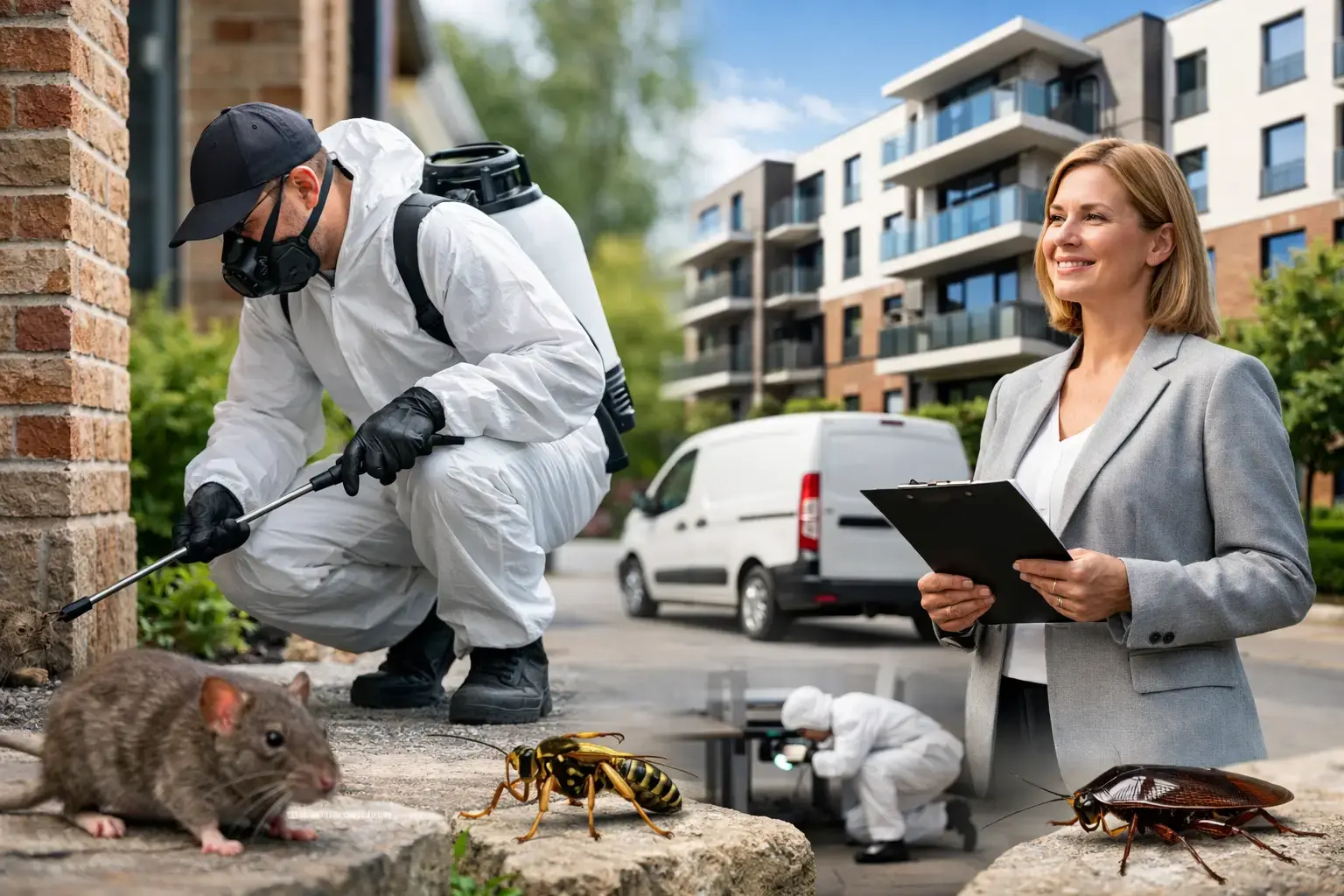
A single rat sighting in a bin store can quickly turn into tenant complaints, failed inspections and awkward questions from owners. Pest control for managed properties is rarely just about removing pests. It is about protecting the building, the people in it and the reputation of whoever is responsible for keeping standards in place.
For landlords, block managers and commercial property teams, the real challenge is not only dealing with the immediate problem. It is knowing why pests are there, how far the issue has spread and what needs to change so it does not come straight back. That is where a professional, structured approach matters.
Why pest control for managed properties needs a different approach
Managed properties come with layers of responsibility. You may be dealing with multiple tenants, shared access points, bin compounds, plant rooms, roof spaces, service risers and external grounds, all of which create routes for pests to enter, hide and breed.
In a single house, the source of a problem can often be isolated quickly. In a managed block, mixed-use site or commercial premises, it is rarely that simple. One resident may report activity in a kitchen, while the real issue sits behind cladding, beneath floor voids or around poorly managed waste areas. If the treatment only tackles what is visible, the problem often returns.
There is also the practical side. Access must be coordinated, records kept, tenants informed where necessary and disruption kept to a minimum. In some settings, discretion matters just as much as speed. That is especially true for residential developments, hospitality settings, offices and sites where public confidence can be affected by visible pest activity.
The pests most commonly found in managed buildings
Rodents remain one of the most common issues across managed sites. Rats and mice exploit weak points in fabric, drainage defects, gaps around services and poorly controlled refuse areas. Once inside, they move through voids and service routes with ease. By the time they are seen, activity is often already established.
Cockroaches are another serious concern, particularly in properties with shared services, food handling areas or frequent movement between units. They spread quickly and can be difficult to eliminate without careful inspection and follow-up.
Bed bugs are increasingly disruptive in buildings with high occupant turnover, temporary accommodation or furnished lets. They create distress for residents and can become a recurring issue if adjoining rooms or flats are not properly assessed.
Stored product insects, ants, wasps, flies and feral bird activity also appear regularly depending on the property type. Each one needs a different control plan. A wasp nest at roof level is not managed in the same way as drain flies in a communal area or pigeons roosting on commercial frontage.
What good pest management looks like in practice
Effective control starts with inspection, not assumption. The first job is to identify the pest correctly, assess the extent of the infestation and understand the conditions allowing it to continue. That may involve checking internal access points, external proofing failures, drainage runs, roof areas and waste handling arrangements.
From there, treatment should be tailored to the site. A managed property needs more than a generic visit and a box of bait. It needs a plan that reflects occupancy, risk level, building layout and the potential for re-entry. In some cases, that means targeted treatment and proofing. In others, it means a broader prevention programme with monitoring, reporting and regular review.
The best results usually come when treatment and prevention are handled together. Removing the immediate infestation without resolving harbourage, access and attractants only delays the next callout.
Pest prevention in managed properties is where long-term value sits
Preventative work is often what separates a one-off fix from a reliable solution. In managed buildings, common failures tend to repeat. Damaged air bricks, unsealed service penetrations, broken drains, overflowing bins, overgrown external areas and poor housekeeping in shared spaces all create opportunities for pests.
Proofing work can make a major difference, but only when it is carried out properly. Blocking the wrong access route without understanding pest behaviour can push activity elsewhere in the building. That is why inspection and experience matter.
For property managers, prevention also reduces cost over time. Repeated reactive visits, tenant dissatisfaction and avoidable damage usually cost more than putting the right controls in place early. It also helps with planning. When you know where the vulnerabilities are, you can deal with them as part of wider maintenance rather than waiting for an infestation to force the issue.
Reporting, compliance and communication matter
In managed environments, pest control is not just an operational task. It is part of the wider duty of care. Owners, agents and facilities teams need clear records of what was found, what was treated and what actions are still required.
That reporting becomes even more important in commercial settings, food-related premises and sites with regulatory oversight. A proper pest management programme should provide evidence of inspection, treatment and recommendations in a format that supports compliance and accountability.
Communication also needs to be handled properly. Tenants do not need vague reassurance. They need practical information, realistic timescales and confidence that the problem is being managed by qualified professionals. The same applies to commercial stakeholders who want issues dealt with quickly but without unnecessary alarm.
When technology helps and when it does not
Modern pest control tools can improve visibility, especially on larger or higher-risk sites. Remote monitoring systems, digital reporting and specialist survey methods can all help build a clearer picture of pest activity and treatment performance.
That said, technology is only useful when it is matched with field experience. A monitoring alert does not solve a pest problem on its own. Someone still needs to interpret the data, inspect the site and decide what practical action will work. On complex managed properties, that judgement is what prevents a minor issue becoming a recurring one.
For some buildings, specialist access methods and survey tools are particularly valuable. Rooflines, voids and difficult external elevations are common problem zones, and they are often missed until activity becomes obvious. The right inspection method can save time and avoid guesswork.
Choosing a pest control partner for managed properties
Not every pest control service is set up for managed sites. The right provider should be able to work across treatment, proofing, prevention and reporting, while understanding the operational pressures of tenanted and commercial environments.
Speed matters, but so does reliability. If residents are affected or a business operation is at risk, delays can make a manageable issue harder to contain. At the same time, a rushed visit with no wider plan often leads nowhere.
Look for a service that can identify root causes, not just symptoms. That includes practical site knowledge, recognised qualifications and the ability to deal with difficult infestations decisively. Discretion may also be important, particularly on residential developments and customer-facing premises where visible pest control activity can create concern.
For managed properties across Stockport and surrounding areas, that local understanding is often a real advantage. Building types, drainage layouts, refuse arrangements and recurring urban pest pressures can vary from one area to another. A team that knows the local environment can often identify likely causes faster and act with more confidence.
When to act
The right time to deal with pest activity is earlier than most people think. Waiting for repeated sightings, multiple complaints or visible damage usually means the infestation is already established. In managed properties, that delay gives pests time to spread through adjoining spaces and hidden service routes.
Early signs are enough to justify inspection. Scratching sounds, droppings, grease marks, nesting debris, insect casings, unusual odours or repeated sightings in shared areas should all be treated seriously. A prompt survey can confirm whether you are dealing with a small, isolated issue or the start of something wider.
Where properties are older, have known proofing weaknesses or have a history of recurring activity, a proactive programme often makes more sense than waiting for problems to reappear. That is especially true where tenant satisfaction, hygiene standards or business continuity are on the line.
Managed properties need pest control that is practical, accountable and built to last. The job is not finished when the immediate activity stops. It is finished when the source has been found, the risk has been reduced and the people responsible for the building can be confident the problem has been properly dealt with.