

Blog
Mice in Loft Warning Signs to Watch For
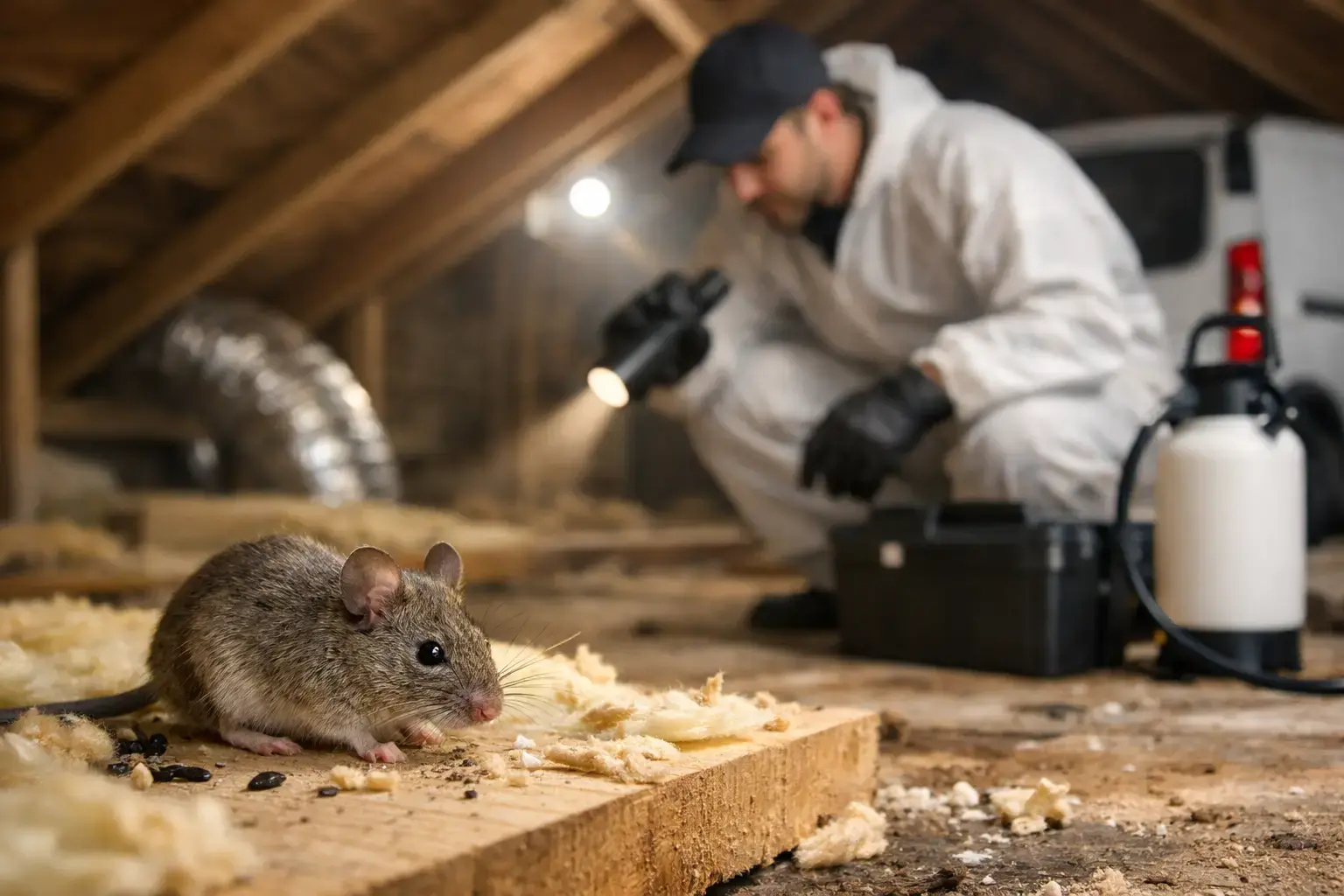
A loft infestation rarely starts with a dramatic sighting. More often, it begins with a faint scratching above the ceiling at night, a stale musky smell near the hatch, or a few droppings tucked along insulation. Those early mice in loft warning signs are easy to dismiss, especially in older properties where creaks and noises can seem normal. Leave them too long, though, and a small issue can turn into nesting, contamination and damage across the roof space.
For homeowners, landlords and property managers, the key is recognising the pattern early. Mice are active, persistent and capable of squeezing through very small gaps. Once they find warmth, shelter and access to food or nesting material, the loft becomes an ideal base.
Common mice in loft warning signs
The most common sign is noise. Mice are usually most active after dark, so you may hear scratching, scurrying or light gnawing sounds from above bedrooms or upstairs ceilings. The sound is often irregular rather than constant, which is why people sometimes mistake it for the house settling or birds on the roof. If the noise tends to start in the evening and stop by morning, mice are a real possibility.
Droppings are another clear indicator. Mouse droppings are small, dark and shaped a bit like grains of rice. In a loft, they often appear along edges, near stored boxes, around pipe runs and close to insulation where mice travel for cover. Fresh droppings are darker and softer. Older ones dry out and become crumbly. If you are seeing a build-up rather than a one-off, the activity is current.
Smell matters too. A loft with mice can develop a strong, stale odour caused by urine, droppings and nesting material. In the early stages this may only be noticeable when you open the loft hatch. As activity increases, the smell can begin to drift into upstairs rooms or landing areas. A persistent musty or ammonia-like smell should not be ignored.
Gnaw marks are also worth checking for. Mice need to keep their teeth down, so they gnaw on wood, plastic, cardboard and even some cables. In a loft, that can show up on stored belongings, joists, pipes, insulation backing and electrical wiring. This is one of the more serious signs because it is not just unpleasant - it can create fire risk and lead to expensive repairs.
What a mouse nest in the loft looks like
Mice do not need much to build a nest. They use shredded insulation, cardboard, paper, fabric and loft debris to create a sheltered area, usually hidden behind stored items or tucked into quieter corners. A nest may look like a loose ball of mixed material with droppings nearby and a noticeable smell around it.
You may also notice small runs through insulation. Mice often create visible tracks where they move repeatedly between entry points, nesting areas and places where they find food or water. In some lofts, the insulation looks flattened in narrow lines. That kind of pattern usually points to regular movement rather than random disturbance.
If there are babies in the nest, the problem will escalate quickly. Mice breed fast, which is why early action makes a real difference. A single pair can lead to a much bigger population in a short period if the conditions are right.
Signs people often mistake for something else
Not every loft noise means mice. Squirrels, birds, insects and even loose roof materials can create similar sounds. The difference is usually in the detail.
Mice tend to sound lighter and quicker than rats or squirrels. Their movement is fast, light and often concentrated around the same routes. Rats usually sound heavier and more deliberate. Squirrels are more active during the day, while mice are mainly heard at night. Birds are more likely to create noise around dawn and near the roofline rather than deeper in the loft space.
That is why guesswork can waste time. If you treat the wrong pest, the problem remains. Proper identification matters because the treatment, proofing and follow-up all depend on what is actually present.
Why lofts attract mice
A loft gives mice exactly what they want - shelter, warmth and relative safety. It is usually quiet, rarely disturbed and full of soft material for nesting. In colder months, the attraction becomes even stronger.
Access is the next part of the picture. Mice can enter through gaps around soffits, broken vents, damaged brickwork, pipe entry points and small defects around the roofline. You do not need a large visible hole. A gap of around 6mm can be enough. Once inside the structure, they can move between cavity walls, floor voids and loft spaces without being seen.
Food is not always in the loft itself. Mice may nest above and feed below. Crumbs in kitchens, pet food, accessible bins and even bird seed stored in garages or utility areas can support activity. That is why treatment alone is not always enough. The source of the attraction needs to be considered as well.
The risks of leaving mice in the loft
The first risk is contamination. Droppings and urine build up over time, affecting insulation, stored items and air quality within the property. If the infestation becomes established, loft insulation may need more than a simple clean-up.
The second is damage. Mice can chew through packaging, timber edges and wiring. Damaged cables in loft spaces are not always visible until an electrical fault appears. That makes delay a costly decision.
There is also the issue of spread. A loft infestation does not always stay in the loft. Mice often travel down wall cavities and service routes into kitchens, airing cupboards and under-floor spaces. If you are hearing activity overhead now, it can become a wider property issue later.
For landlords and commercial operators, there is an added concern around standards, hygiene and reputation. Evidence of rodents in any building should be addressed quickly and properly, not patched over.
What to do if you notice mice in loft warning signs
Start by limiting disturbance. It is understandable to want to go into the loft and start moving boxes around, but that can spread contamination and make the mice relocate deeper into the property. If you do inspect, wear suitable protective gear and avoid handling droppings or nesting material directly.
Next, look for supporting evidence rather than relying on one sign alone. Noise, droppings, smell and gnawing together paint a clearer picture than any single clue. If you can do so safely, check around the loft hatch, insulation edges, pipe runs and stored belongings.
Then act quickly. Shop-bought products may catch one or two mice, but they rarely solve the full issue if entry points remain open or nesting is already established. The problem with partial treatment is that it gives the impression of progress while the infestation continues out of sight.
Professional pest control is usually the faster and more reliable route, particularly where there is repeated activity, hard-to-access nesting, or any sign of damage. A proper response should include identification, treatment, advice on proofing and a realistic assessment of why the issue started in the first place.
Prevention after treatment
Once the immediate infestation is under control, proofing is what prevents repeat problems. This may involve sealing structural gaps, protecting vents, addressing broken access points and reviewing any conditions that make the property attractive to mice.
Housekeeping plays a part, but it is not the whole answer. Clean homes can still get mice if the access is there. In the same way, an older property is not automatically more vulnerable if it has been well maintained and properly proofed. It depends on the building, the surrounding environment and how mice are getting in.
Regular checks are worthwhile, especially going into autumn and winter. If you own or manage property in areas such as Stockport and across Greater Manchester, where housing types vary from period terraces to newer developments, the entry points can differ but the pattern is often the same - small defects, quiet roof spaces and a problem that starts subtly.
AZ Environmental Service Pest Control deals with exactly these kinds of cases, including infestations that have been missed or only partly treated before. The aim is not just to remove the current activity, but to stop it returning.
If something about the loft does not feel right, trust that instinct. A soft scratching sound, a strange smell or a few droppings in the corner may not look urgent on day one, but mice rarely solve themselves. Acting early is usually the difference between a contained job and a much bigger one.