

Blog
Mice in Cavity Walls: Signs, Risks and Removal
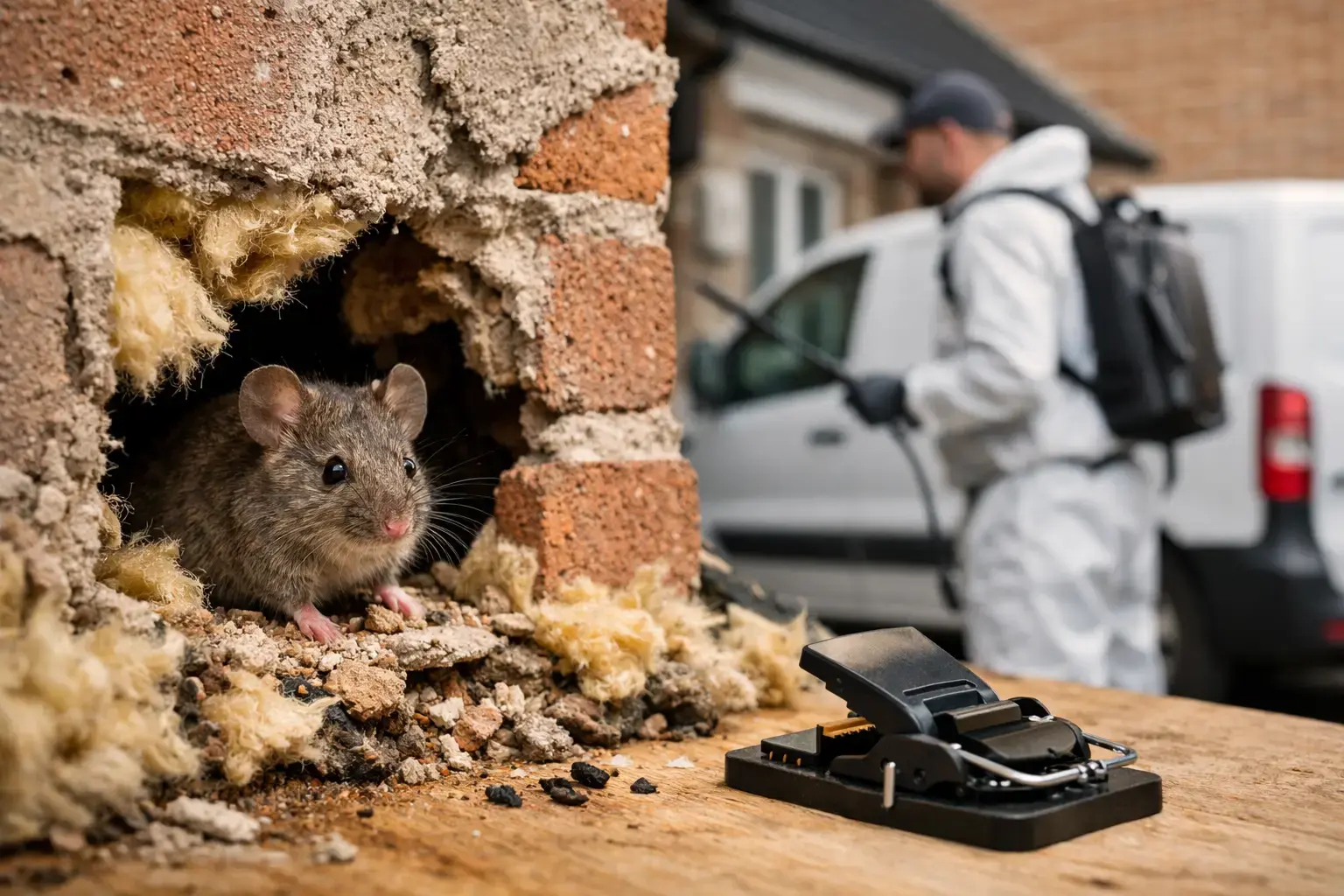
Scratching behind the plaster at night is rarely a problem that disappears on its own. Mice in cavity walls can remain hidden for weeks, using insulation, service gaps and wall voids to move around a property without being seen. By the time a mouse appears in the kitchen or loft, there may already be an established access route inside the building fabric.
For homeowners, landlords and businesses, the priority is not simply removing the mice that are visible. It is finding where they are entering, treating the activity safely and preventing the same problem from returning.
Why mice choose cavity walls
Cavity walls provide exactly what mice need: shelter from weather, warmth from the property and protected routes between floors, rooms and roof spaces. Modern homes can be particularly attractive in colder months, but older properties also have plenty of potential entry points around damaged brickwork, air bricks, pipework and extensions.
A mouse only needs a gap of around 6mm to gain access. That means a small opening beneath a door, around a utility pipe or at the edge of an air vent can be enough. Once inside, they may travel through wall cavities, beneath floors and above ceilings, emerging where food and warmth are available.
Insulation can make the issue harder to spot. Mice may nest within disturbed insulation or use it as protected cover, while their movement remains almost completely out of sight. This is why a trap placed in one room may catch an occasional mouse without addressing the source of the infestation.
Signs of mice in cavity walls
The most common sign is noise. Mice are usually most active after dark, so light scratching, scurrying or intermittent squeaking from walls, ceilings or under floors can indicate activity. Their sounds are often localised, but the same mouse may travel some distance through a cavity, making it difficult to identify the exact nesting point by noise alone.
Other signs are usually found in accessible areas close to the wall void. Look for small dark droppings along skirting boards, behind appliances, in cupboards, in lofts or near boiler boxing. Fresh droppings are darker and softer, while older droppings become dry and grey. A persistent musky smell may also develop where mice are nesting or urinating repeatedly.
You may notice gnawing on food packaging, timber, cable coverings or plastic pipework. Mice need to gnaw continually to wear down their teeth, and cables are not exempt. Damage to electrical wiring is a genuine concern, particularly in hidden areas where it may not be noticed until it affects an appliance, circuit or safety system.
In commercial premises, signs can be less obvious because activity often happens after closing. Stock damage, droppings in storage areas, gnawed packaging, unexplained hygiene concerns or repeated alarm call-outs can all justify a professional inspection.
The risks are more than an unpleasant noise
Mice in wall cavities can cause several problems at once. Contamination is the most immediate concern. Mice can contaminate food, preparation areas and stored goods through droppings and urine. In homes, this is especially concerning in kitchens and pantries. In commercial settings, it can affect hygiene standards, customer confidence and operational continuity.
There is also the risk of damage. Gnawed cables, pipe insulation, plasterboard and stored materials can turn a minor infestation into a costly repair. If mice disturb cavity-wall insulation, its performance may be reduced in affected areas. They may also carry nesting material into voids, creating unpleasant odours that persist after activity has stopped.
The risk level depends on the property and the scale of infestation. A single mouse finding its way indoors does not always mean there is a large nest in the wall. However, repeated noises, fresh droppings or regular sightings should be treated as evidence of an ongoing access problem rather than a one-off event.
Why DIY treatment often falls short
Store-bought traps can be useful for confirming activity in an accessible room, and good housekeeping will reduce available food. Neither measure reliably solves mice in cavity walls, though. The issue is that the route, rather than the visible mouse, is usually the real problem.
Sealing gaps too early can also be counterproductive. If active mice are still inside the property, blocking one exit may push them into another room, loft space or ceiling void. A rushed repair can make the infestation harder to monitor and treat.
Rodenticide should be handled with care. Incorrect use can create risks for children, pets and non-target wildlife. It may also result in a mouse dying in an inaccessible void, leading to an unpleasant smell. Professional pest control involves assessing where activity is taking place, selecting the right treatment method and monitoring progress before proofing the relevant entry points.
A professional approach to mice in cavity walls
Effective control starts with a detailed survey. The technician should inspect accessible internal areas, external walls, air bricks, drainage connections, rooflines, utility entries and possible gaps around extensions or garages. The objective is to understand how mice are getting in, where they are travelling and whether the wall cavity is part of a wider issue involving lofts, suspended floors or neighbouring structures.
Treatment is then tailored to the evidence found. This may involve targeted trapping, secured baiting in appropriate locations, monitoring equipment and follow-up visits. The best approach depends on the property layout, the presence of children or pets, the level of activity and whether the premises are domestic or commercial.
Proofing comes at the right stage of the process. Gaps around pipes may need a durable mesh and sealant solution, damaged air bricks may require rodent-resistant protection, and defects in brickwork, cladding or door thresholds may need repair. Airflow must be considered carefully. Air bricks should not simply be blocked, as they serve an essential ventilation function. They need protection that prevents rodent entry while maintaining ventilation.
For difficult-to-access elevations, rooflines or voids, a professional survey may use specialist inspection methods to identify defects that are not visible from ground level. That is particularly valuable where repeated infestations have continued despite previous treatment.
What you can do while waiting for treatment
Do not disturb suspected nesting areas inside a cavity or attempt to fill holes with expanding foam alone. Mice can chew through many unsuitable materials, and disturbing them may spread activity elsewhere in the property.
Instead, keep food in sealed containers, clear crumbs from cupboards and beneath appliances, and avoid leaving pet food out overnight. Check for obvious gaps around washing machine pipes, kitchen units and external doors, but make a note of them rather than sealing them immediately if there is confirmed active activity. If droppings are present, wear gloves and clean them carefully with appropriate disinfectant rather than sweeping or vacuuming dry material.
For landlords and property managers, document sightings, locations and dates. This helps establish patterns and allows treatment to focus on the correct areas. Businesses should also protect stock and record any pest activity as part of their site hygiene procedures.
When to arrange an inspection
Arrange professional help promptly if you hear repeated wall noises, find fresh droppings over several days, see mice during daylight hours or notice damage to cables, packaging or insulation. Daytime sightings can indicate increased activity or competition for food and nesting space.
A prompt survey is also sensible before carrying out major decorating, insulation work or building repairs. Sealing over an active route can conceal the problem without resolving it.
AZ Environmental Service Pest Control provides discreet, tailored rodent control for homes and businesses across Stockport and the surrounding area. The right response combines treatment, monitoring and proper proofing, so the mice are removed and the route they used is dealt with properly.
If you suspect activity behind your walls, act while the signs are still limited. Early professional action is usually simpler, cleaner and less disruptive than waiting for a hidden route to become a wider infestation.