

Blog
Mice Control Cheadle Hulme Done Properly
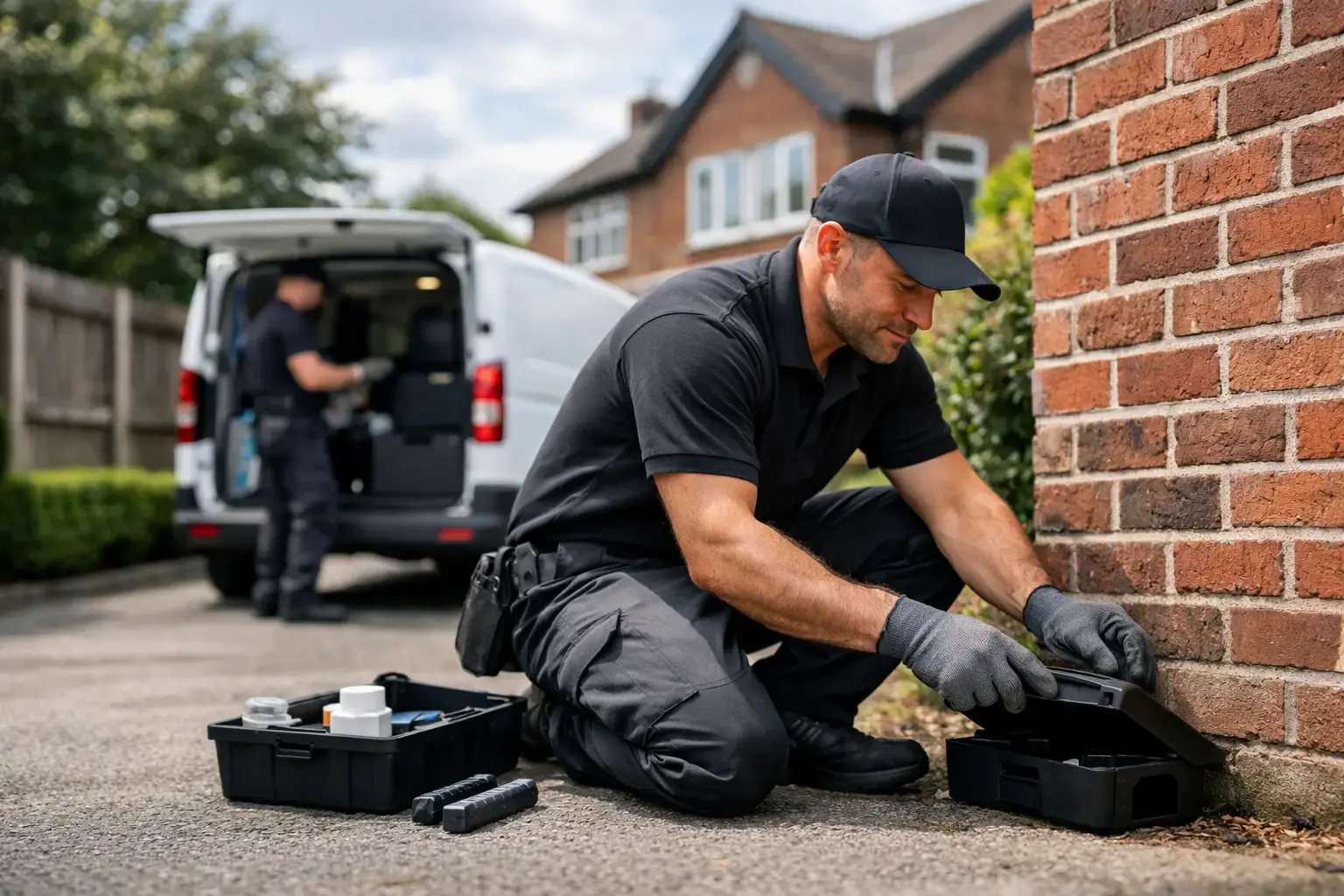
Scratching behind the skirting at night usually starts as a minor worry. Then you notice droppings in a cupboard, a gnawed cereal box, or a smell that was not there last week. That is when mice control Cheadle Hulme property owners need stops being a future job and becomes something that needs sorting properly.
Mice are not just unpleasant to live or work around. They contaminate food, damage insulation, chew cables and often stay hidden until numbers have grown. In homes, that creates stress and hygiene concerns. In commercial settings, it can quickly become a reputational and compliance issue. The mistake many people make is assuming a trap from the shop will deal with the root of the problem. Sometimes it catches one mouse. It rarely solves why they got in, where they are nesting, or what will happen next.
Why mice become a problem so quickly
Mice are built to exploit small gaps, quiet voids and regular food sources. A tiny opening around pipework, a damaged air brick, or a gap beneath a door can be enough for entry. Once inside, they look for warmth, shelter and easy feeding points. Kitchens, utility rooms, loft spaces, cavity walls and stock rooms are common activity areas.
What makes them difficult is not just their size. It is their behaviour. Mice are cautious but active, they can travel along wall edges unnoticed, and they breed quickly. If there are signs during daylight, the problem is often more established than it first appears. That is why effective treatment needs to be based on inspection, not guesswork.
Mice control in Cheadle Hulme needs more than bait and traps
The right approach depends on the property, the level of activity and how the mice are getting in. A domestic semi with loft activity needs a different plan from a food premises, office building or rental property with repeated issues between tenancies. There is no single treatment that suits every site.
Professional mice control in Cheadle Hulme should start with a proper survey. That means identifying active runs, harbourage points, entry routes, feeding sources and the scale of infestation. It also means understanding the trade-off between fast knockdown and long-term prevention. If treatment is carried out without proofing and hygiene advice, the infestation may drop for a while and then return.
For that reason, the strongest results usually come from a combination of targeted control measures and practical prevention work. The treatment reduces active numbers. The proofing work makes the property harder to invade again.
What a professional survey should pick up
A good survey is not just about spotting droppings. It should build a clear picture of how mice are using the building. In many cases, the obvious signs are only part of the story.
A technician should be looking at access points around extensions, garages, drain exits, service penetrations and roofing details. Indoors, the pattern of activity often shows up around kickboards, under appliances, suspended ceilings, risers and storage clutter. Commercial premises may also have issues linked to delivery areas, refuse handling or neighbouring units.
This is where experience matters. Two properties can show similar signs and need very different solutions. One may have a single access defect causing a localised issue. Another may have multiple harbourage areas and an ongoing attraction problem. The treatment plan needs to reflect that reality.
Common signs you should not ignore
The most obvious signs are droppings, gnaw marks, scratching noises and food damage. Grease smears along skirting boards or walls can also appear on established runs. A musky smell may develop in enclosed spaces. Pets sometimes detect activity before people do, especially around kitchen units or boxed-in pipework.
If the issue is in a business setting, staff may notice packaging damage, activity in washrooms or kitchens, or sightings during cleaning and opening routines. One daytime sighting in a commercial property is enough reason to act quickly.
Why repeat infestations happen
A lot of repeat call-outs come down to one of three things. The first is incomplete treatment. The second is poor proofing. The third is a failure to remove what attracted the mice in the first place.
For example, baiting can reduce numbers, but if there is a gap around a waste pipe behind the kitchen units, more mice can follow the same route. Equally, proofing alone will not fix an established infestation if active mice are already inside wall voids or loft insulation. The real solution is joined-up work.
This matters for landlords and managing agents in particular. If a property has had mice before, it is worth asking why. Was the source ever fully identified? Were defects closed off? Was tenant guidance practical and realistic? Quick fixes often cost more over time because the same problem keeps resurfacing.
Domestic and commercial properties have different pressures
Homeowners usually want the issue resolved fast, discreetly and with minimal disruption. They want confidence that the treatment is safe, sensible and not more intrusive than it needs to be. In family homes, there is often concern about children, pets and contamination in food areas.
Commercial operators face a wider set of risks. Hygiene standards, audits, customer confidence and business continuity all come into play. A café, warehouse, office, school or managed residential block may each need a different service response. In these cases, documentation, monitoring and prevention can be just as important as the initial treatment.
That is why a specialist service matters. The right contractor should not just remove the current infestation. They should help reduce the chance of disruption returning.
What effective mice control Cheadle Hulme customers should expect
You should expect a clear explanation of what has been found, what treatment is needed and what happens next. Good pest control is not vague. It should tell you where the activity is, why it is happening and what practical changes will reduce risk after the treatment stage.
You should also expect discretion and professionalism. For many customers, especially businesses and landlords, that matters. Unmarked vehicles, careful site conduct and a straightforward service process all help keep the issue contained and managed properly.
Most importantly, you should expect a plan that goes beyond the first visit. Depending on the infestation, follow-up visits may be needed to check consumption, reset control points, assess activity levels and confirm that proofing work has held. Anyone promising a one-size-fits-all answer without a proper inspection is usually oversimplifying the problem.
The role of proofing and prevention
Proofing is often what separates a temporary improvement from a lasting result. This can include sealing service entry gaps, improving door sweeps, fitting mesh to vulnerable points and addressing structural defects that allow access. Housekeeping advice can also be part of the solution, but it should be realistic and specific to the building.
There is always an element of balance here. Not every property can be made completely mouse-proof in one step, particularly older buildings with multiple hidden voids. But targeted proofing based on actual evidence can make a major difference. The key is to focus on the routes being used, not to carry out random patchwork repairs.
When to call for help
If you have seen droppings, heard scratching at night, noticed gnawing or had repeated sightings, the issue is already worth investigating. Waiting usually gives mice more time to settle in and spread through the building. For businesses, delay can create avoidable risk. For households, it often means a larger and more frustrating problem a few weeks later.
The same applies if you have tried traps and the activity keeps returning. That usually points to hidden access routes, nesting areas or a wider infestation that has not been identified properly.
In Cheadle Hulme, many properties combine older building features with modern alterations, extensions and service penetrations. That can create access opportunities that are easy to miss without trained inspection. A local specialist with practical field experience is far more likely to find the true source than a generic, off-the-shelf approach.
AZ Environmental Service Pest Control takes that problem-solving approach seriously, with treatment plans built around the property, the level of activity and the need to stop repeat issues, not just reduce them for a few days.
The most useful next step is often the simplest one: get the property checked before the problem becomes bigger, noisier and more expensive than it needs to be.