

Blog
Loft Pest Camera Survey Review
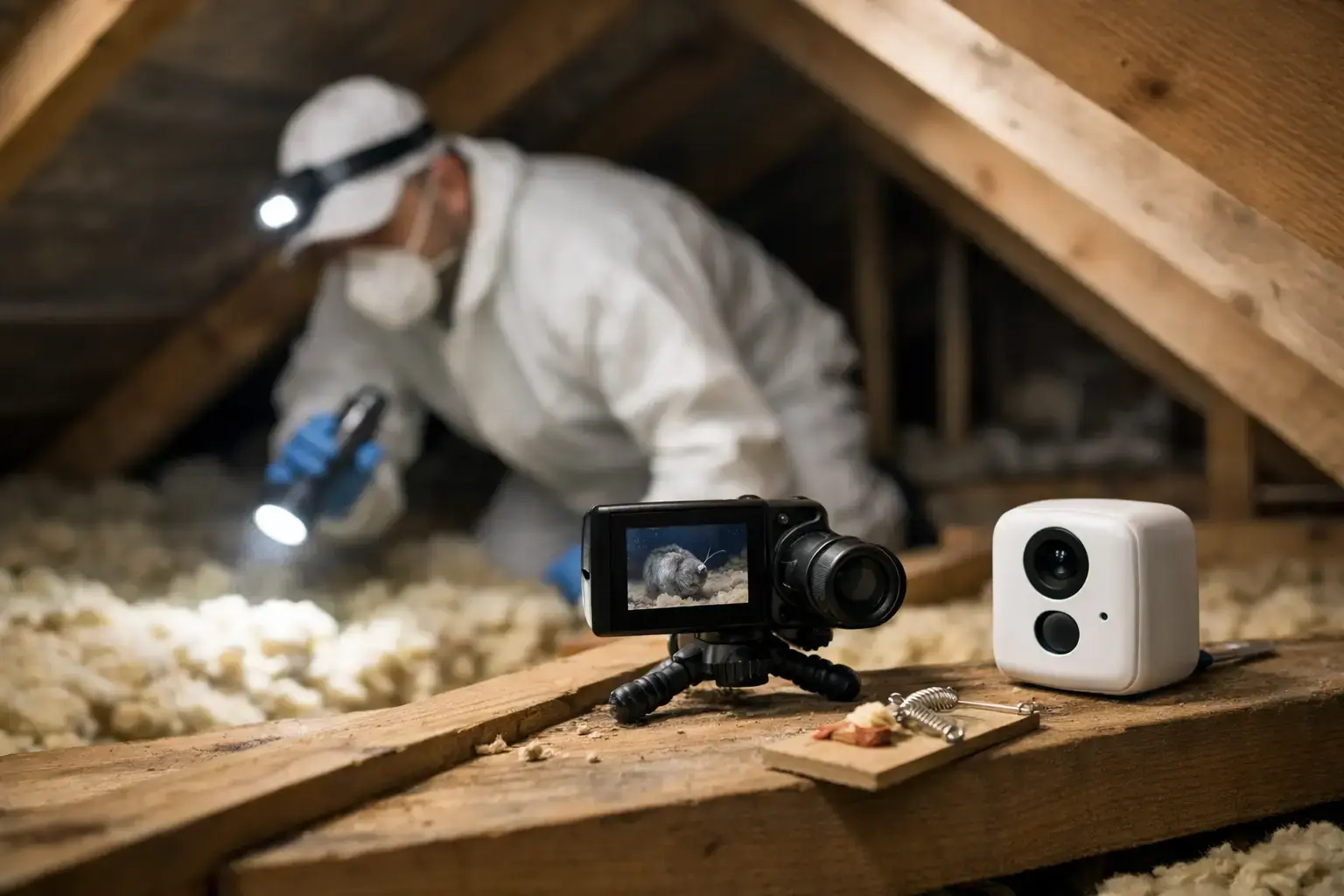
If you can hear scratching above the ceiling at night but there is no safe hatch access, no clear droppings in view, and no obvious entry point from ground level, a loft pest camera survey review becomes more than a nice extra. It becomes the quickest way to stop guessing. In many pest cases, the real delay is not treatment. It is finding out exactly what is in the loft, how active it is, and where it is getting in.
A camera survey is useful because loft spaces rarely tell the full story from the hatch. Insulation hides runs and droppings. Roof timbers create blind spots. Low eaves make physical inspection slow and sometimes unsafe. If a technician is forced to work from limited visibility, there is a higher chance of missing the nesting area, the access route, or the true scale of the infestation. Good pest control starts with evidence, not assumptions.
What a loft pest camera survey is actually for
A loft camera survey is not just a video of the roof void. It is a diagnostic inspection. The purpose is to check inaccessible or awkward loft areas for signs of rodents, birds, insect activity, nesting material, damaged insulation, contaminated areas, and potential proofing defects. In some cases it also helps confirm that a previous treatment has worked, especially where there has been historic rat or mouse activity and the customer wants reassurance before repairs are carried out.
That matters because many loft pest issues look similar from below. Light scratching can point to mice, young rats, squirrels or birds moving around rooflines. Staining around soffits may suggest repeated entry, but not which pest is responsible. A proper survey helps separate those possibilities before anyone recommends baiting, trapping, proofing or loft clearance.
Loft pest camera survey review - what you should expect
The value of any loft pest camera survey review depends on what happens before and after the camera goes up. A useful survey should begin with a wider inspection of the property. External checks often explain what the loft footage later confirms. Missing tiles, lifted flashing, open eaves, gaps around pipework and damaged air bricks can all point towards the route pests are using.
Once the loft is surveyed, the findings should be interpreted by someone who understands pest behaviour, not just someone who can operate a camera. Footage on its own is not the answer. The answer is knowing whether the visible evidence is current or old, isolated or widespread, and whether treatment, proofing or monitoring is the first priority.
A reliable review of the service should therefore include three things: clear evidence, clear diagnosis and a clear action plan. If any of those are missing, the survey may add interest without adding much value.
When a loft camera survey is the right choice
It is particularly useful where access is limited, the loft is heavily insulated, or the roof void is too tight for a full manual inspection. This is common in older properties with awkward roof angles, extensions with difficult junctions, and commercial premises where access equipment or disruption needs to be kept to a minimum.
It also helps where the pest issue is intermittent. Some customers only hear movement at night or during early morning. By the time they check the loft, there is nothing obvious to see. Camera inspection can reveal pathways through insulation, grease marks along timbers, fresh droppings, feather build-up, and nesting pockets that are easy to miss from a brief look through the hatch.
For landlords and property managers, there is another advantage. A camera survey creates a visual record. That is useful when deciding whether the issue is active, whether remedial works are justified, and whether proofing has dealt with the root cause. For commercial sites, that record can support maintenance decisions and internal reporting.
What the camera can find - and what it cannot
A good loft inspection camera can show signs of rats, mice, squirrels, birds and insect-related damage in roof spaces. It may identify nesting material, urine staining, gnawing on timbers or cables, compressed insulation from repeated movement, and daylight showing through defects that should be sealed. Where there is contamination, it can also help identify the extent of the affected area before any cleaning or insulation replacement is discussed.
But there are limits. A camera does not replace pest expertise, and it does not remove the need for treatment. It also cannot always give a perfect count of activity, especially if pests are not present during inspection or if the loft has multiple voids behind dwarf walls and boxed sections. In some properties, follow-up monitoring is still needed to confirm the full pattern of movement.
That is why honest advice matters. If someone presents a camera survey as a complete solution in itself, that should raise questions. The survey is there to improve accuracy and reduce wasted time. The result should be a better treatment and proofing plan, not a false sense that the problem has already been solved.
Why camera surveys often save money
Some customers hesitate because they see the survey as an added cost. In reality, it can prevent the more expensive mistake of treating the wrong pest problem or treating only part of it. If rats are entering through a broken eaves junction, poisoning alone will not stop repeat visits. If mice are nesting in one insulated corner and travelling along hidden pipe routes, a general approach may miss the centre of activity.
A camera survey can also reduce unnecessary disturbance. Without clear findings, customers sometimes lift insulation, clear stored items or arrange repair works too early. Once the infestation has been mapped properly, the work becomes more targeted. That means less mess, less wasted labour and a better chance of getting the result right first time.
For properties in Stockport and surrounding areas, where loft layouts vary significantly between terraces, semis, detached homes and converted spaces, that accuracy is especially important. No two roof voids behave in exactly the same way.
What separates a useful survey from a poor one
The best surveys are practical and outcome-focused. You should come away knowing what pest is present or likely present, what evidence supports that view, where the likely entry point is, and what needs to happen next. If the report is vague, overloaded with technical wording, or avoids committing to a recommendation, it has not done its job.
There is also a difference between footage and interpretation. A camera might show droppings, but an experienced technician can estimate whether they are old or fresh. A camera might show disturbed insulation, but experience helps determine whether that points to rodents or previous electrical work. This is where a specialist pest company adds real value.
At AZ Environmental Service Pest Control, this type of survey is approached as part of the wider job of solving the infestation properly. That means identifying the pest, confirming activity, locating access points where possible, and building a treatment and proofing plan that matches the evidence on site.
Loft pest camera survey review for homeowners and commercial sites
For homeowners, the main benefit is certainty. You want to know what is above your ceiling before the problem worsens, before contamination spreads, and before you spend money on the wrong fix. A survey gives you a clearer basis for action, especially if the noise has been ongoing or previous attempts have not resolved it.
For commercial customers, the benefit is often speed and accountability. If there is suspected pest activity in a roof void above offices, storage areas, hospitality units or managed premises, you need a discreet and documented way to assess the issue. Camera surveys support that process well, particularly when access constraints or operational pressures make traditional inspection less efficient.
In both settings, the principle is the same. Better visibility leads to better decisions.
Is a loft pest camera survey always necessary?
No. If there is clear access, obvious evidence and a straightforward route of entry, a standard inspection may be enough. Not every loft problem needs technology added for the sake of it. A good pest professional should tell you when a camera survey is useful and when it is unnecessary.
That said, it becomes far more worthwhile when the evidence is hidden, the access is poor, or the issue keeps returning. In those cases, the survey can be the difference between repeated call-outs and a proper fix.
If you suspect pest activity in your loft, the sensible next step is not to guess louder. It is to get clear evidence, then act on it with a treatment plan that matches the problem.