

Blog
How to Stop Pigeons Roosting for Good
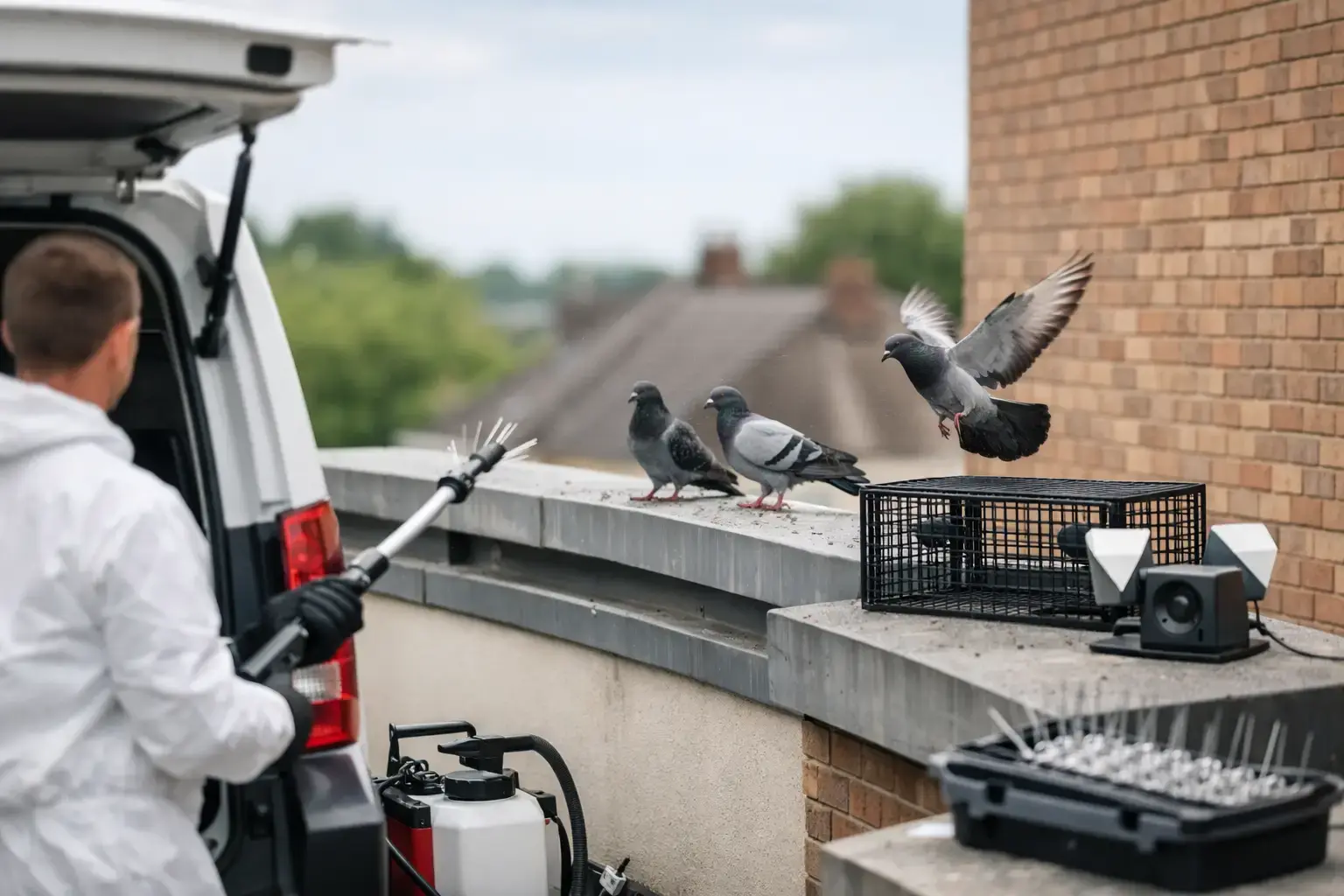
If pigeons have chosen your roofline, balcony or solar panels as their regular perch, the problem rarely stays minor for long. Knowing how to stop pigeons roosting matters because once birds settle into a routine, droppings build up quickly, gutters block, noise becomes constant and the same access points keep being used day after day.
Pigeons are creatures of habit. If a site offers shelter, height and a reliable resting point, they will return unless that space is changed or physically denied. That is why quick fixes often disappoint. Scaring birds away for a few hours is not the same as solving the reason they keep coming back.
Why pigeons keep roosting on the same property
Roosting is different from feeding. A pigeon may feed in one area and still choose a completely different place to rest, shelter or nest. Roof edges, chimney breasts, warehouse beams, shop signs, loading bays, balconies and the void beneath solar panels all provide what pigeons want - cover from the weather, a good vantage point and relative safety from disturbance.
In domestic settings, the issue often starts with one or two birds and then expands. On commercial premises, especially where food waste, warmth or sheltered structures are present, pigeon activity can become persistent very quickly. Once droppings accumulate, they also attract attention to neglected maintenance issues such as blocked rainwater goods or damaged netting.
There is also a health and safety side to it. Pigeon fouling is not just unpleasant to look at. It creates slip hazards, damages surfaces over time and can affect hygiene-sensitive environments. For landlords and business owners, that can become more than a nuisance.
How to stop pigeons roosting effectively
The most effective answer is nearly always a combination of proofing, deterrence and site correction. Relying on one measure alone can work in some cases, but it depends on the location, the number of birds and how established the habit has become.
Start by removing what is attracting them. Open food sources, overflowing bins, fallen seed from bird feeders and neglected waste areas all make a property more appealing. If birds are being fed intentionally nearby, that can make control harder, but it still does not make proofing impossible.
After that, the key is to deny access to the exact roosting points. On ledges, parapets, signs and roof edges, bird spikes are often effective when fitted correctly. They do not harm the birds, but they stop them settling comfortably. Poorly fitted spikes, however, leave gaps and pigeons will simply work around them. Installation matters as much as the product itself.
On larger areas such as courtyards, warehouse frames, canopies and loading bays, bird netting is often the stronger option. Netting creates exclusion rather than irritation. If it is properly tensioned and sealed at the edges, it prevents birds entering the protected space. If it is badly fitted or damaged, it can fail quickly and create a bigger maintenance problem.
For solar panels, specialist solar proofing is usually the right approach. Pigeons are drawn to the warm, sheltered void beneath panels, where they can roost and nest out of sight. This is one of the most common bird problems on modern homes. Mesh systems designed for solar arrays block entry without damaging the panels themselves, but access must be handled carefully to avoid causing damage to the installation.
When deterrents help and when they do not
Visual deterrents and sound-based devices can play a role, but they are often overestimated. Reflective items, imitation predators and noise units may unsettle pigeons at first, especially if the birds are only occasional visitors. Where birds are already established, these methods usually offer only short-term disruption.
Pigeons learn quickly. If a deterrent does not present a real barrier, they tend to ignore it after a short period. This is why many property owners end up spending money repeatedly without seeing a lasting result. A deterrent can support a control plan, but in most recurring cases it should not be the whole plan.
Gel products are another area where caution is needed. Some can be useful in the right setting, but they are not suitable everywhere, especially where dust, weather exposure or heavy bird pressure are involved. On some surfaces, they also create maintenance issues of their own. Choosing the wrong method for the structure usually leads to repeat call-outs.
The best way to stop pigeons roosting on roofs and ledges
Roofs and ledges are among the hardest areas for householders to manage safely. The birds favour them because they are elevated, quiet and often undisturbed for long periods. The best approach is usually to inspect the full roofline rather than treating only the point where the droppings are most obvious.
A single active ledge often means there are several access and resting points across the property. You may see fouling on a garage roof, but the birds could be landing first on a chimney stack, crossing the ridge and then sheltering behind fascia details. Without checking the whole route, treatments can miss the actual problem area.
This is where a proper survey makes a difference. For taller buildings, awkward roof spaces or solar installations, professional inspection methods such as UAV surveys can identify activity without unnecessary disruption. That allows proofing to be targeted properly instead of guessing from ground level.
Domestic and commercial pigeon problems are not the same
Homeowners usually want the noise, mess and damage stopped as quickly as possible. The focus is practical - clean access, protected roofs, safe gardens and preventing birds from nesting under panels or on balconies.
Commercial sites often carry extra pressure. Roosting pigeons can affect customer perception, staff safety and compliance expectations. Warehouses, schools, offices, retail units and food-related premises need control measures that are effective but also discreet and appropriate for the building. In many cases, work has to be planned around operating hours and public access.
That is why there is no single answer to how to stop pigeons roosting. A house in Bramhall with pigeons under solar panels needs a different solution from a town centre unit with birds fouling signage and service entrances. The right fix depends on the structure and the level of activity, not just the species involved.
Common mistakes that make the problem worse
One of the biggest mistakes is waiting until nesting starts. Once nests, eggs and young birds are present, control options become more restricted and timing becomes more important. Early action is always simpler, cleaner and more cost-effective.
Another common mistake is partial proofing. Blocking one section of a roof while leaving the adjacent section open often just moves the problem a few feet away. The birds are still on the property, and the issue returns in a slightly different form.
Cleaning without proofing is another false economy. If droppings are removed but the access point remains unchanged, the area is quickly re-used. In some cases, fouling can even increase because the site has effectively been reset and made available again.
Finally, DIY work at height creates obvious risks. Ladders, fragile roofing materials and solar panel edges are not worth taking chances with. Bird control should solve one problem, not create another.
When to bring in a professional bird control specialist
If pigeons are returning daily, nesting on the property, roosting under solar panels or causing repeated fouling on roofs, ledges or entrances, it is usually time for professional assessment. The same applies where earlier deterrents have failed or where the building is difficult to access safely.
A specialist should do more than fit products. They should identify why the birds are selecting the site, recommend the right proofing system for the structure and carry out work in a way that is humane, compliant and built to last. That is especially important on commercial properties, listed buildings and managed blocks where access, appearance and duty of care all matter.
For property owners in Stockport and surrounding areas, local knowledge can help too. Different building types create different roosting patterns, from older terraces with chimney activity to newer homes where solar panel voids are the main issue. A practical, site-specific response usually outperforms generic advice.
Pigeons are persistent, but they are not unbeatable. If the roosting point is properly identified and professionally denied, the pattern can be broken. The sooner that happens, the easier it is to protect the building, reduce cleaning costs and stop a nuisance becoming an established problem. If birds have made themselves at home on your property, the right action now saves a far bigger job later.