

Blog
How to Spot Cockroach Activity in Your Property
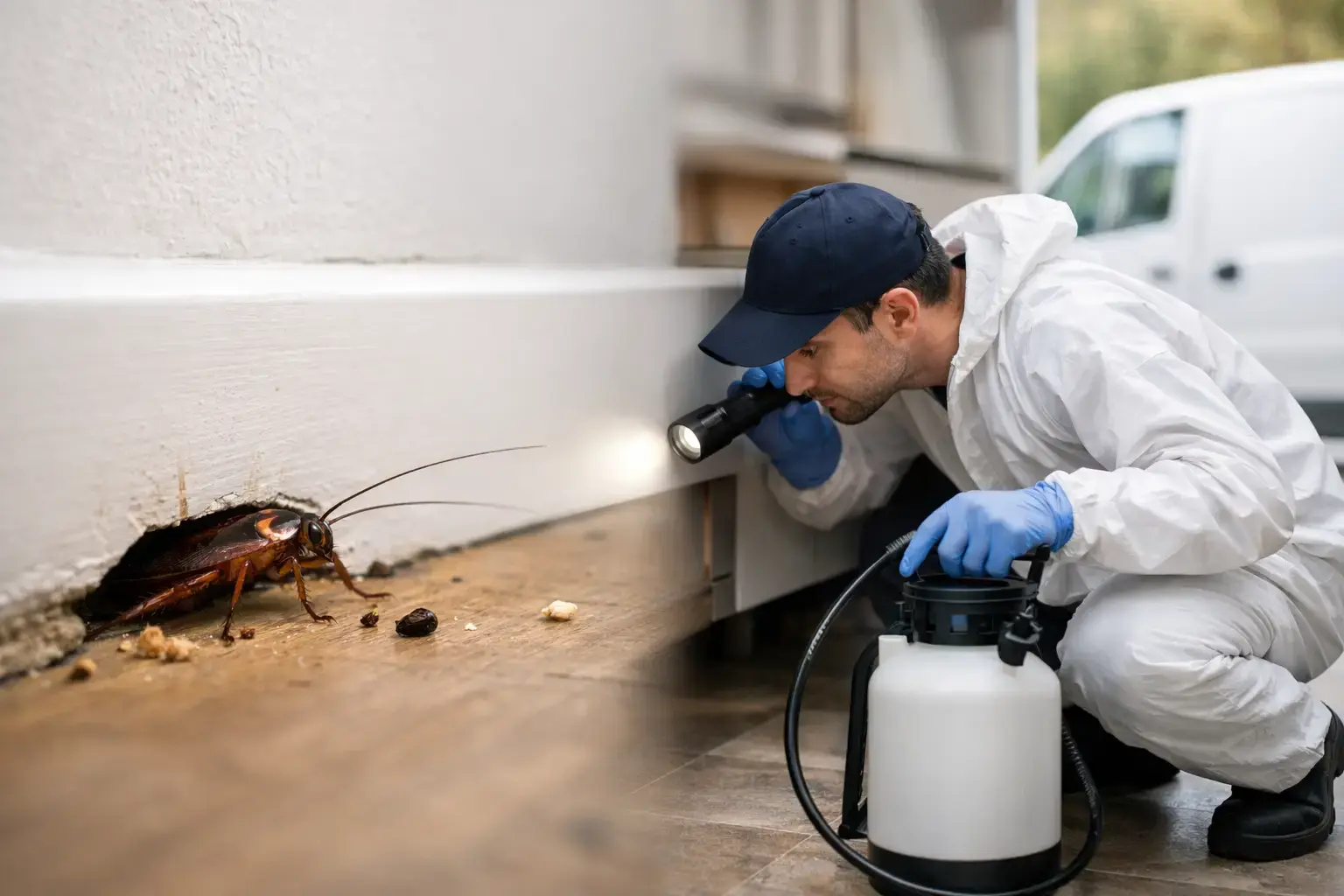
A cockroach problem rarely begins with a cockroach running across the kitchen floor. These pests are largely nocturnal, fast-moving and skilled at staying out of sight. Knowing how to spot cockroach activity means looking for the smaller clues they leave behind - often in warm, hidden areas close to food, water and electrical equipment.
Early action matters. A small number of cockroaches can establish quickly in the right conditions, particularly in kitchens, utility rooms, staff areas, communal bin stores and food-handling premises. The sooner the source is identified, the more effectively it can be treated and proofed.
How to spot cockroach activity before you see one
Cockroaches need three things: shelter, moisture and a reliable food source. They prefer tight, undisturbed gaps and will often remain hidden during daylight hours. That is why a clear sighting is not the only, or even the first, sign of an infestation.
A methodical inspection should focus on the areas around sinks, boilers, fridges, dishwashers, washing machines, pipework, cupboard hinges and wall-floor junctions. In commercial settings, check behind cooking equipment, under counters, inside service voids and around stock storage. A torch, patience and attention to detail are more useful than a quick glance around the room.
Droppings in cupboards, corners and equipment gaps
Droppings are one of the most reliable signs of active cockroach activity. Small cockroach species, including the German cockroach commonly found indoors in the UK, leave droppings that resemble black pepper, coffee grounds or fine dark specks. You may find them along cupboard edges, in drawer runners, behind appliances and beside pipe entries.
Larger cockroaches produce more substantial, dark cylindrical droppings. The size and appearance can vary, so it is sensible not to diagnose a pest problem from one mark alone. Mouse droppings, dirt from a damaged seal or debris from an appliance can sometimes be mistaken for cockroach evidence.
What matters is the pattern. Fresh droppings repeatedly appearing in protected areas, particularly near food preparation surfaces or water sources, require investigation. Wipe the area clean, then check again after a day or two. New deposits indicate current activity rather than an old issue.
A stale, oily or musty smell
An established cockroach infestation can produce an unpleasant, lingering odour. People describe it as musty, stale, greasy or slightly sweet. The smell comes from cockroach secretions, droppings and aggregation pheromones, and it tends to become stronger where numbers are high or harbourage is close by.
Odour alone is not proof. Damp, drains, spoiled food or neglected bin areas can all create similar smells. However, when an odour is combined with droppings, shed skins or sightings, it is a strong indication that cockroaches are present.
Shed skins and egg cases
As cockroaches grow, they shed their outer skin. These pale brown, papery skins are often found near the places where they hide. Check the back of cupboards, behind kickboards, under loose flooring, around warm appliances and inside cluttered storage areas.
You may also find egg cases, known as oothecae. They are small, brown, capsule-shaped cases with a ridged appearance. Some species carry the egg case until close to hatching, while others leave it in a secure location. Finding one does not tell you exactly how large an infestation is, but it does show that breeding may be taking place.
Smear marks along regular routes
Cockroaches often follow the same routes between harbourage, water and food. In areas with heavy activity, they can leave dark smear marks on walls, skirting boards, shelf edges and around door frames. These marks are most likely to appear in humid locations or narrow gaps where cockroaches repeatedly squeeze through.
Look closely around pipe penetrations under the sink, the sides of kitchen units and the rear of appliances. Marks in these areas can reveal a route even when the main harbourage is hidden deeper inside a void.
Live cockroaches, especially during the day
Seeing a cockroach at night does not automatically mean there is a major infestation, but it should never be ignored. Seeing several, seeing young cockroaches, or seeing them during the day is more concerning. Daytime sightings can suggest that harbourage is overcrowded or that the population is large enough to force cockroaches out of their usual hiding places.
If possible, take a clear photograph from a safe distance. Correct identification affects the treatment plan. Cockroaches are commonly confused with beetles, crickets and other insects, and different species behave differently.
Where cockroaches are most likely to hide
Cockroaches are not drawn to a property simply because it is untidy. Poor hygiene can provide food, but even very clean homes and well-run businesses can experience activity where warmth, moisture and access points are available. They may arrive in deliveries, second-hand appliances, cardboard packaging, neighbouring flats or through service routes.
In homes, the highest-risk locations are kitchens, bathrooms, airing cupboards, utility rooms and areas around plumbing. Check behind the fridge compressor, beneath the cooker, under the sink and around any appliance that produces warmth or condensation.
For landlords, managing agents and commercial operators, shared services and inaccessible voids deserve particular attention. Cockroaches can move between units through pipework, electrical trunking, ceiling voids and poorly sealed service penetrations. Treating one visible room without checking the wider route can lead to repeated activity.
Food businesses, care settings, offices with kitchens, warehouses and hospitality premises need a particularly careful response. Cockroaches can contaminate food-contact areas and undermine hygiene controls. A discreet professional inspection helps establish the extent of the issue without disrupting normal operations.
Signs that activity is getting worse
A single old egg case or isolated insect does not always mean there is a live infestation. Evidence becomes more urgent when signs are fresh, repeated or found across more than one area. Regular sightings, increasing droppings, young nymphs, a developing odour and activity in several rooms point towards an established population.
Do not rely on aerosol sprays as a solution. Spraying visible insects may kill a few individuals but can disturb others and drive them further into wall voids or adjacent rooms. It may also make a professional inspection more difficult if evidence is scattered or bait acceptance is affected.
Avoid moving infested appliances, cupboards or stock to another room before the problem has been assessed. This can spread cockroaches and their egg cases into previously unaffected areas. In commercial premises, keep a simple record of sighting locations, dates and any evidence found. It gives a pest technician a clearer picture of likely travel routes and harbourage.
What to do when you find cockroach evidence
Start by removing accessible food and moisture sources. Store dry goods in sealed containers, clear crumbs and grease from beneath appliances, empty internal bins regularly and repair leaking taps or pipework. Reduce clutter, especially cardboard, bags and unused packaging near kitchens or stock areas. These actions support treatment, but they are unlikely to eliminate an established infestation on their own.
Next, avoid disturbing likely harbourage. Do not pull apart fitted units, dismantle electrical equipment or apply uncontrolled chemicals in food areas. Cockroach treatments are most effective when the species, population level, harbourage and movement routes have been properly assessed.
A professional survey can identify whether the problem is localised or linked to a wider building issue. Treatment may involve targeted gel baiting, monitoring, insect growth regulation where appropriate, crack-and-crevice treatment and pest proofing. The correct approach depends on the species, the property layout, the presence of children or pets, and whether the site handles food or serves the public.
For homes and businesses in Stockport and the surrounding area, AZ Environmental Service Pest Control provides discreet inspections and tailored cockroach treatment programmes designed to deal with the source, not just the insects in view.
Cockroaches are easiest to control when the evidence is still limited. If you are finding fresh droppings, shed skins or repeated sightings, treat those signs as a reason to act promptly rather than waiting for the problem to become obvious.