

Blog
How to Seal Entry Points Against Rodents
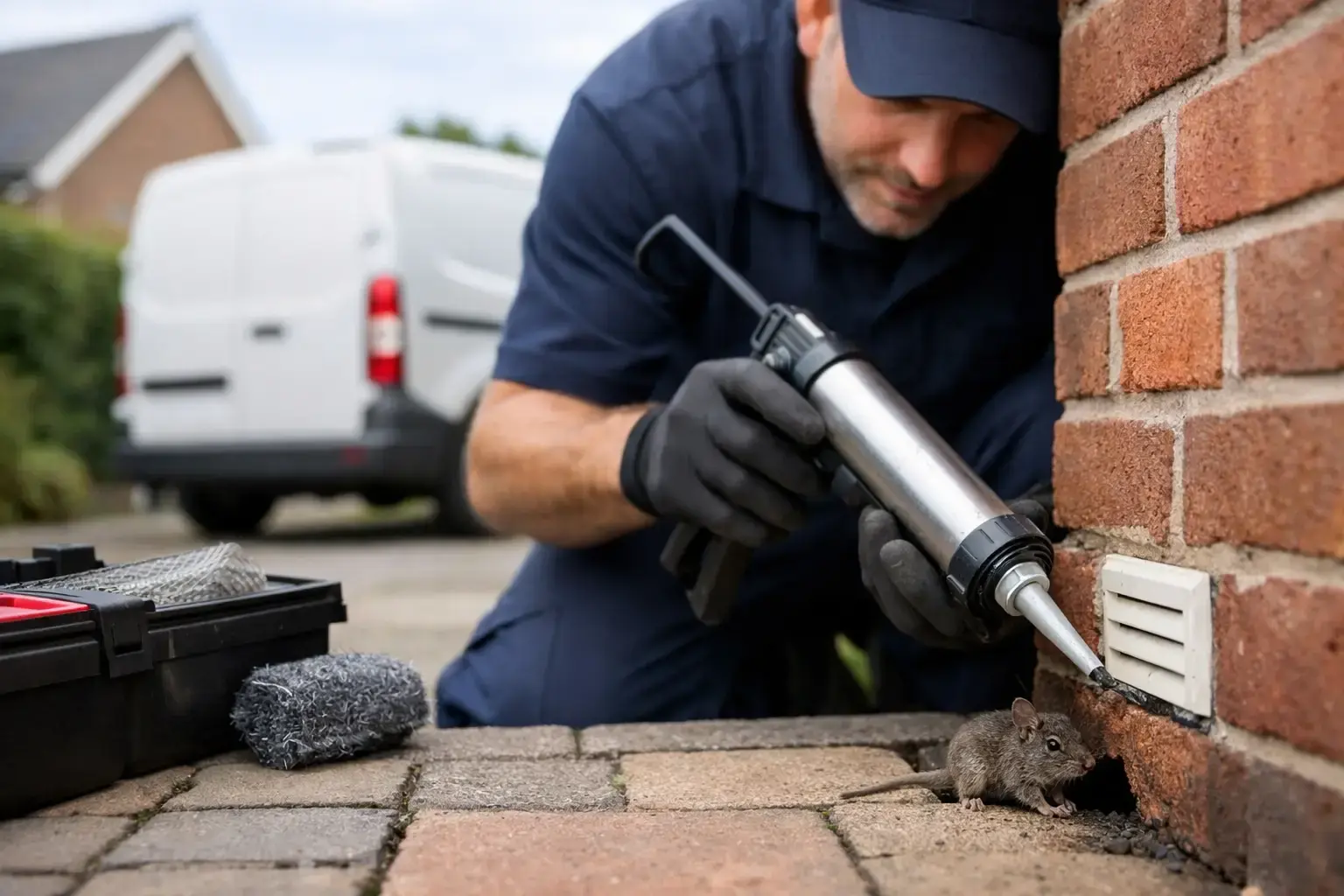
That scratching behind a kitchen unit or the sudden appearance of droppings along a skirting board usually means one thing - rodents have already found a way in. If you want to seal entry points against rodents properly, the job is not about filling random gaps with whatever is to hand. It means identifying exactly how mice or rats are moving through a property, understanding why they favour certain routes, and using the right proofing materials so the problem does not return a few weeks later.
Rodent proofing is often the difference between a short-term treatment and a lasting result. Poison or trapping may deal with current activity, but if the building still offers access, warmth and shelter, new rodents can move in quickly. That is why effective pest control always includes prevention as well as treatment.
Why rodents keep getting back in
Mice and rats do not need much space. A mouse can squeeze through a gap far smaller than most property owners expect, and rats will exploit damaged air bricks, broken drains, poorly fitted doors and service entry points around pipework. In older properties, these access points can build up over time through general wear, minor building movement and previous repair work that was never finished properly.
Commercial premises face the same issue, often on a larger scale. Roller shutter doors, loading areas, ceiling voids, ducting and plant rooms all create opportunities. In food sites, offices, warehouses and rental properties, the challenge is not just stopping the immediate pest issue. It is protecting hygiene standards, reputation and business continuity.
Where to check when you seal entry points against rodents
The most common mistake is looking only at eye level. Rodent access points are often low down, hidden behind stored items, or tucked under fixtures and external cladding. A proper inspection should cover the full building envelope, not just the room where activity has been noticed.
Start outside. Check around drain covers, waste storage areas, external pipe penetrations, air bricks, broken mortar joints and gaps beneath doors. Look at where cables and pipes pass through walls. Even a small unfinished opening around utility lines can become a regular route in and out.
Then inspect internally. Focus on understairs cupboards, utility rooms, loft spaces, suspended ceilings, risers, kitchen voids and behind integrated appliances. In commercial settings, service voids and stock rooms deserve particular attention because they are often disturbed less frequently and give rodents safe cover.
Fresh rub marks, droppings, gnawing and greasy smears near an opening usually indicate an active route. If there is a hole but no sign of use, it still needs attention, but active points should be prioritised first.
Not all materials are suitable
A lot of failed proofing work comes down to poor material choice. Rodents are persistent chewers. Standard expanding foam on its own is not rodent proof, and neither is thin plastic mesh or a basic filler used for cosmetic repair. These may close a gap visually, but they will not stand up to continued pressure.
Effective proofing usually involves more durable materials such as galvanised wire mesh, metal kick plates, cement-based repair, rodent-resistant sealants used correctly, and purpose-made covers for air vents and drainage points. The right choice depends on the size and location of the gap, what services pass through it, and whether the area is exposed to weather, moisture or repeated wear.
There is also a balance to strike. A building still needs ventilation and safe access to utilities. Blocking an air brick entirely or sealing around pipework without considering heat, condensation or maintenance access can create a new problem. Good proofing stops rodents without compromising the building.
The areas that are most often missed
Some entry points are obvious once you know what to look for. Others are repeatedly overlooked, especially in busy properties.
Door thresholds are a common weak point. A worn brush strip or a small gap under a rear door may be enough for mice. Likewise, damaged brickwork behind stored bins, gaps beneath external cladding, and faults around old boiler pipe entries are all frequent access routes.
Drains are another major factor, particularly for rats. If there is a broken drain or defect in the system, rodents can travel through pipe runs and emerge within the building footprint. In those cases, sealing visible holes indoors will not solve the underlying issue. The route has to be identified and addressed properly.
Loft junctions and roofline defects can also matter more than people think. While rats are often associated with ground-level access, they are strong climbers and will exploit overhanging branches, defective soffits and gaps at eaves level if conditions allow.
How to approach proofing properly
The first step is always inspection. You need to know whether you are dealing with mice, rats or both, because their behaviour and access routes differ. You also need to establish whether activity is current, historical or coming from an adjoining property, neighbouring yard or shared service run.
Once the route is confirmed, proofing should be carried out in a planned order. Active entry points come first, then secondary vulnerabilities nearby. It rarely makes sense to repair a single gap if three more are present within the same area. Rodents will simply switch route.
Timing matters too. In some infestations, especially heavy internal activity, proofing should be coordinated with trapping or treatment so rodents are not sealed into inaccessible voids. In multi-occupancy buildings or commercial sites, proofing may also need to be phased to avoid disrupting operations.
This is where experience counts. A straightforward hole around a pipe is one thing. A food premises with recurring rat activity linked to drainage defects, service ducting and external waste storage is a different level of problem entirely.
Domestic and commercial properties need different thinking
For homeowners, the goal is usually simple - stop rodents getting in, protect the home and avoid repeat callouts. That often means dealing with kitchens, garages, lofts, sub-floor voids and garden-side access points. The repair work needs to be neat, durable and suited to everyday living.
For landlords and managing agents, proofing also needs to hold up between tenancies and reduce the risk of ongoing complaints. Temporary patch jobs tend to cost more over time because the same issue comes back.
Commercial properties need a stricter standard. Proofing must support hygiene, compliance and audit expectations, particularly where food handling, healthcare, hospitality or public-facing operations are involved. In these environments, even minor rodent activity can quickly become a serious business risk.
When a DIY fix is enough - and when it is not
There are situations where a simple repair can help. Replacing a damaged door sweep, fitting a proper cover over a vent, or making good a very small external gap with the correct materials may be reasonable if there is no sign of established infestation.
But if you are seeing repeat activity, hearing movement in voids, finding droppings in several areas, or dealing with rats rather than mice, it is usually time for a professional survey. The same applies if the property is tenanted, commercial, or part of a larger block where access routes may cross boundaries.
The risk with DIY proofing is not just that it fails. It can also hide evidence, delay the right treatment and make the real source harder to trace later.
Seal entry points against rodents for long-term control
To seal entry points against rodents effectively, the focus has to be on the full picture - inspection, species identification, treatment where needed, and durable proofing that matches the building. Quick fixes rarely deliver long-term control. Proper pest proofing does.
For properties in and around Stockport, where older housing stock, mixed-use buildings and busy commercial sites often create hidden access opportunities, a thorough assessment is especially valuable. Problems that seem minor at first can spread through cavity walls, roof spaces, drainage runs and service voids before they become visible.
At AZ Environmental Service Pest Control, proofing work is approached as part of the wider solution, not an afterthought. That means identifying why rodents are getting in, resolving current activity and closing down the routes that allow the problem to continue.
If you suspect rodents are entering your property, do not wait for the signs to build. The earlier entry points are found and dealt with properly, the easier it is to protect the building, the people using it and the standards you need to maintain.