

Blog
How to Remove Wasp Nest Safely
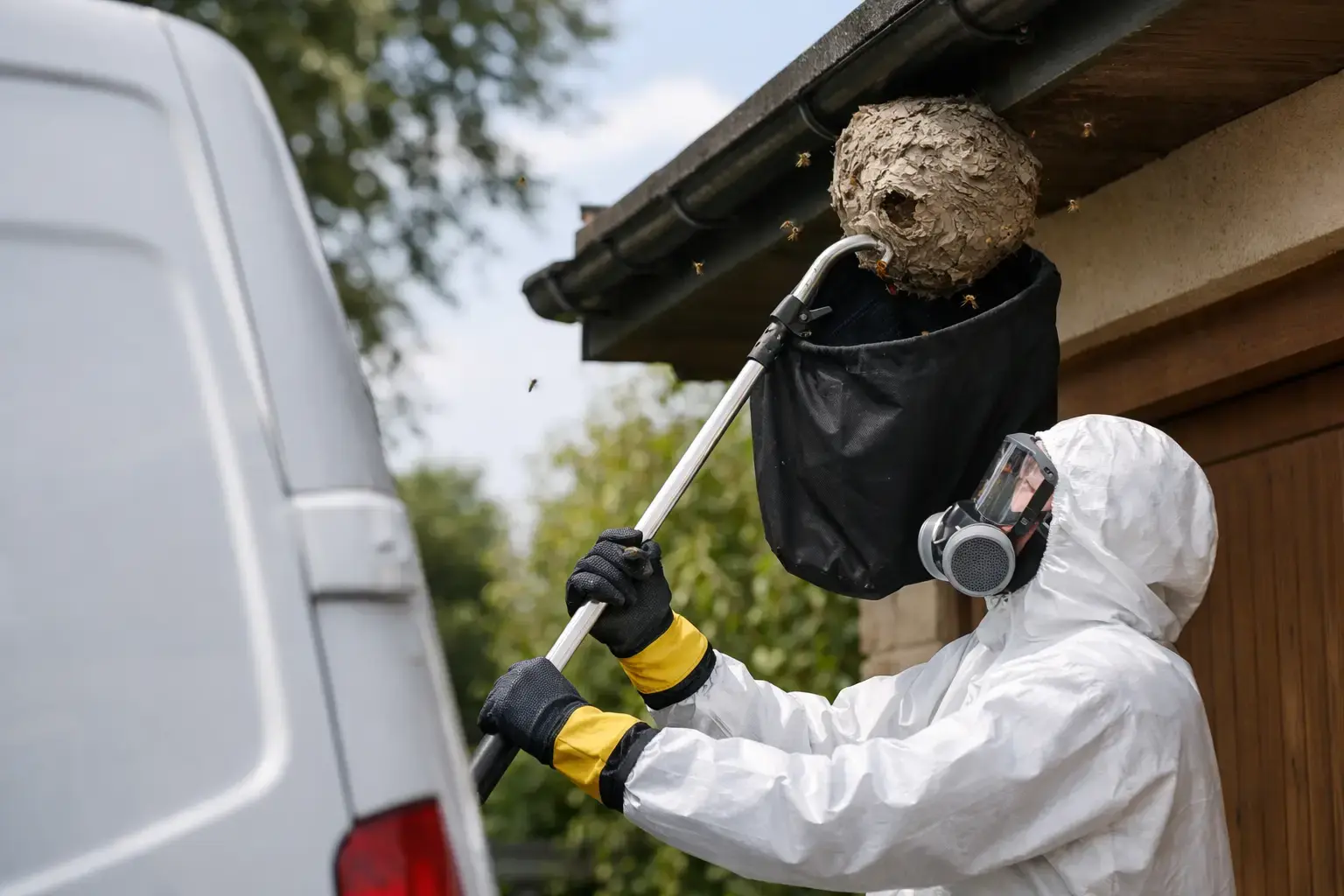
A wasp nest is rarely a problem you can ignore for long. What starts as a few wasps around the eaves, loft or garden shed can quickly turn into a busy nest with dozens, then hundreds, of defensive insects. If you are searching for how to remove wasp nest safely, the first thing to know is simple - the risk is not just the sting itself, but what happens when a nest is disturbed without the right approach.
For homeowners, landlords and business premises, the right response depends on the nest location, the level of activity and who may be put at risk nearby. In some cases, leaving a nest alone for a short period is reasonable. In many others, especially where access routes, outdoor seating areas, roof spaces or play areas are affected, fast professional treatment is the sensible option.
How to remove wasp nest without making it worse
The biggest mistake people make is treating a wasp nest as a basic DIY job. Spraying the outside of the nest with shop-bought aerosol, knocking it down with a pole or blocking the entry hole almost always makes matters worse. Wasps defend the colony aggressively when they detect a threat, and a poorly timed attempt can trigger a mass attack.
A second problem is misjudging the nest itself. What looks like a small nest on the outside may only be the visible part of a larger colony hidden inside a cavity wall, loft void or under roof tiles. If the nest is concealed, surface treatments are unlikely to reach the centre of activity. That means the wasps survive, stay agitated and may find a new exit point elsewhere in the building.
This is why safe removal starts with identification and access assessment. You need to know whether the nest is active, exactly where it sits, how the wasps are entering and whether treatment can be applied directly and safely. Without that, removal becomes guesswork.
When you should not try to remove a wasp nest yourself
There is no value in taking risks to save a small call-out fee. If the nest is in a loft, cavity wall, chimney, roofline, tree, hedge, garage, outbuilding or beneath decking, caution is needed. The same applies if anyone at the property is allergic to stings, if children or pets use the area, or if the nest is close to a doorway, footpath or working area.
Commercial sites carry added pressure. A nest near an entrance, bin store, loading area, school grounds, hospitality seating or warehouse access point can create a health and safety issue very quickly. In those situations, delaying treatment can be more disruptive than arranging professional removal straight away.
There is also the question of height. Nests under gutters, fascias and upper roof edges are common, but accessing them without proper equipment is risky in itself. Even if the treatment product works, working from a ladder while wasps become defensive is not a safe plan.
What professional wasp nest removal involves
Professional removal is not about simply destroying the visible nest. The job starts with locating the source, confirming species behaviour and applying the correct insecticidal treatment where it will be most effective. In most cases, the treatment is introduced directly into the nest or entry point so worker wasps carry it through the colony.
Once the treatment has been applied, activity usually reduces significantly over a short period. Timing can vary depending on nest size, access and weather, but the aim is always complete control of the active nest. Physically removing the empty nest is not always essential straight away, because the structure itself will not regenerate once the colony has been eradicated. What matters most is stopping live activity.
A proper service also considers what caused the issue in the first place. Gaps around soffits, vents, roof junctions and wall cavities often give wasps an ideal entry point. If those access points are left untreated or unsealed where appropriate, future nesting becomes more likely.
How to remove wasp nest in lofts and wall cavities
Lofts and cavity walls are two of the most common and most awkward nesting locations. They are also where DIY attempts fail most often. People hear buzzing behind plasterboard or see wasps entering near the fascia and assume the nest is easy to reach. In reality, the colony may be positioned well away from the visible entry point.
With loft nests, access may be limited by insulation, boarding, low head height or restricted crawl space. Disturbing the area can provoke wasps before treatment is ready. In cavity walls, direct access may not be possible at all, so treatment has to be applied at the right point with the right method.
This is where experience matters. A rushed treatment can scatter the colony or encourage wasps to emerge into internal rooms. A controlled approach is designed to avoid that. For occupied homes and business premises, the difference is significant.
Should you remove an old wasp nest?
An old wasp nest is not usually reused in the following season. Once inactive, it becomes a dry paper structure with no ongoing life cycle inside it. That means removal is often more about cleanliness, access or peace of mind than pest control.
If the nest is in a loft or outbuilding and clearly inactive, it can sometimes be left in place without causing harm. If it is loose, damaged or getting in the way of repairs, it can be removed once you are certain there is no live activity. The key point is certainty. A nest that seems quiet during cooler hours may still be active later in the day.
For any doubt at all, it is better to have it checked before touching it.
Signs the nest is larger than you think
Wasp activity gives clues. If you are seeing a steady stream of wasps entering one point every few seconds, the colony is likely well established. If activity increases through late spring and summer, that usually means the nest is expanding. Buzzing sounds in ceilings or walls, repeated indoor sightings near loft hatches or upper windows, and wasps gathering around roof edges all suggest a concealed nest rather than a stray few insects.
By the time a nest is obvious, it is often no longer a minor problem. That matters because larger colonies are more defensive and more difficult to treat without proper equipment.
Prevention after the nest is dealt with
Removing the nest solves the immediate issue, but prevention reduces the chance of the same problem returning. Wasps look for sheltered, undisturbed voids in spring when queens start new nests. Roof spaces, sheds, garages and eaves are all common targets.
Good maintenance helps. Sealing gaps around soffits and cladding, repairing damaged vents, keeping outbuildings in sound condition and checking roofline defects can all reduce opportunities for nesting. In commercial settings, regular site inspection is particularly valuable because staff often spot wasp activity only after it starts affecting customers or operations.
It also helps to act early. A small nest in spring is much easier and safer to manage than a mature colony in high summer.
The safest answer is often the fastest one
If you are dealing with active wasps around your home or premises, the safest answer is usually not to experiment. It is to get the nest assessed properly and treated before the problem escalates. That is especially true where access is awkward, the nest is hidden, or vulnerable people may be exposed.
At AZ Environmental Service Pest Control, we deal with wasp nest problems across Stockport and surrounding areas with a practical, no-nonsense approach. The aim is simple - identify the nest, treat it correctly and remove the risk with as little disruption as possible.
If you suspect a nest, keep clear of the area, avoid blocking the entrance and do not try to knock it down. A calm, informed response now is far better than dealing with an aggressive swarm later.