

Blog
How to Remove Squirrels From Loft Spaces
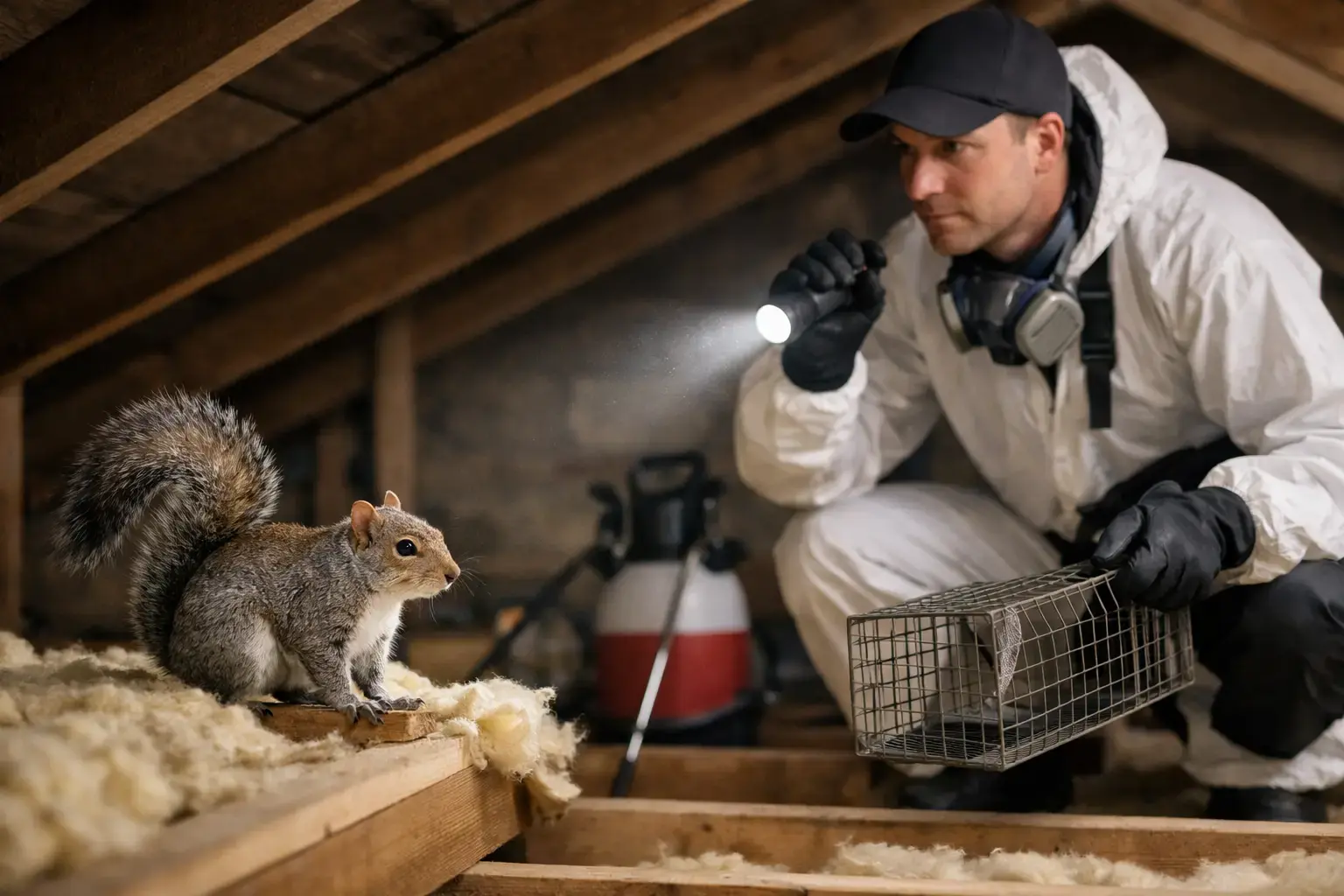
If you can hear rapid scratching above the ceiling at first light, there is a fair chance you are not dealing with mice. Squirrels in a loft are louder, more destructive and far harder to ignore. If you are searching for how to remove squirrels from loft spaces, the priority is not just getting them out. It is doing it legally, safely and in a way that stops them coming straight back.
Grey squirrels can cause serious damage in a short space of time. They chew timber, tear up insulation for nesting and, more worryingly, gnaw electrical cables. That creates both a repair bill and a fire risk. For homeowners, landlords and property managers, the real issue is rarely the noise alone. It is the combination of property damage, contamination and repeat access.
How to remove squirrels from loft areas properly
The first step is to confirm that squirrels are actually the problem. In lofts, they are often active at dawn and late afternoon, with heavier thumping and scampering than you would expect from rats or mice. You may also notice droppings, stripped insulation, nesting material and entry points around the roofline. Common access routes include broken soffits, lifted tiles, gaps around eaves and damaged fascia boards.
Once squirrels are established, DIY action can make the problem worse if it is badly timed. Blocking the hole too early can trap the animal inside, leading to further damage as it tries to get out. It can also leave dependent young in the nest, which raises both welfare and odour issues. In the UK, any removal plan needs to be practical and wildlife-conscious, not rushed.
In most cases, the safest route is a structured approach: identify entry points, check whether a nest is active, encourage or remove the squirrels from the loft space, then proof the building once you are certain they are out. Miss one stage and you can end up back where you started.
Check for young before any exclusion work
This is the part many people miss. During the breeding season, a female squirrel may be using the loft as a nesting site. If babies are present, sealing access points can separate the mother from the nest or trap the whole group inside. Neither outcome is acceptable.
A proper inspection should look for signs of a breeding nest, feeding remains, fresh droppings and repeated activity patterns. This is one reason professional surveys matter. What sounds like one squirrel may turn out to be several, and the timing of removal makes a real difference to how quickly the problem can be solved.
Avoid ineffective home remedies
There is no shortage of advice suggesting loud radios, mothballs, bright lights or strong smells. In practice, squirrels that have chosen a loft for warmth and shelter are often not put off for long. Some repellents are ineffective, some are unsuitable for enclosed domestic spaces, and some simply shift activity deeper into the void.
Trapping is also not as straightforward as many assume. Legal obligations apply, and the method used must be humane, appropriate and correctly managed. Poorly handled trapping creates welfare issues and often fails to deal with the reason the squirrels got into begin with.
Why squirrels keep coming back
A loft is attractive to squirrels for the same reason it is useful to the building owner - it is dry, sheltered and elevated. Once they find a weak point in the roofline, they tend to reuse it. If one squirrel has gained access, others may follow the same route later.
This is why removal on its own is only half the job. Long-term control depends on proofing. That usually means repairing entry holes, reinforcing vulnerable points and checking the wider structure for chew damage or loosened materials. On older properties, multiple small defects can add up to one ongoing problem.
Where the access point is not obvious from the ground, roof-level inspection can be essential. Modern survey methods, including UAV inspections where appropriate, can help identify damage without unnecessary disruption. That matters when access is awkward or when repeated infestations suggest a hidden weakness in the roof structure.
What professional squirrel removal should include
A proper squirrel control service should start with inspection rather than guesswork. The aim is to confirm species, assess the extent of activity, locate all likely entry points and decide whether immediate removal is suitable. The best approach depends on the property, the time of year and how long the infestation has been active.
Treatment should then focus on lawful removal, not shortcuts. In some situations, that may involve controlled trapping and follow-up visits. In others, exclusion and proofing will be the key stage once activity has been reduced or the loft has been cleared. There is no single method that fits every property, and anyone promising a one-size-fits-all fix is oversimplifying the problem.
Just as important is the aftercare. Loft spaces used by squirrels often need more than a quick tidy. Insulation may be contaminated or damaged, nesting debris may need clearing and wiring should be checked if gnawing is suspected. If squirrels have been present for some time, restoring the space can be as important as removing the animals.
Signs the infestation is more serious than it looks
Some loft infestations are obvious. Others appear minor until the inspection begins. If you have heard repeated noise for weeks, noticed staining on ceilings, seen insulation coming through gaps or experienced unexplained electrical issues, the damage may extend beyond the immediate nest area.
Landlords and commercial operators should be particularly cautious here. Delaying action can increase repair costs and, in some cases, create health and safety concerns for tenants, staff or customers. Fast response is not just about convenience. It reduces the risk of a manageable problem becoming a major one.
Can you remove squirrels from a loft yourself?
Technically, some property owners try. Practically, it is often a false economy. The challenge is not spotting that squirrels are present. The challenge is removing them humanely, complying with current legal expectations, avoiding trapped young, and proofing the building properly afterwards.
There is also the access issue. Loft work can be awkward and roofline repairs carry obvious safety risks. Even if you manage to scare one squirrel out, that does not mean the nest is empty or the access point is resolved. We regularly see properties where the initial DIY attempt has simply moved the squirrels to another part of the loft or pushed the damage further along the roofline.
For that reason, professional help is usually the quicker and more reliable option, especially where there is ongoing noise, visible damage or repeated re-entry.
How to stop squirrels entering the loft again
Once the squirrels are out, prevention matters. Any weak point used once is likely to be targeted again unless it is repaired to a good standard. Roof edges, air gaps, vents and junctions around dormers are common trouble spots.
Proofing needs to be secure enough to resist gnawing and well fitted enough not to leave a new edge to exploit. At the same time, repairs should preserve ventilation and avoid creating moisture issues in the loft. Good pest proofing is not just about blocking holes. It is about protecting the property without storing up another building problem.
Trees and overhanging branches can also play a part, although cutting everything back is not always necessary or practical. It depends on the layout of the property and how the squirrels are accessing the roof. A proper survey will usually show whether the issue is mainly a building defect, an access route, or both.
When to call a specialist
If you have heard activity more than once, seen squirrels entering near the roof, or noticed damage in the loft, it is time to act. Waiting for the noise to stop rarely solves the issue. It usually means the nest is established and the damage is continuing out of sight.
For properties across Stockport and surrounding areas, local knowledge can make a difference. Different building types present different access issues, and a specialist used to working on domestic and commercial properties will usually spot recurring patterns quickly. That means less trial and error and a better chance of getting it right first time.
AZ Environmental Service Pest Control deals with pest problems where other companies often fall short, and squirrel activity in lofts is a good example of where technical knowledge matters. The right result is not simply a quieter loft for a few days. It is a lawful removal, proper proofing and the confidence that the problem has been dealt with fully.
If squirrels have chosen your loft, treat it as a property protection issue as much as a pest issue. The sooner it is assessed properly, the easier it is to stop a noisy nuisance turning into structural damage, contaminated insulation and repeat call-outs.