

Blog
How to Remove Ants Indoors: Stop the Trail
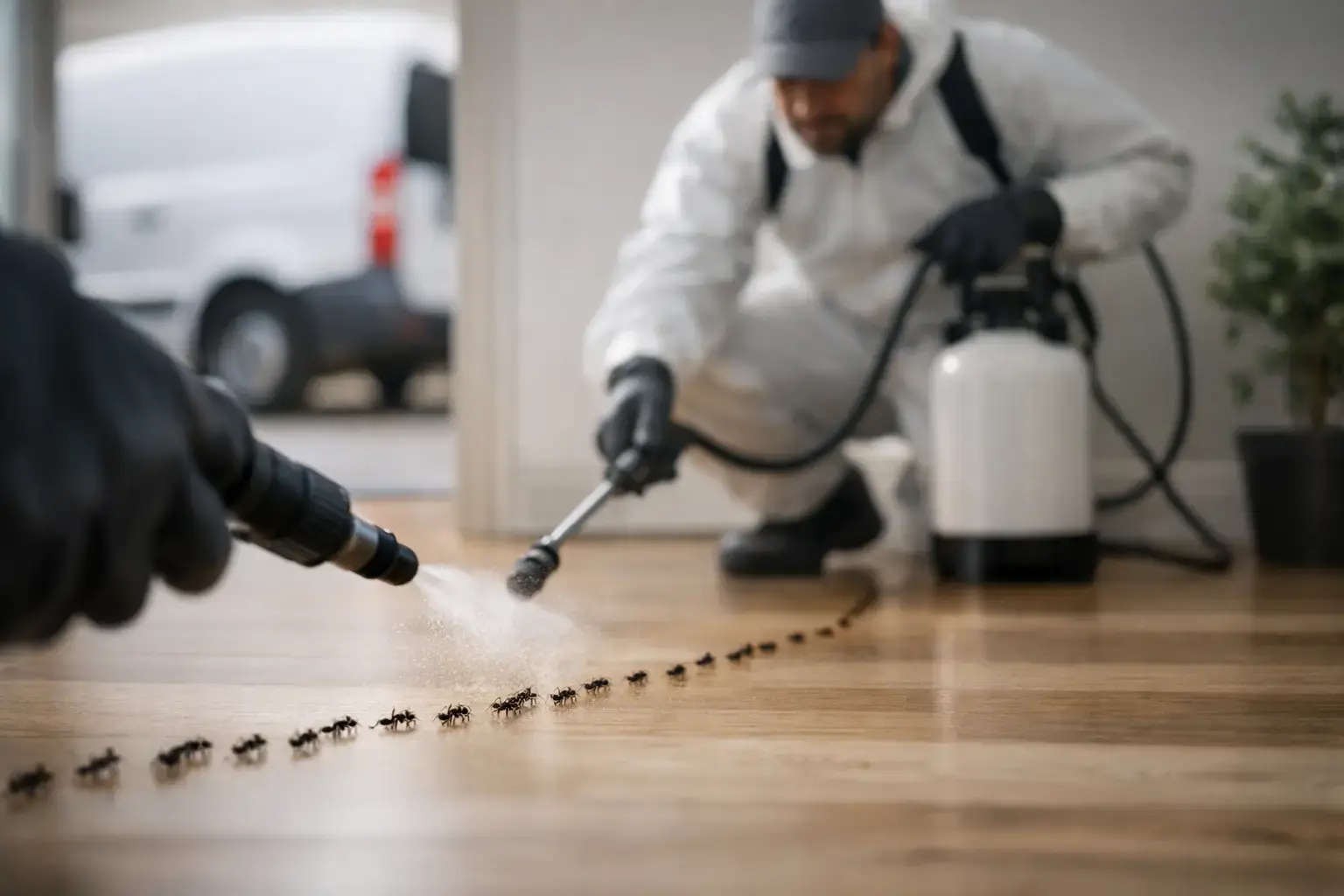
A line of ants across the kitchen worktop is rarely a one-off visitor problem. The ants you can see are foragers, following a scent trail between a food or water source and a nest that may be outside, under flooring or within a wall void. Knowing how to remove ants indoors means dealing with that trail, removing what attracts it and targeting the colony rather than simply killing the visible insects.
How to remove ants indoors safely and effectively
Start by finding where the ants are travelling. Common routes include gaps around pipework, cracks beside skirting boards, window frames, air bricks and the edges of patio doors. In kitchens, inspect behind appliances, under sinks and around bins. In bathrooms and utility rooms, look closely around plumbing, as moisture can be as attractive as food.
Wipe the route with hot soapy water or a household cleaner, then dry it thoroughly. This removes food residues and disrupts the pheromone trail that tells other worker ants where to go. It is a useful first step, but it will not remove an established nest on its own.
Next, remove easy food sources. Put sugar, cereal, pet food and fruit into sealed containers, wipe spillages immediately and avoid leaving dirty plates overnight. Empty internal bins regularly and rinse recyclable cans, jars and bottles before storing them. Even a small amount of syrup, juice or grease behind a toaster can keep a trail active.
If ants are entering around a door or window, clean the threshold and check whether rain, condensation or a leaking gutter is creating a damp area nearby. Ant activity often increases during warm weather, but a reliable water source can keep workers coming indoors at other times of year too.
Why sprays often do not solve an ant problem
Aerosol insect sprays can kill ants on contact, so they may make an infestation look better for a day or two. The problem is that they usually affect only the workers currently in view. The queen and the developing brood remain protected in the nest, allowing the colony to continue sending out new foragers.
For small, straightforward household infestations, a properly labelled ant bait is generally more effective than spraying the trail. Worker ants carry the bait back to the nest and share it with other ants. This process takes time, so it is normal to see activity continue for several days after bait is placed. In some cases, the number of ants may briefly appear to increase because workers are feeding from the bait.
Place bait close to the active route but out of reach of children and pets, following the product instructions exactly. Do not spray insecticide or use strong cleaning products directly around the bait, as this can repel the ants before they take it. Keep the bait in position for the full recommended period, even if activity appears to have stopped.
The right approach depends on the species, nest location and scale of the problem. Garden ants entering occasionally through a patio door are very different from a persistent infestation in a block of flats, commercial kitchen or food premises.
Treat the cause, not just the kitchen counter
Ants usually come indoors because the property offers something useful: food, water, warmth or a sheltered route. Once you have reduced indoor attractants, inspect the outside of the building. Look for vegetation touching walls, loose paving near entrances, cracked mortar, damaged seals around service pipes and gaps below doors.
Seal small, confirmed entry gaps with an appropriate filler or sealant once activity has reduced. Do not seal a route while a large number of ants are actively travelling through it, particularly where the nest may be inside the structure. Blocking one route can cause ants to emerge elsewhere in the room.
Pay particular attention to kitchens that back onto gardens, conservatories and utility rooms. Ant nests are often found beneath paving slabs, along wall foundations, in soil banks or under decking. Disturbing an outdoor nest without identifying the species or using a suitable treatment can scatter the colony and prolong the issue.
For landlords and property managers, recurring reports from the same building should be investigated as a property condition issue, not treated as isolated complaints. Shared pipe risers, voids, poorly sealed service penetrations and communal bin storage can provide a continuing route between multiple units.
When indoor ants need professional treatment
Call a qualified pest controller when activity is persistent, widespread or returning despite baiting and cleaning. Professional help is especially sensible if ants are appearing from sockets, wall voids, ceiling spaces or beneath fitted kitchen units, where the nest cannot be safely reached with household products.
You should also seek advice where ants are present in food preparation areas, care settings, rental properties or commercial premises. Businesses need treatment that considers hygiene requirements, staff safety, record keeping and minimal disruption to operations.
Small yellow or light brown ants found repeatedly in heated buildings deserve particular attention. Pharaoh ants, for example, can establish complex colonies with multiple queens. Using repellent sprays against them can cause budding, where the colony splits and spreads to new areas. These infestations require a planned bait-based programme and careful monitoring.
A professional survey identifies the likely species, entry points, food sources and nest location before treatment begins. At AZ Environmental Service Pest Control, treatment plans are tailored to the property and supported by practical proofing advice, so the aim is to stop repeat activity rather than offer a short-lived reduction in sightings.
What not to do when ants come indoors
Avoid pouring boiling water, bleach or other chemicals into cracks, sockets, drains or wall gaps. These methods can damage surfaces, create fumes, affect plumbing or put children and pets at risk, without reaching the colony. Mixing cleaning chemicals is particularly dangerous.
Do not rely on essential oils, vinegar or chalk lines as a complete solution. Some may temporarily disrupt a trail, but they do not provide dependable control of an established nest. They can be used as part of cleaning, but should not replace baiting, proofing or professional treatment where needed.
It is also worth avoiding the temptation to move bait stations repeatedly. Ants need time to locate and feed from them. If no feeding occurs after several days, reassess the placement or seek advice rather than adding multiple products around the room.
Keeping ants out for good
Long-term control is usually simple housekeeping combined with sensible building maintenance. Keep food sealed, clean crumbs and sticky spills promptly, manage moisture around sinks and appliances, and repair gaps that give ants direct access indoors. During spring and summer, check patio doors, kitchen thresholds and external pipe entries before the first trails become established.
If a trail reappears in the same place, treat it as useful evidence. It points to a recurring entry route, a hidden food source or a nest close to the property. Acting early is quicker, cleaner and usually far less disruptive than waiting for a small line of ants to become a daily problem.