

Blog
How to Identify Rat Activity Early
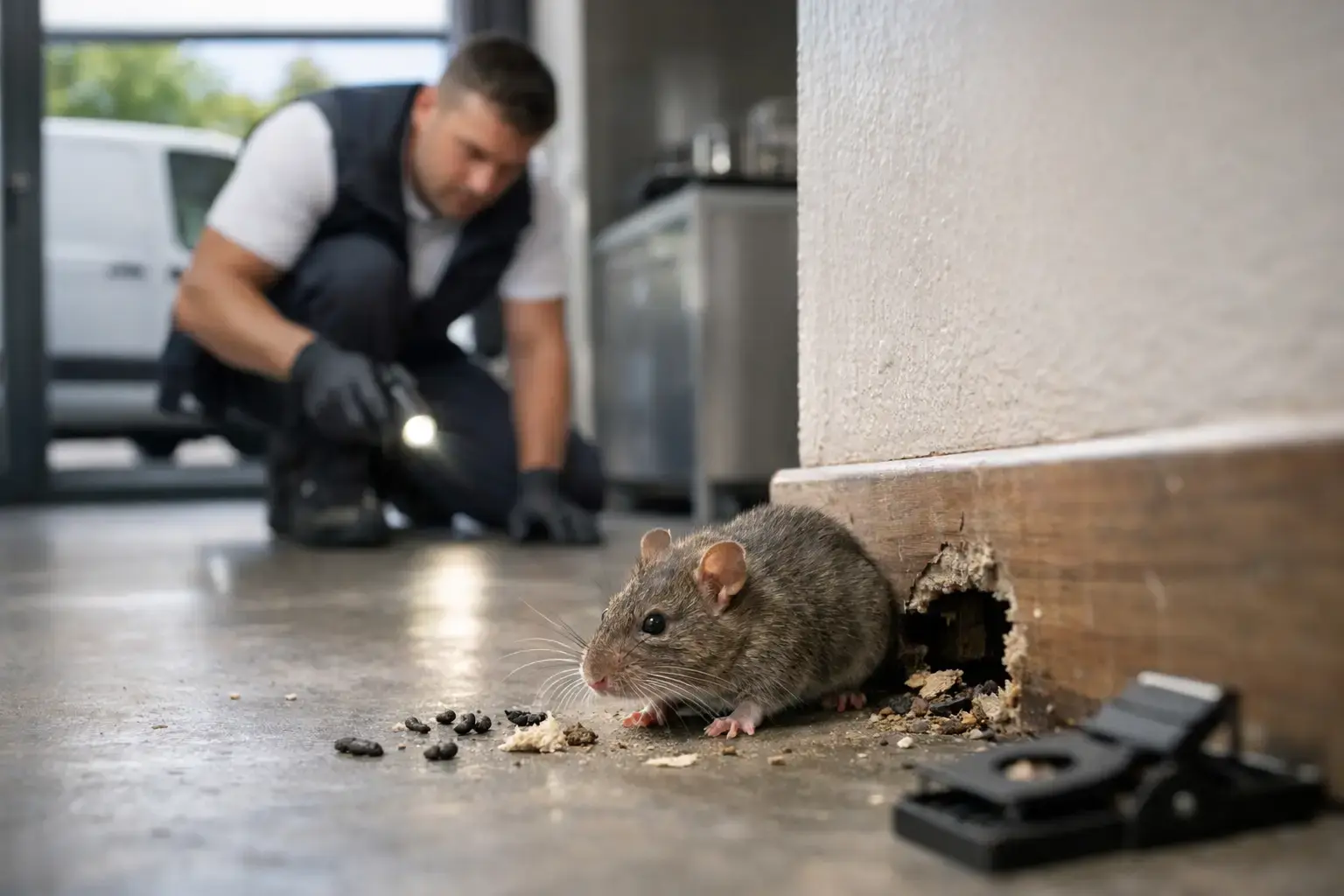
You usually notice rats by what they leave behind, not by seeing one in the open. If you are wondering how to identify rat activity, the first step is knowing where to look and what the signs actually mean. A single mark under a sink or a faint scratching sound in a loft may not look urgent at first, but rat problems tend to build quickly once they are established.
Rats are cautious, mostly active when properties are quiet, and very good at staying out of sight. That is why early identification matters. The sooner you spot the pattern, the easier it is to stop nesting, contamination and structural damage before it becomes a larger job.
How to identify rat activity in and around a property
The clearest sign is usually droppings. Rat droppings are dark, spindle-shaped and typically found in clusters along regular travel routes. You are most likely to find them behind appliances, inside cupboards, near stored items in garages, in loft insulation, or around bin areas and outbuildings. Fresh droppings are darker and softer. Older droppings become dry and dull. If you keep finding new droppings after cleaning, that points to ongoing activity rather than an old issue.
Noise is another common indicator, especially at night. Scratching, scurrying or gnawing sounds in cavity walls, under floorboards, behind kitchen units or above ceilings often suggest rodents moving through hidden spaces. The exact sound can vary depending on the structure of the building, so it is worth paying attention to when it happens. If the noise starts after dark and follows a similar pattern each evening, rats are a realistic concern.
A strong, stale smell can also be a warning sign. Active infestations often produce a persistent musky odour, particularly in enclosed areas with poor airflow. This can be more obvious in lofts, basements, storerooms and under cupboards. On its own, an odour is not enough to confirm rats, but when it appears alongside droppings, marks or noises, it becomes much more significant.
The physical signs rats leave behind
Rats tend to travel the same routes repeatedly. Over time, this leaves visible evidence. Smear marks are one of the best examples. As rats move along skirting boards, pipe runs and wall edges, the grease and dirt in their fur can leave dark rub marks. These are especially noticeable in dusty areas or narrow access points.
Gnaw damage is another major clue. Rats need to wear down their teeth constantly, so they chew wood, plastic, plaster, insulation and sometimes wiring. Chewed pipe boxing, damaged food packaging, frayed materials and bite marks around holes should all be taken seriously. Electrical cables are a particular concern because gnawing creates a fire risk as well as a pest problem.
You may also find nesting material. Rats build nests from shredded paper, cardboard, loft insulation, fabric and other soft materials. These nests are often hidden in quiet, sheltered spaces such as loft corners, behind stored stock, under decking, in sheds or beneath kitchen units. If you come across a compact pile of shredded material in a hidden area, do not assume it is harmless debris.
Footprints and tail marks can appear in dusty places. In cellars, lofts and storage rooms, a light layer of flour or dust may reveal repeated movement. This can help confirm whether a route is active, although it is only one part of the picture. For a reliable assessment, signs should always be considered together.
Outdoor signs that often get missed
Rat activity is not always centred indoors. In many cases, the problem starts outside and then spreads into the property once food, shelter or access becomes available. Gardens, yards, bin stores and drains are common starting points.
Burrows are one of the most obvious external signs. Rat burrow entrances are usually round, roughly 5 to 10 cm across, and often found along fence lines, under sheds, beneath decking, near compost heaps or around overgrown edges. Fresh soil around the entrance suggests recent use. Not every hole in the ground belongs to rats, but if you also have droppings, runs or gnawing nearby, the likelihood increases.
Look at bin areas closely. Spilled waste, gnawed lids, regular activity around food refuse and droppings behind commercial bins can all point to an established population. For restaurants, takeaways, care settings, warehouses and other commercial premises, this is more than a nuisance. It can become a hygiene, compliance and reputational issue very quickly.
Drains are another key area. Damaged drains can allow rats to travel undetected and enter buildings through broken pipework or weak points around services. If there is repeated rat activity with no obvious external source, drainage defects may need to be considered. This is one reason the cause of the problem matters just as much as the treatment itself.
How to tell whether the activity is recent
Not every sign means there is a live infestation right now. Sometimes the evidence is old. The difference matters because treatment and proofing decisions depend on what is currently active.
Fresh droppings are usually moist and dark. Older droppings become dry and crumbly. New gnawing looks lighter in colour, while old damage appears dirtier and worn. Recently used burrows tend to have clean entrances and disturbed soil. Active runs are usually easier to spot because the route is still being used regularly.
If signs appear in more than one area at the same time, that often points to an active and established issue rather than a one-off visit. Equally, if you hear movement repeatedly over several nights, or continue finding fresh evidence after cleaning and tidying, it is sensible to treat that as ongoing activity.
Common places rats enter buildings
Knowing how to identify rat activity also means understanding where rats gain access. They can get through surprisingly small gaps, especially around pipe entries, damaged air bricks, broken drain connections, gaps under doors and defects in roofing or cladding. Older properties and extensions often have hidden weaknesses that are easy to miss without a proper survey.
In homes, entry points are often found around kitchens, utility rooms, garages and loft spaces. In commercial buildings, service risers, loading areas, plant rooms, storage zones and waste handling areas deserve particular attention. A treatment may reduce numbers, but if access points stay open, the problem can return.
This is where experience makes a difference. Finding rats is one part of the job. Finding why they are there and how they are getting in is what prevents repeat activity.
When rat signs need urgent action
Any suspected rat activity should be taken seriously, but some situations call for immediate action. If you find droppings in food storage areas, signs of gnawing on cables, rat activity in a school, care setting, restaurant or rental property, or repeated evidence across several areas of the building, delaying usually makes matters worse.
There is also a health risk to consider. Rats contaminate surfaces and stored goods with urine, droppings and hair. For landlords and business operators, there is a duty to deal with infestations properly and not simply mask the problem. Quick fixes rarely solve established rat issues if the source, access and harbourage are left untouched.
In areas such as Stockport and across the wider North West, changing weather, dense housing, drainage systems and food waste can all contribute to rat pressure. That does not mean every noise is a rat, but it does mean early signs should not be ignored.
What to do if you suspect rat activity
Start by avoiding unnecessary disturbance. Do not handle droppings carelessly or block holes before the full picture is clear, as this can push rats deeper into the property. Make a note of where signs are appearing, when noises occur, and whether the evidence is increasing. That helps build an accurate view of the problem.
Good housekeeping matters, but it is not always enough on its own. Securing food, reducing clutter, managing waste properly and cutting back overgrown external areas all help reduce attraction. Still, if rats are already nesting, travelling through drains or using hidden access points, the issue usually needs professional investigation and treatment.
A proper pest control response should look beyond baiting alone. The right approach depends on the site, the level of activity, whether it is a domestic or commercial setting, and what is driving the infestation. In some cases that means proofing work, drainage checks or longer-term monitoring as well as treatment.
If you are seeing repeated signs and want the issue resolved properly, the most sensible step is to have the property assessed by a qualified specialist. Clear identification leads to the right treatment, and the right treatment prevents the same problem returning a few weeks later.
The earlier you act, the more options you usually have and the less disruption the problem causes.