

Blog
A Practical Guide to Wasp Nest Safety at Home
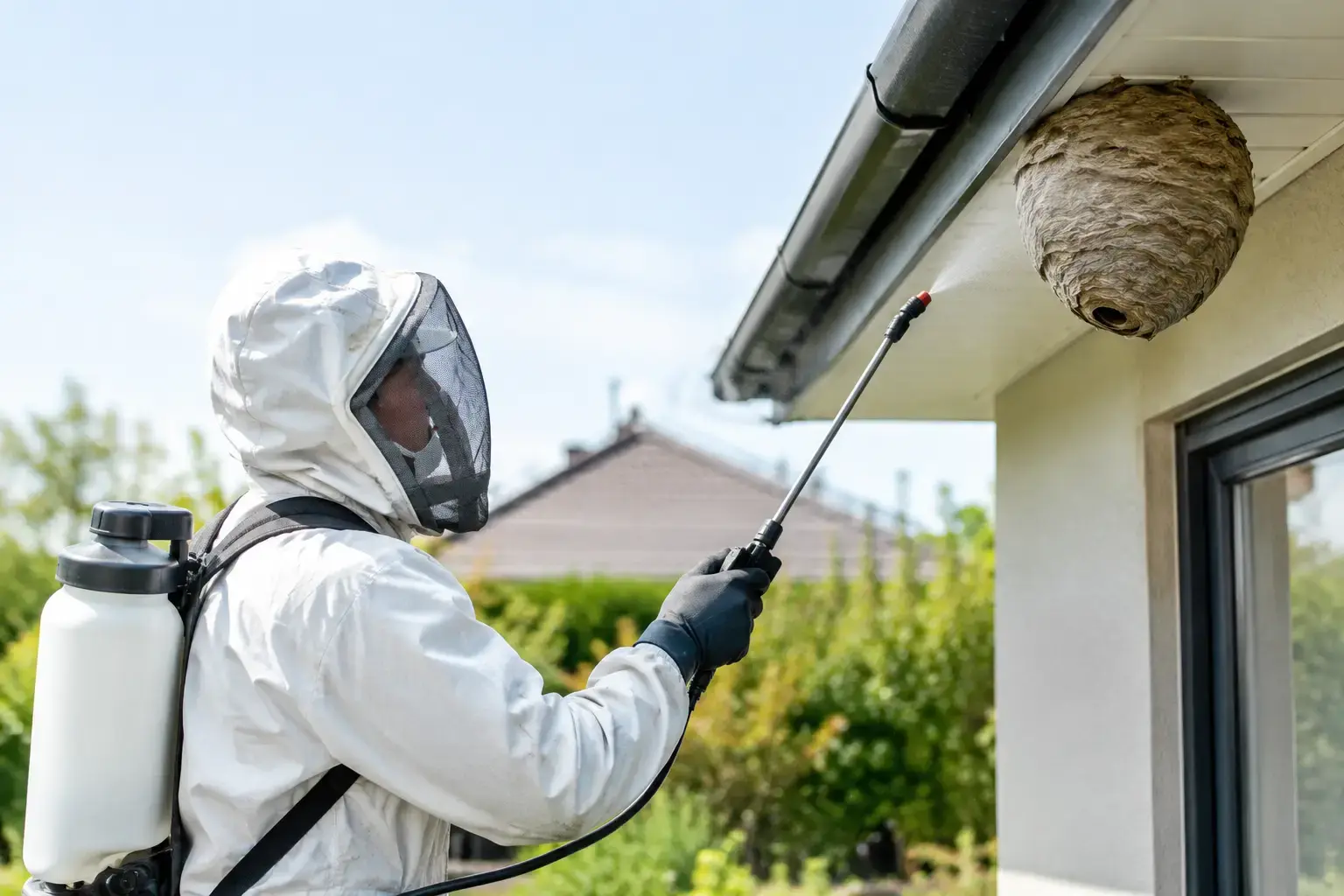
A wasp nest can turn a quiet garden, loft space or business entrance into a genuine safety concern very quickly. This guide to wasp nest safety explains what to do from the moment you notice increased wasp activity, without putting yourself, your family, pets, staff or customers at unnecessary risk.
The key rule is straightforward: keep your distance and avoid disturbing the nest. Wasps defend their colony when they detect vibration, sudden movement or a perceived threat. A nest that seems manageable from several metres away can become dangerous if it is knocked, sprayed or blocked without the right assessment and treatment.
Recognising when a wasp nest is a risk
A few wasps around flowers, bins or outdoor food do not necessarily mean there is a nest on your property. Consistent traffic in and out of one point is the usual sign. Watch from a safe distance for wasps entering a gap in brickwork, an air brick, soffit, shed roof, loft vent, wall cavity or hole in the ground.
The level of risk depends on the nest location, the number of wasps, and who uses the surrounding area. A nest high in a tree at the far end of a large garden may need a different response from one beside a front door, above a child’s bedroom window or in a commercial loading area. It also matters whether the nest is becoming more active. Colonies grow through spring and summer, so a small amount of activity can increase significantly within weeks.
Treat any nest as a priority where there is regular footfall, limited space to avoid it, or a known allergy to stings in the household or workplace. Landlords and commercial property managers should also consider their duty to keep common areas, staff spaces and customer access routes reasonably safe.
Guide to wasp nest safety: what to do first
Once you suspect a nest, create space around it. Keep children and pets away from the entrance point and avoid mowing, strimming, drilling or carrying out DIY repairs nearby. If the nest is in a roof, wall or loft, do not investigate by lifting boards or pushing insulation aside. You may be much closer to the colony than you realise.
Close nearby windows where practical, particularly if the nest is close to an upstairs room. If wasps are entering a living area through a gap, leave internal doors shut to contain the problem and give them a clear route back outside where possible. Swatting individual wasps is unlikely to solve anything and can make them more defensive.
For a ground nest, mark out the area clearly and keep people away. Do not cover the entrance with soil, paving slabs, buckets or garden furniture. Blocking an active nest can force wasps to find another exit, sometimes into a garage, conservatory, cavity wall or internal room.
It is sensible to make a note of the nest location and the times of day activity is highest. This helps a pest controller assess the situation, especially when access is difficult or the nest is concealed. There is no need to stand close for photographs or attempt to identify the species yourself.
Actions that make a nest more dangerous
Most wasp sting incidents around nests are caused by well-intentioned DIY attempts. Household aerosols, smoke, water, expanding foam and improvised barriers do not provide a controlled treatment. They can agitate the colony while leaving much of it alive and active.
Avoid these common mistakes:
- Do not hit, shake or remove a visible nest by hand, even if it appears small.
- Do not spray an entrance from close range with general insect killer or a hosepipe.
- Do not seal a gap, vent or hole while wasps are still actively using it.
- Do not use ladders near a nest in eaves, gutters or rooflines.
- Do not rely on wasp traps as a solution for an established nest.
Ladders deserve particular attention. A person who is stung while working at height can lose balance quickly, creating a much more serious accident than the pest issue itself. The same applies to attempting treatment from a loft hatch or through a window.
Protecting children, pets and vulnerable people
Children and pets are naturally curious, which makes outdoor nests difficult to manage without clear boundaries. Explain that wasps near one area should be left alone, rather than chased or brushed away. Dogs may snap at flying insects, and a sting to the mouth or throat requires urgent veterinary advice because swelling can affect breathing.
For people, most stings cause local pain, redness and swelling. Remove yourself from the area calmly and move indoors if possible. A cold compress may ease discomfort. If a sting causes breathing difficulty, swelling of the lips, tongue or throat, faintness, widespread hives, confusion or severe vomiting, call 999 immediately. These can be signs of a serious allergic reaction.
Anyone with a prescribed adrenaline auto-injector should follow their medical action plan after a suspected severe reaction and seek emergency help. Do not drive yourself if you feel unwell. In a workplace, ensure colleagues know where first-aid equipment is kept and how to call for assistance.
When professional wasp nest removal is the right choice
Professional treatment is the safest option for active nests that affect access, daily use of a property or the wellbeing of occupants. It is particularly advisable for nests in cavities, under roofs, in lofts, behind cladding, beneath decking, or at height. These locations can be difficult to treat fully without the correct equipment and knowledge of wasp behaviour.
A qualified pest professional will assess the entrance point, nest position where visible, access requirements and the activity level before choosing a suitable treatment method. The aim is not simply to kill wasps seen at the entrance. It is to treat the colony effectively while reducing exposure to people, pets and non-target wildlife.
After treatment, there may still be wasp activity for a short period as returning workers come into contact with the treatment. This is normal. Follow the technician’s advice about keeping clear of the area and do not block the entrance until you have been told it is safe. The timing varies according to the nest location, size and treatment method.
For homes and businesses in Stockport and surrounding areas, AZ Environmental Service Pest Control provides professional wasp nest treatment with a practical assessment of the risk, safe access and the right next steps for the property.
Do you need to remove every nest?
Not every nest requires immediate removal. A nest located well away from people, with no impact on entrances, gardens or work areas, may be left alone where it can be safely avoided. Wasps play a role in controlling other insects, and a responsible decision considers the actual risk rather than treating every sighting as an emergency.
However, leaving a nest alone is only sensible when the location remains genuinely low risk. A nest near a rarely used shed may become a problem if children begin playing nearby, garden work is planned, or activity increases later in the season. Reassess if circumstances change.
In the UK, social wasp nests are generally not reused the following year. Once the colony naturally dies out in colder weather, the old structure is usually harmless. That does not mean a property is protected from future nests. Queens may establish new nests in sheltered roof spaces, garages and outbuildings the following spring.
Preventing repeat nesting around your property
Prevention is most effective after the active nest has been dealt with. Check eaves, fascia boards, vents, gaps around pipework, loose roof tiles and cracks in sheds or garages. Pest proofing should be carried out carefully and at the right time, never by sealing an active wasp entrance.
Keep outdoor bins closed and clean up food spills promptly during warm weather. This will not stop a colony that is already established, but it can reduce wasps gathering around patios, staff break areas and customer entrances. Fallen fruit should also be cleared from lawns where practical.
If a property repeatedly attracts nests, an on-site survey can identify the access points and environmental factors behind the pattern. This is often more useful than treating the visible problem year after year. The best result is a safe property with fewer opportunities for wasps to establish themselves in the first place.
A calm response protects everyone. Keep clear of the nest, avoid quick-fix treatments, and arrange professional help when its location or activity creates a real risk. Acting early is usually simpler, safer and less disruptive than waiting for a small nest to become a busy colony.