

Blog
Guide to Pigeon Proofing Buildings
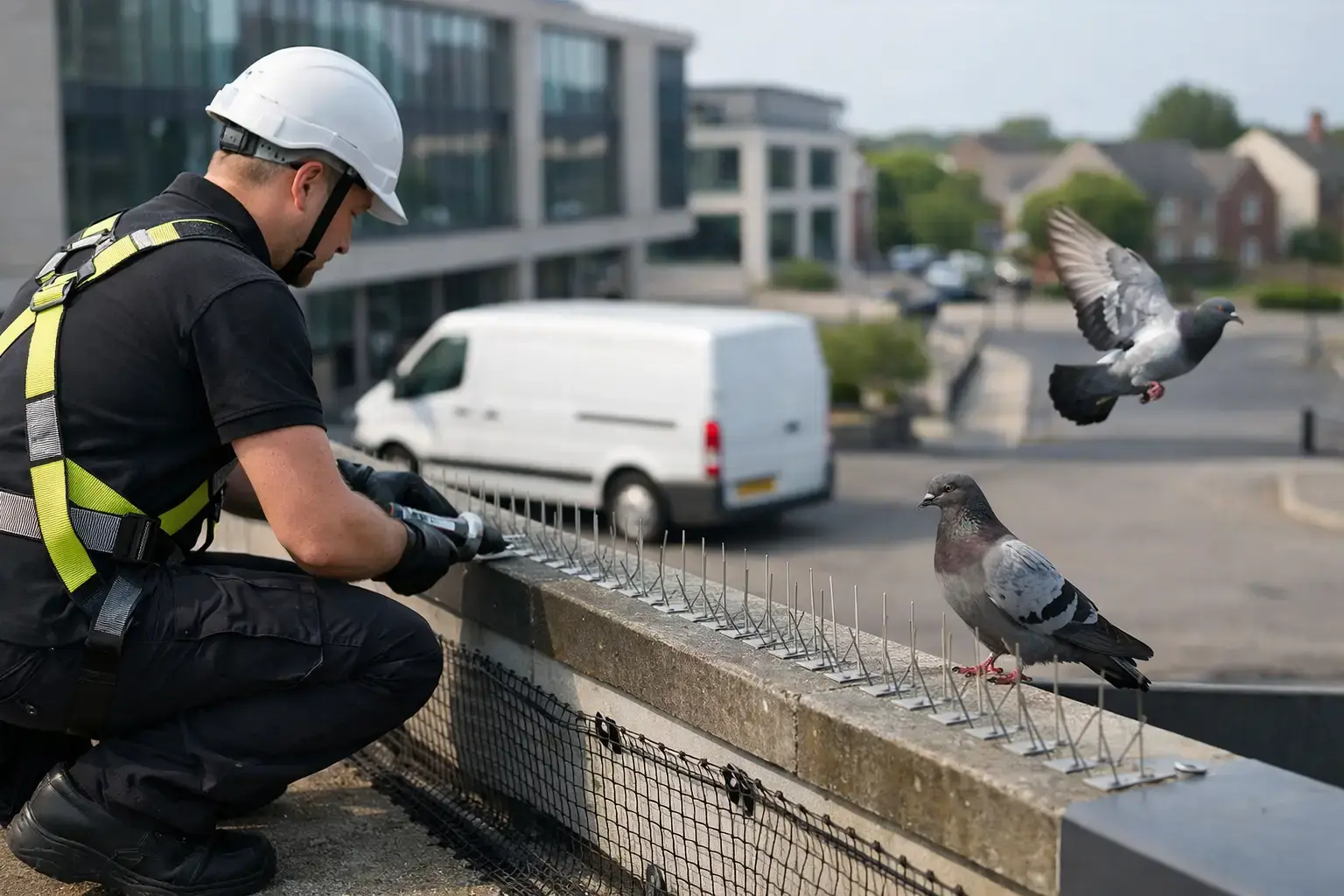
When pigeons settle on a building, the problem rarely stays small for long. A few birds on a ledge can quickly turn into heavy fouling, blocked gutters, damaged fabric and ongoing complaints from tenants, staff or neighbours. This guide to pigeon proofing buildings explains what works, what fails, and how to protect a property properly without wasting time on short-term fixes.
Why pigeon proofing needs a proper plan
Pigeon activity is often treated as a minor nuisance until the signs become impossible to ignore. By that point, there may already be nesting in roof voids, fouling on walkways, corrosion on metalwork and unsafe build-up around entrances or fire escapes. On commercial sites, there is also the reputational issue. Customers and visitors notice birds around signage, loading bays and front elevations far sooner than most property owners expect.
The mistake is assuming every building can be dealt with using the same product. It cannot. A warehouse, school, block of flats and retail unit all present different access points, pressures and safety requirements. Good bird proofing starts with the structure itself - where pigeons are landing, where they are nesting, how they are gaining access and which areas create the greatest risk.
A guide to pigeon proofing buildings starts with the survey
Before any proofing is installed, the site needs to be assessed properly. That means looking beyond the obvious ledges and checking rooflines, solar panels, signage frames, canopies, beams, service ducts and voids. In many cases, the most active nesting area is not visible from ground level.
This is why survey quality matters. A rushed inspection can miss high-level activity and lead to proofing being fitted in the wrong place. In practice, that means the birds simply move a few metres along the building and the problem continues. On larger or more complex sites, UAV surveys can be especially useful because they show inaccessible areas safely and clearly before any work begins.
A proper survey should answer three questions. First, what is attracting the pigeons? Second, where are they roosting and nesting? Third, what proofing method is right for the fabric and use of the building? Without those answers, treatment becomes guesswork.
The main risks pigeons create on buildings
Pigeons are not just messy. Their presence can create practical, financial and health-related issues. Fouling is acidic and can damage paint, stone, metal and roofing materials over time. Gutters and downpipes can become blocked with nesting debris, which then causes water overflow and damp problems.
There is also the hygiene concern. Areas contaminated with droppings and feathers are unpleasant to work around and can become hazardous if staff or residents are expected to clean them. Slips on fouled walkways are a real risk, especially around entrances, bin stores and external stairways.
For landlords and commercial operators, repeat bird activity often leads to repeat costs. Cleaning bills, maintenance call-outs, access equipment, tenant complaints and failed repairs add up quickly. In most cases, proper proofing is cheaper than ongoing reactive work.
Which pigeon proofing methods actually work?
The right system depends on the building, the level of pressure and the exact place the birds are using. The most effective options tend to be netting, spikes, wire systems and proofing around specific access points.
Bird netting
Netting is often the best choice for larger areas where pigeons are roosting or nesting regularly. It is designed to exclude birds completely from spaces such as loading bays, roof structures, plant areas, balconies and courtyards. When installed correctly, it is one of the most reliable long-term solutions.
That said, netting is only as good as its fixings and layout. Poorly tensioned net, wrong mesh size or rushed edge detailing can lead to failures. It also needs to be fitted neatly and safely so it does not create visual problems or trap birds. This is not a product to install badly and hope for the best.
Bird spikes
Spikes are useful on ledges, signs, parapets, beams and other narrow landing points. They stop pigeons from settling comfortably, which reduces fouling and roosting in those spots. On the right surface, they are straightforward and effective.
They are not a cure-all. If a ledge is too wide, or if the birds have plenty of room around the spikes, they may still attempt to roost. Spikes also do nothing to stop nesting inside roof voids or under solar panels. They work best as part of a wider proofing plan rather than as a single answer to every pigeon issue.
Post and wire systems
These systems are often chosen where appearance matters, such as on listed buildings, shopfronts or more visible architectural features. The wires create an unstable landing point and can be less visually obvious than spikes.
They can work well in lower-pressure areas, but they are not always the strongest option for sites with heavy and persistent pigeon activity. If the pressure is high, a more restrictive method may be needed.
Access point proofing
Some pigeon problems are less about open ledges and more about entry into sheltered areas. Missing mesh, damaged soffits, broken vents and gaps around cladding can all provide nesting opportunities. In these cases, proofing focuses on sealing or screening those points without affecting ventilation or building function.
This part is often overlooked, yet it can be the reason a problem keeps returning. If birds are getting into the structure, surface deterrents alone will not solve it.
Common mistakes that make pigeon problems worse
One of the biggest mistakes is relying on visual deterrents such as fake owls, reflective tape or occasional noise devices. These may have some short-lived effect, but pigeons quickly become used to them, especially in urban environments. If there is shelter, warmth and a regular perch, they tend to stay.
Another issue is partial proofing. Treating one ledge while leaving nearby nesting areas untouched simply displaces the birds. The same applies to cleaning without proofing. The area may look better for a few days, but if the access and roosting points remain, the contamination returns.
DIY installation is also risky on anything above low level. Aside from safety concerns, badly fitted spikes, netting or clips often fail early and can create maintenance issues of their own. On commercial sites, poorly executed proofing can look unprofessional and cause more complaints than the pigeons did.
When professional bird control is the better option
If the building is tall, complex, occupied or already heavily affected, professional help is usually the sensible route. That is especially true where there are health and safety responsibilities, public access areas or signs of nesting in difficult locations.
A specialist will assess the site properly, recommend the right exclusion method and install it with the correct fixings for the surface. More importantly, they will consider the wider problem - not just the visible birds, but also cleaning requirements, legal considerations and how to prevent the issue from shifting elsewhere on the property.
This matters for businesses that cannot afford disruption. A food site, school, warehouse, office or managed residential block needs work that is effective, discreet and durable. It is not simply about putting up spikes. It is about protecting the building and reducing repeat call-outs.
Choosing the right proofing for your building
There is no single best method for every site. A small domestic property with pigeons under solar panels needs a different solution from a town centre commercial unit with roosting above the entrance. The right decision depends on the layout, materials, bird pressure, visibility and budget.
In some cases, combining systems gives the best result. Netting may be needed for a recessed roof space, with spikes added to adjacent ledges and targeted proofing to close access gaps. That joined-up approach tends to hold up far better than one isolated measure.
For property owners in places such as Stockport and across the wider North West, older buildings can be particularly challenging because they often have more voids, ledges and ageing fabric. That makes survey-led work even more important. The goal is not to fit as much proofing as possible. It is to fit the right proofing in the right places.
Maintenance still matters after installation
Even well-installed bird proofing should be checked periodically. Storm damage, building works and general wear can affect fixings over time. Leaves and debris can also collect around some systems, particularly at roof level.
A simple inspection routine helps spot small issues before they become expensive ones. If a section of netting becomes loose or an access point reopens, pigeons will usually find it quickly. Fast remedial work protects the original investment and keeps the building secure.
The best pigeon proofing does not rely on guesswork, gimmicks or temporary deterrents. It relies on a proper survey, the right exclusion method and installation that matches the building. If the problem has become persistent, the most cost-effective move is usually to stop treating the symptoms and deal with the cause properly.