

Blog
Guide to Commercial Pest Compliance
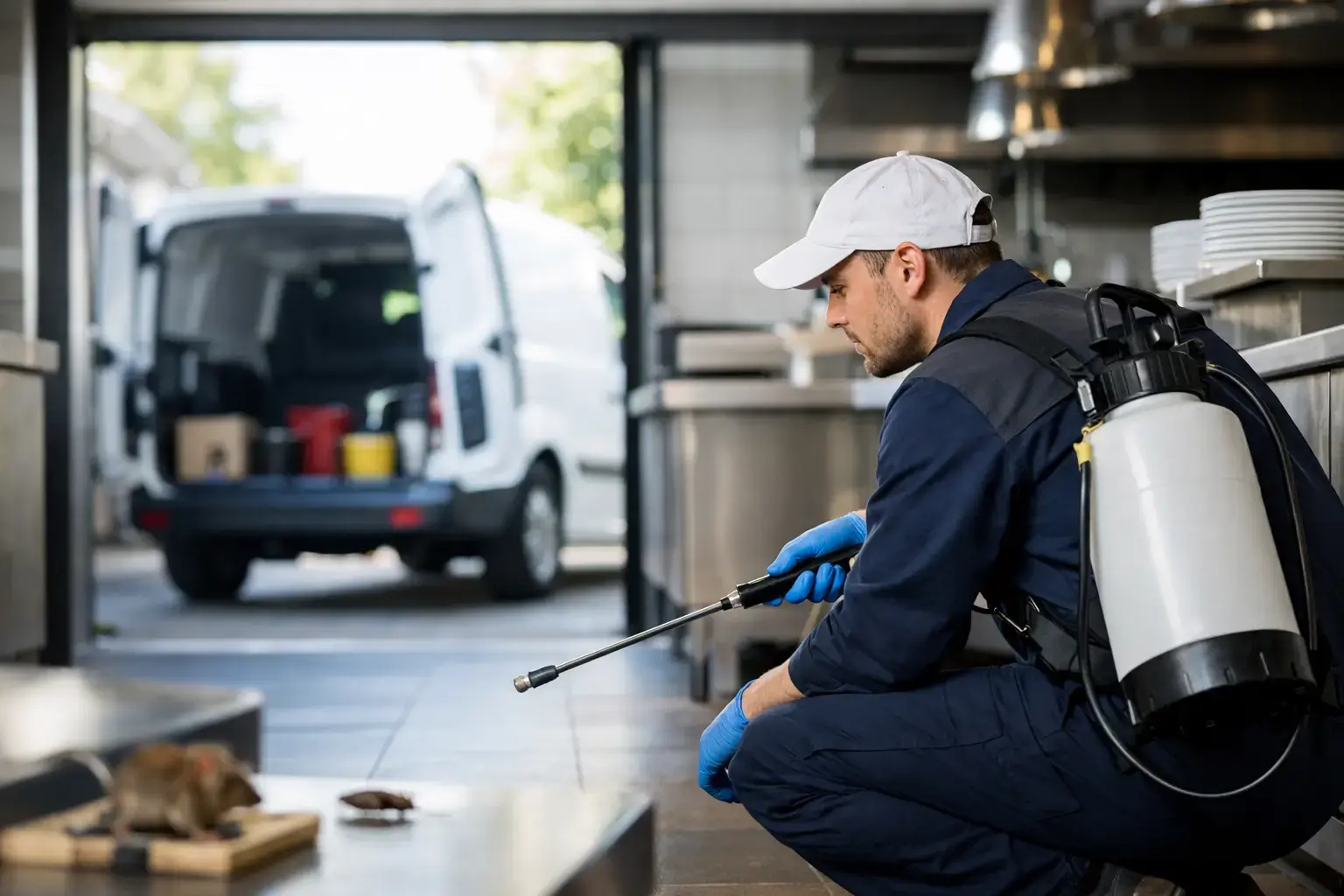
An auditor spots mouse droppings behind a dry store shelf, asks for your pest control records, and suddenly a small issue becomes a serious compliance problem. That is why a clear guide to commercial pest compliance matters. For many businesses, pest control is not just about getting rid of rats, mice, birds or insects. It is about protecting hygiene standards, meeting legal duties, safeguarding reputation and showing due diligence when someone asks for proof.
For commercial sites, compliance sits at the point where pest activity, site standards and record keeping all meet. Food businesses, warehouses, landlords, managing agents, care settings, hospitality venues and manufacturing sites all face slightly different pressures, but the principle is the same. You need a pest management approach that is documented, preventative and suitable for your premises.
What commercial pest compliance actually means
Commercial pest compliance means having the right measures in place to prevent, monitor and respond to pest activity in a way that supports your legal and operational responsibilities. It is not a single certificate or a one-off visit. It is an ongoing system.
In practice, that system usually includes site inspections, monitoring devices, proofing recommendations, housekeeping controls, treatment where required, and records that demonstrate what has been found and what has been done about it. If your business is ever challenged by an environmental health officer, an auditor, a client or your own internal standards team, those records matter.
The exact standard expected depends on the type of site. A restaurant kitchen will need tighter controls than a low-risk office. A food production unit, care home or pharmaceutical environment may need much more frequent monitoring, stricter reporting and clearer escalation procedures. This is where many businesses get caught out. They assume a basic pest control visit is enough, when their actual risk profile demands more.
A guide to commercial pest compliance starts with risk
The best place to start is not with pesticide use or trap placement. It is with risk assessment. A proper survey looks at what is attracting pests, how they are getting in, what parts of the building are vulnerable and what the consequences would be if activity developed.
External bin stores, drainage defects, gaps beneath roller shutters, damaged air bricks, cluttered plant rooms and poorly rotated stock are common weak points. Bird activity around rooflines and service yards can also create ongoing compliance issues, especially where fouling affects entrances, fire escapes, loading bays or customer-facing areas.
Risk also changes over time. A site that was low risk last winter can become a higher-risk environment after a refurbishment, a change in waste handling, a new tenant next door or warmer weather that increases flying insect activity. That is why compliance cannot be treated as a static document.
Prevention carries more weight than reaction
A reactive callout may solve an immediate issue, but it does not always satisfy compliance expectations on its own. Inspectors and auditors want to see that you are not just treating pests when they appear. They want evidence that you are reducing the likelihood of recurrence.
That usually means a combination of proofing, housekeeping and procedural changes. If staff leave external doors open, if damaged stock is left exposed, or if voids and service entries are not sealed, treatment alone will only achieve so much. Good commercial pest control is practical. It deals with the source, not just the symptom.
Legal duties and due diligence
UK businesses have a general responsibility to keep premises in a condition that does not encourage pest activity, especially where food safety, public health or tenant welfare are involved. The details vary by sector, but the idea of due diligence runs through all of them. If a problem occurs, can you show that you took reasonable steps to prevent it and acted appropriately when it was identified?
That means keeping inspection reports, treatment records, site plans, trend data and recommendations. It also means acting on recommendations. A contractor can report a proofing issue five times, but if nobody authorises the repair, the compliance gap remains.
For landlords and property managers, the position can be more complicated. Responsibility may sit partly with the building owner and partly with the occupier, depending on lease terms and the nature of the defect. If rodents are entering through a structural gap, that is not the same as a tenant creating a hygiene problem inside their demise. The practical answer is to clarify responsibilities early and document them properly.
What records should a compliant site keep?
Good records should tell a clear story. They should show the level of risk on site, what monitoring points are in place, what pest activity has been identified, what action has been taken and what remains outstanding.
At minimum, most businesses should expect to keep service reports, a site plan showing device locations, risk assessments where relevant, details of any pesticides used, trend notes and recommendations for corrective action. Higher-risk sites may also need visit frequencies justified by risk, escalation procedures and documented checks by site staff between contractor visits.
Paper files can still work if they are complete and easy to access, but digital reporting often makes compliance simpler. It reduces the chance of lost paperwork and gives managers a clearer view across one site or multiple premises.
Records only help if they are current
An out-of-date file gives false reassurance. If the site plan does not match the current layout, if monitoring points have moved without being recorded, or if recommendations from six months ago are still open with no explanation, the file will not stand up well under scrutiny.
Compliance is strongest when records reflect what is actually happening on site now, not what was supposed to happen last year.
Common compliance gaps in commercial premises
The biggest compliance failures are often basic. A business may pay for regular visits but still fail an inspection because the surrounding standards are poor. Pest control does not sit in isolation from facilities management, maintenance or staff behaviour.
Common gaps include poor waste management, inadequate stock rotation, overflowing external bins, damaged door seals, missing bristle strips, roof voids left accessible to birds, food debris under fixed equipment, and no clear process for staff to report sightings. Another frequent issue is assuming that no visible pests means no risk. Early-stage infestations are often missed until an audit, a complaint or contamination brings them to light.
There is also a trade-off between cost and coverage. Some businesses try to reduce visit frequency or limit monitoring points to save money. That can be reasonable on genuinely low-risk sites, but it can be a false economy where hygiene standards, audit requirements or site complexity demand closer control.
Choosing the right contractor for commercial pest compliance
If you are relying on a pest control provider to support compliance, they need to do more than place bait and issue a report. They should understand your sector, identify root causes, explain risk clearly and provide recommendations that your team can act on.
A good contractor will also be realistic. Not every issue needs the same response. In some cases, proofing and monitoring are enough. In others, immediate treatment and tighter follow-up are necessary. Bird control, for example, often requires a longer-term plan built around deterrence, proofing and lawful, wildlife-conscious methods rather than a quick fix.
Discretion can matter too. For hotels, care environments, retail units and busy business parks, unmarked vehicles and low-profile attendance help reduce unnecessary attention while the issue is being managed.
Where sites need stronger oversight, modern monitoring technology can improve visibility. Systems that track activity trends and support faster intervention can be particularly useful on larger or more sensitive premises, but technology is only as good as the response behind it. Data on its own does not solve pest problems.
How to strengthen compliance between service visits
Even the best contractor cannot control what happens on site every day. Staff habits, cleaning standards and maintenance response times make a major difference.
Managers should make sure sightings are logged promptly, vulnerable areas are checked routinely, and recommendations are passed to the right person without delay. If a back door no longer closes properly or a drain cover has shifted, that should be treated as a pest risk, not just a maintenance snag.
Training helps here, but it needs to be practical. Staff do not need a lecture on entomology. They need to know what signs to look for, how to report them and why small issues should not be ignored.
A guide to commercial pest compliance for growing businesses
As a business grows, pest compliance often becomes more complex. Extra units, longer opening hours, more deliveries and more waste all increase exposure. Multi-site operators also face consistency problems. One location may be well run while another keeps poor records and misses basic housekeeping.
That is why scalable systems matter. Standard reporting, regular reviews and site-specific risk assessments help businesses stay in control as operations expand. What works for a single café or office may not be enough for a chain, a mixed-use estate or a large distribution site.
For businesses across Stockport and the wider North West, local knowledge can also make a difference. Pest pressures vary by property type, age of building, surrounding land use and density of neighbouring premises. A contractor who understands those local patterns is often quicker to identify where the real risks sit.
Strong compliance is rarely about doing one dramatic thing. It is about doing the ordinary things properly, every time, and fixing weaknesses before they turn into infestations. If your current setup would struggle to answer hard questions from an auditor or environmental health officer, that is usually the point to act, not wait.