

Blog
A Practical Guide to Bird Control Systems
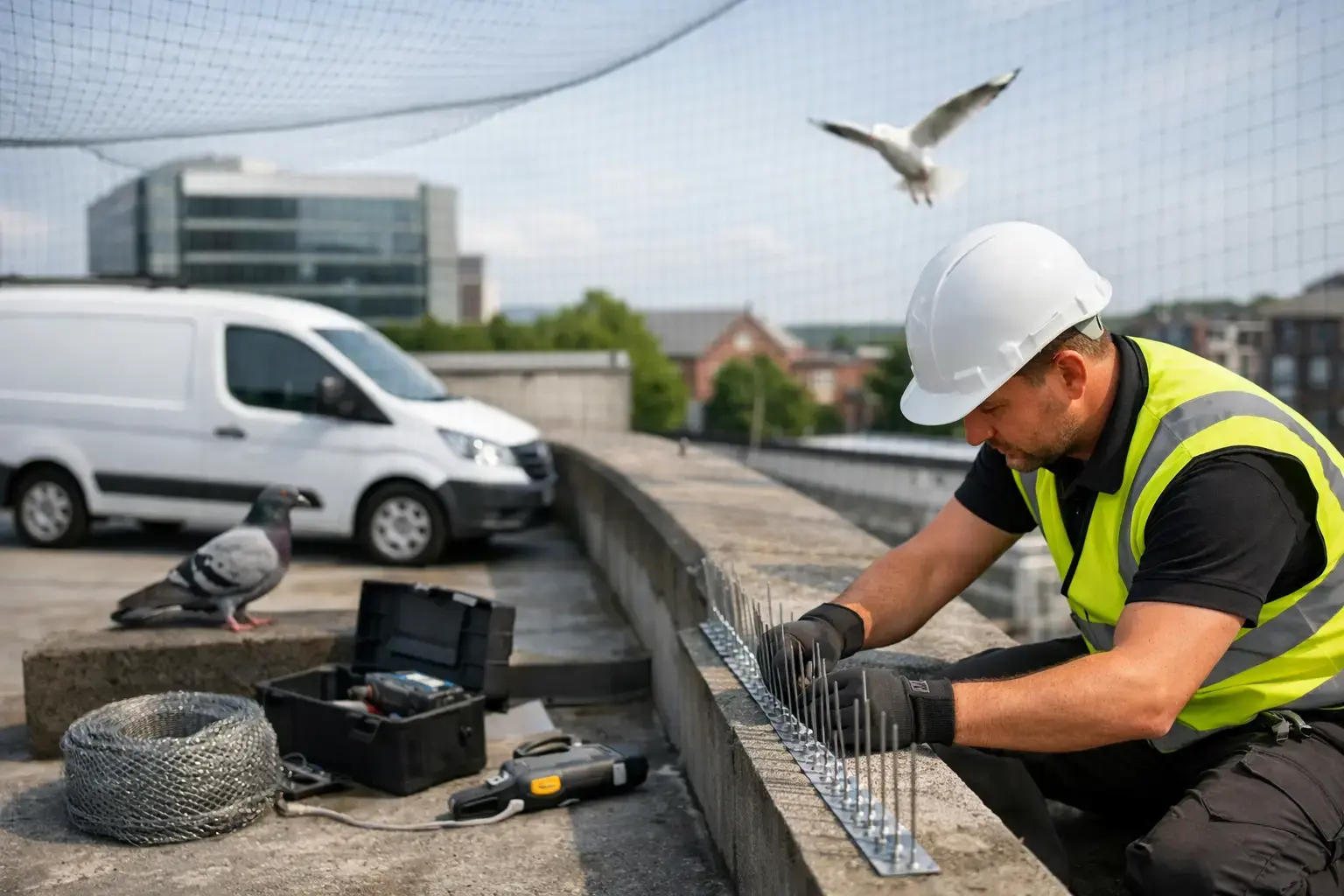
A pigeon roosting beneath a canopy may look like a minor nuisance at first. Left untreated, however, droppings can create slip hazards, block gutters and drains, damage finishes, contaminate stock and make a building look poorly managed. This guide to bird control systems explains how to select a practical, humane solution that protects the property without creating a new problem elsewhere.
For homeowners, landlords and commercial operators, the right system depends on the bird species, the part of the building being used and the reason birds keep returning. A visible deterrent fitted without a proper survey often fails because it treats the symptom rather than removing access to the favoured roosting or nesting area.
Why bird control needs a site-specific plan
Birds are persistent because a site offers something useful: shelter, warmth, food, water or a secure place to perch. Pigeons commonly favour ledges, beams, roof voids, canopies and service yards. Gulls may use flat roofs and higher open areas. Smaller birds can enter through damaged fascias, vents and gaps around pipework.
The first task is to identify where birds land, roost, feed and enter. It is also necessary to establish whether there are active nests. Wild birds, their active nests and eggs are protected by law, so timing and method matter. A professional assessment helps ensure work is carried out responsibly and avoids disturbing nesting birds.
At AZ Environmental Service Pest Control, surveys focus on the practical details that determine whether a system will last: access points, fixing surfaces, drainage, roof loading, public exposure and the condition of existing proofing. For awkward roofs, high elevations and inaccessible gutters, UAV surveys can provide a clear view before work is planned.
Guide to bird control systems: choosing the right method
There is no single best bird control system. The most effective option is usually the one that physically denies birds access to a proven problem area while preserving the building's appearance, safety and day-to-day use.
Bird netting for larger exclusion areas
Bird netting is one of the most dependable methods for protecting courtyards, loading bays, roof voids, canopies, plant areas and undercroft spaces. When correctly specified and tensioned, it creates a physical barrier that prevents birds entering or returning to the protected zone.
Netting is particularly useful where pigeons are roosting over stock, vehicles, walkways or food-handling areas. The mesh size must suit the target species, and the installation needs secure perimeter fixings with no gaps at corners, pipes or roof junctions. Poorly fitted netting can sag, allow birds behind it or become a maintenance issue, which is why installation quality is as important as the material itself.
The trade-off is visual impact. On some heritage buildings or prominent frontages, netting may not be the preferred choice. In those cases, discreet ledge systems or targeted proofing may be more suitable.
Bird spikes for ledges, signs and narrow perches
Bird spikes are designed to stop birds landing on narrow, predictable surfaces such as parapets, signs, light fittings, window ledges, pipe runs and external units. They do not injure birds when installed correctly. Instead, they remove the flat landing space birds need to settle.
Spikes work well on short ledges with regular access for installation and cleaning. They are not a cure for every situation. If a ledge is wide, uneven or heavily contaminated with droppings and nesting material, birds may still find space around a badly chosen spike system. The surface must be thoroughly cleaned and the spike width matched to the ledge before fitting.
They also require occasional inspection. Leaves, litter and nesting material can build up around the base, reducing their effectiveness if not dealt with promptly.
Tensioned wire systems for discreet protection
Tensioned wire systems use carefully spaced wires to make a ledge uncomfortable for birds to land on. They can be a neat option for architectural features where spikes would be too visible, including coping stones, decorative ledges and commercial frontages.
This system is best suited to pigeons and similar-sized birds using consistent perch lines. It is less appropriate for broad roof areas or places where birds can simply land beside the wires. Accurate positioning is essential, as even a small unprotected section can become the new roosting point.
Electrified track systems for persistent roosting
Low-profile electrified track systems deliver a brief, conditioned deterrent when a bird lands on the protected surface. They are often considered where pigeons continue to use ledges despite other deterrents, or where a less visible finish is required.
These systems should only be installed by trained professionals. The track, power supply and cable routes must be appropriate for the location, particularly on public-facing buildings, sites with routine maintenance access or areas exposed to standing water. It is a specialist option, not a shortcut, but it can be highly effective when specified correctly.
Solar panel proofing
The gap beneath solar panels offers pigeons a dry, sheltered nesting space. Once birds establish themselves there, debris and droppings can affect drainage, attract insects and make future maintenance more difficult.
Purpose-made mesh is fitted around the panel perimeter to close the entry gap without drilling into the panels. It should allow ventilation beneath the array while preventing birds gaining access. This is a useful example of why generic mesh and makeshift fixes are risky: an incorrect fitting can affect the system, look untidy or leave gaps for birds to exploit.
Proofing works that support long-term control
A bird control system will only perform as well as the surrounding building condition allows. Broken tiles, damaged soffits, open vents, gaps under eaves and failed cladding details can all provide alternative access once a primary roost is blocked.
Effective programmes often combine deterrents with pest proofing. This may involve sealing suitable gaps, repairing damaged sections, fitting vent guards or preventing access beneath roofline details. Drainage should also be checked, as standing water and blocked gutters encourage repeat activity while creating separate property maintenance risks.
Food sources matter too. Open bins, spilled waste, unsecured bird feed and outdoor eating areas can keep birds close to a site even after roosting points are protected. Commercial premises should include waste management and cleaning routines in their bird control plan, especially around deliveries, bin stores and staff break areas.
What to expect from a professional installation
A proper bird control survey should begin with evidence, not assumptions. The contractor should identify the species where possible, assess the extent of activity, check for nesting and explain why a particular system is recommended. For businesses, the assessment should also consider operational disruption, working-at-height requirements, site safety and the need for discreet scheduling.
The installation itself should use suitable, durable fixings for the building substrate. Adhesives, clips, brackets and tensioning components need to withstand local weather conditions and the load placed on them. On older buildings, the fixing approach needs additional care to avoid unnecessary damage to masonry, roof coverings or decorative elements.
After installation, a follow-up inspection is sensible, particularly on large commercial sites. Birds may test nearby ledges or seek a new route into the same building. Addressing those small changes early is far more cost-effective than allowing a new roost to become established.
When a temporary deterrent is not enough
Visual devices, reflective materials and sound-based deterrents can occasionally provide a short-term effect, especially where bird activity is new or irregular. Birds often become accustomed to them, however, particularly where food and shelter remain available. They should not be relied upon as the main solution to an established pigeon problem on a busy commercial property.
Likewise, cleaning droppings without blocking access only resets the appearance of the area. The birds return, and the cost repeats. The strongest results come from cleaning safely, removing nesting debris where lawful, excluding birds from the area and correcting the conditions that attracted them.
If birds are affecting a roof, business entrance, solar panels or loading area in Stockport or the wider North West, act before the damage and cleaning costs increase. A well-planned system protects the building, supports hygiene standards and gives birds a reason to move on without compromising wildlife welfare.