

Blog
The Future of Smart Pest Monitoring
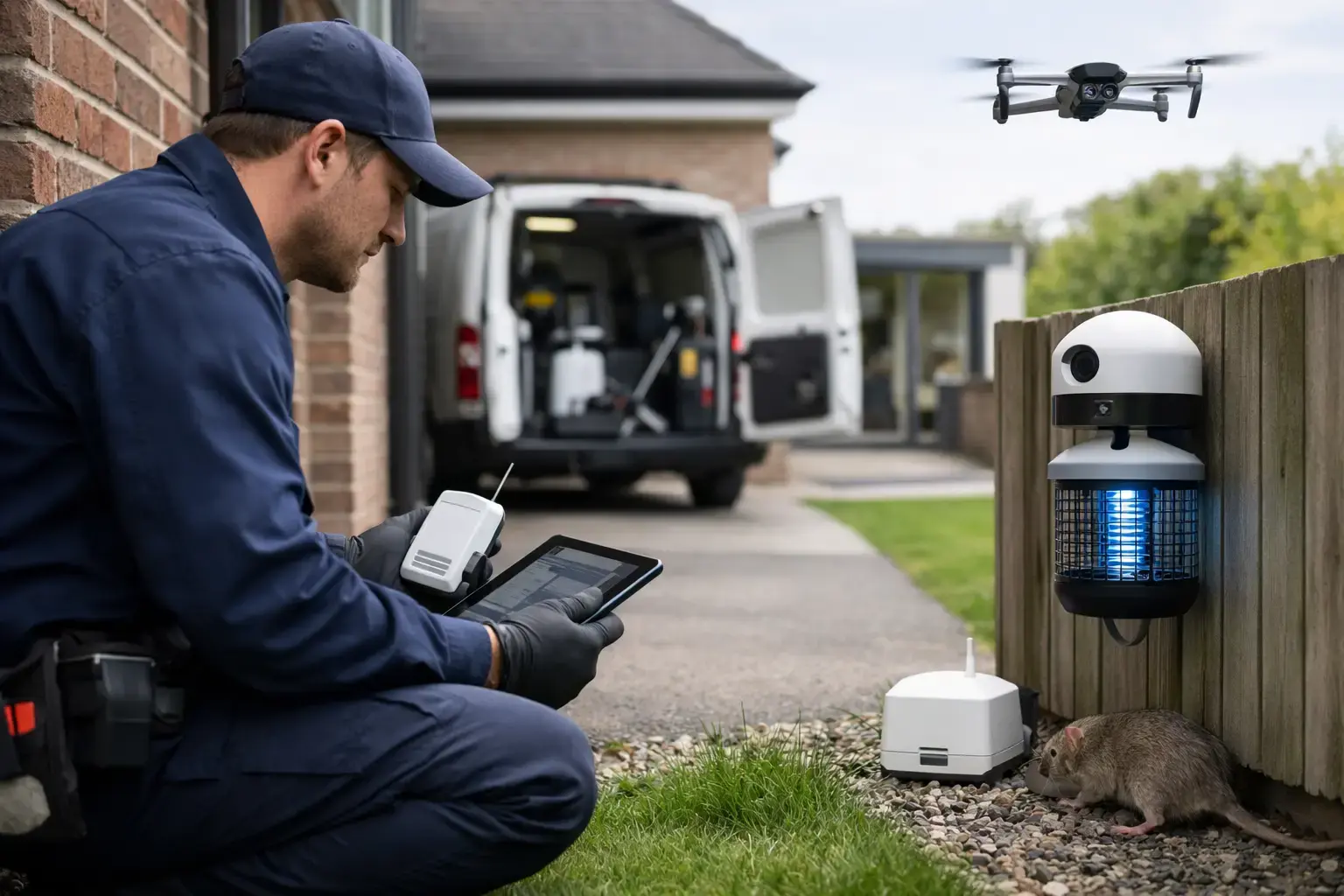
A rat sighting in a bin store or a mouse in a staff kitchen rarely starts as a major infestation. The real problem is what happens before anyone notices. That is where the future of smart pest monitoring is changing the job. Instead of waiting for visible activity, modern systems help identify movement earlier, track patterns more accurately and support faster action before a pest issue spreads.
For homeowners, landlords and commercial operators, that shift matters. Pest control works best when it is proactive, not reactive. Smart monitoring does not replace experienced pest technicians, but it gives them better information, earlier warnings and clearer evidence. That leads to more targeted treatment, less disruption and better long-term prevention.
What smart pest monitoring means in practice
Smart pest monitoring is not a gadget for the sake of it. At its most useful, it combines connected devices, sensor-based alerts and digital reporting to show where pest activity is happening, when it is increasing and what needs attention first.
In a commercial setting, that could mean connected monitoring points in food storage areas, service ducts or external perimeter zones. In domestic settings, it may be used more selectively, especially where there is recurring rodent activity in lofts, garages, wall voids or outbuildings. The principle is the same. You are no longer relying only on periodic visual checks. You are building a clearer picture of risk between visits as well.
This is particularly valuable in sites where reputation, hygiene and compliance matter. If a business only finds out there is a problem after staff report droppings or damage, it is already behind. Early notification gives more room to contain the issue and protect operations.
Why the future of smart pest monitoring is moving towards prevention
Traditional pest control has always involved inspection, treatment and proofing. That will not change. What is changing is the balance between response and prevention.
The future of smart pest monitoring is centred on identifying low-level activity before it becomes established. A single mouse entering through a poorly sealed service gap is one problem. A breeding population behind walls is another. Smart systems can help flag that first stage sooner, which means fewer pests, less damage and less extensive treatment.
For landlords and property managers, this is especially useful in multi-occupancy buildings where access can be delayed and reports may be inconsistent. A connected monitoring approach can provide objective evidence of activity and help direct resources where they are needed most. For businesses, it supports due diligence and strengthens record keeping. For homeowners, it can provide reassurance when dealing with a recurring issue that seems to appear without warning.
That said, technology is not a magic fix. Sensors and connected traps still need correct placement, regular review and professional interpretation. If devices are badly positioned or the building has major proofing failures, the data will only confirm what should already have been addressed.
Better data, better decisions
One of the biggest benefits of smart monitoring is not simply speed. It is accuracy.
Pest activity is often uneven. Rodents may use one route repeatedly while ignoring another nearby. Insects may build in one warm, humid area while adjacent rooms remain unaffected. Without data, treatment can become too broad or too cautious. With better monitoring, pest control becomes more precise.
That precision matters because effective pest management is not just about applying products. It is about understanding behaviour. If alerts show repeated rodent movement near a rear delivery point between certain hours, the issue may be linked to waste handling, poor door discipline or a structural gap that is only exposed at night. If there is no ongoing activity after proofing work, that is valuable evidence too.
This is where technology supports a more professional service. Clients do not just want to be told a problem is under control. They want to know why, where and what happens next. Digital reporting, trend analysis and site-specific records make that conversation clearer.
The role of technicians will become more important, not less
There is sometimes an assumption that smart monitoring means automation will take over pest control. In reality, the opposite is more likely. As systems become more advanced, the need for qualified pest professionals becomes greater.
A sensor may indicate activity, but it will not explain whether the cause is poor housekeeping, defective drainage, nesting material in a loft void or an entry point behind cladding. It will not carry out proofing, identify species from subtle signs, assess environmental risk or design a treatment plan around pets, children, staff or sensitive stock.
The future is not about replacing field expertise with devices. It is about giving experienced technicians sharper tools. The best outcomes still come from inspections, practical problem solving and tailored pest management plans. Technology adds visibility, but trained judgement turns that information into results.
That distinction matters for customers choosing a provider. A smart system is only as effective as the people managing it. If a company installs devices but does not interpret the findings properly or act on them quickly, the value drops away very quickly.
Where smart monitoring works best
Not every property needs a fully connected monitoring system. It depends on the pest risk, the building type and the consequences of delayed detection.
Commercial premises often see the strongest benefit. Food businesses, warehouses, offices, schools, care settings and managed residential sites all have reasons to detect activity early and maintain a clear audit trail. In these environments, smart monitoring helps support routine programmes and can reduce the time between pest activity and response.
For domestic customers, the case is more selective. A one-off wasp nest or occasional ant problem may not require any monitoring technology at all. But persistent rodent issues, repeated loft activity, difficult access areas or larger homes with outbuildings can all benefit from a smarter approach. If a problem keeps returning, better visibility is often part of the answer.
Properties with known vulnerabilities also stand to gain. Older buildings, mixed-use premises, sites near watercourses and homes backing onto open land can all present conditions where early warning makes a real difference.
Privacy, cost and practical limits
There are clear advantages to connected pest monitoring, but there are trade-offs as well.
Cost is one factor. Smart systems can be more economical over time in the right setting, especially where they reduce disruption or prevent serious infestations. But they are not always the cheapest option upfront. For a low-risk property, a strong inspection and prevention programme may be the better fit.
Signal reliability and site layout also matter. Thick walls, remote plant rooms and external structures can affect how well connected devices perform. The system needs to suit the building, not the other way round.
Then there is the question of expectation. Smart monitoring improves visibility. It does not mean zero pests forever. Any responsible provider should be clear about that. Buildings change, tenants change, waste practices slip and pests adapt. Good pest management is about reducing risk, responding quickly and maintaining control, not making unrealistic promises based on technology alone.
What clients should expect over the next few years
Over the next few years, clients are likely to see smart monitoring become more common in routine pest management, especially for rodent control. Systems will continue to improve in how they report activity, track trends and support compliance records. That will be particularly relevant for businesses that need documented evidence of monitoring and action.
We are also likely to see smarter integration between on-site surveys, proofing recommendations and monitoring data. That means fewer generic visits and more targeted interventions. Instead of treating every area as equal risk, pest control will focus more closely on the pressure points that the building actually presents.
For customers, the practical benefit is straightforward. Problems should be identified earlier, reporting should be clearer and treatment plans should become more precise. In places like Stockport and the wider North West, where properties vary from older terraced housing to large commercial estates, that flexibility matters.
The strongest results will still come from combining technology with local knowledge, qualified inspection and proper proofing. That is the real direction of travel. Smarter systems, yes, but used by professionals who understand how pests behave in real buildings, not just on a dashboard.
If you are responsible for a property and want fewer surprises, that is the real promise of smart monitoring. Not flashy technology for its own sake, but earlier answers, better decisions and a clearer route to lasting control.