

Blog
Flea Treatment After Pets Leave the Home
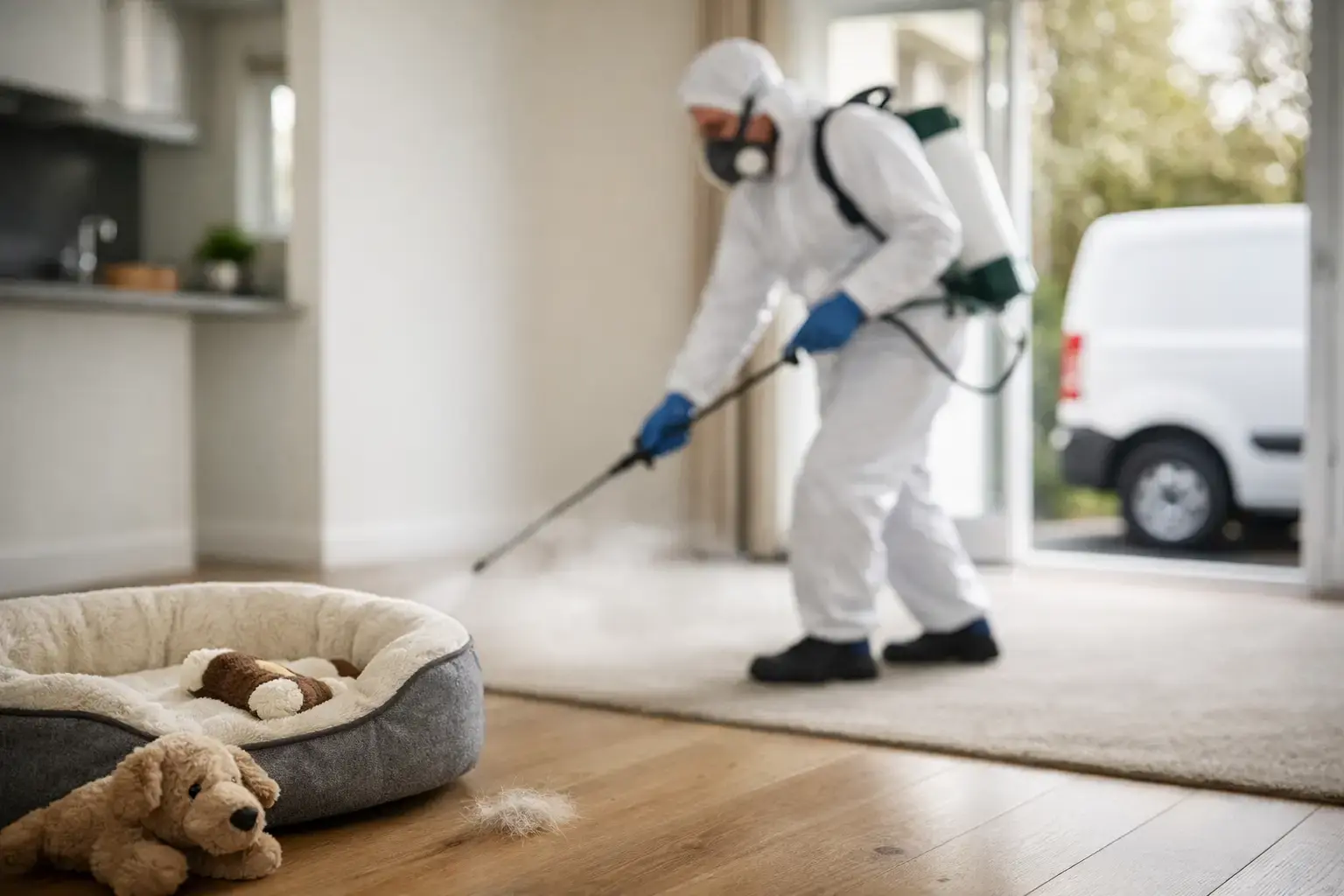
The dog has gone. The cat no longer lives there. Yet people are still getting bitten around the ankles and spotting tiny dark insects on carpets. Flea treatment after pets leave the home is a common issue, and it catches many property owners out because the pets may be gone, but the infestation often is not.
That happens because fleas do not disappear with the animal host. Eggs, larvae and pupae can stay hidden in carpets, soft furnishings, cracks in flooring and along skirting boards. In empty properties, rented homes, newly purchased houses and rooms that have not had pets for months, fleas can still emerge when vibration, warmth and carbon dioxide signal that a host is nearby.
Why flea treatment after pets is still necessary
Adult fleas are only one part of the problem. What most people see is a small fraction of the infestation. The larger issue is the life cycle taking place out of sight.
Flea eggs are not sticky, so they fall off the animal and settle into the environment. Larvae then develop in protected areas such as under furniture, in carpet fibres and around pet bedding. The pupal stage is the most stubborn. Pupae are enclosed in a cocoon that helps protect them from drying out and from some treatments. They can remain dormant until conditions are right.
This is why a property can appear fine for weeks and then suddenly develop a flea problem after people move in, cleaners start work, or a room is used again. It is also why a quick spray from the supermarket often fails to solve the issue fully.
Where fleas remain after pets have gone
In most homes, fleas are concentrated where pets rested, slept or moved through regularly. Living rooms, bedrooms, stairs and upholstered furniture are common hotspots. In rental properties, the problem is often worse in vacant periods because the infestation is left untreated while immature stages continue developing.
Hard floors are not always exempt. Gaps between floorboards, edges of laminate and debris trapped beneath skirting can all harbour flea stages. If the previous pet had access to a vehicle, garage or outbuilding, these areas may also need attention.
For landlords and property managers, this matters because fleas can lead to complaints from new tenants very quickly. For homeowners, it matters because the first sign is often bites rather than visible pests.
Signs you need flea treatment after pets leave
Bites around the lower legs are one clue, but bites alone are not enough to confirm fleas. Other insects can cause similar irritation, and some people do not react at all. Better indicators include small dark insects jumping from carpets or soft furnishings, flea dirt that looks like black specks, and reports that the issue worsens after vacuuming or walking through a room.
In empty or newly occupied properties, fleas often seem to appear all at once. That is usually not a sudden infestation. It is an existing one becoming active.
Can you treat fleas yourself?
Sometimes, yes - but it depends on the stage of the infestation, the size of the property and how quickly you need the problem resolved.
If the activity is very light and caught early, careful vacuuming, washing soft furnishings at a suitable temperature and using a properly selected residual insecticide may reduce the issue. The difficulty is not applying a product. The difficulty is using the right one, in the right places, with the right follow-up.
Many DIY attempts fail for three reasons. First, people treat only the obvious areas and miss hidden harbourages. Second, they expect instant results, when emerging fleas may still appear for a period after treatment. Third, they do not deal with the full life cycle.
There is also a safety point. Treatments must be used exactly as directed, especially in homes with children, vulnerable adults or returning animals. More product does not mean better treatment.
What professional flea treatment after pets should involve
A proper treatment starts with inspection, not guesswork. The aim is to confirm flea activity, identify the likely source areas and assess whether there are wider contributing factors such as untreated furnishings, vacant-room activation or previous failed treatment.
Professional flea treatment after pets have left the property usually focuses on carpets, upholstered furniture, room edges, cracks and any areas where the animals spent time. The treatment needs residual effect so that newly emerged fleas contact the active product. In some cases, more than one visit or a planned follow-up is sensible because pupae can continue to hatch after the initial application.
Preparation matters as well. Vacuuming before treatment is often recommended because it stimulates emergence and removes debris that protects developing fleas. Bedding, throws and removable covers may need laundering. After treatment, further vacuuming at the correct interval can help support results. The details vary by product and property, so one-size-fits-all advice is rarely enough.
Why empty properties can be worse
This catches out landlords in particular. A house or flat may sit vacant after a tenant with pets has moved out. During that time, there is no host, but the flea life cycle in the environment continues. Then, when decorators, cleaners, agents or new tenants enter the property, the vibration and body heat trigger emergence.
That can make it seem as though the fleas have arrived with the new occupant, when the opposite is true. The problem was already there.
Treating before re-letting or re-occupying is often the most practical decision. It protects the next occupant, avoids complaints and reduces the risk of repeat visits and drawn-out disruption.
Flea treatment after pets in homes and businesses
Most people associate fleas with domestic settings, but commercial premises can also be affected, particularly if staff bring infestations from home on soft items, if former residential use is involved, or if animals have had access to certain areas.
For businesses, the issue is not just irritation. It is reputation, staff comfort and operational disruption. Discreet, competent treatment matters. In customer-facing premises, speed and professionalism are essential because a lingering pest issue can quickly become a wider problem.
How long does it take to get rid of fleas?
That depends on the severity of the infestation and the stage it is in when treatment begins. A well-targeted professional treatment can bring the problem under control quickly, but some continued emergence for a short period is normal. That does not always mean the treatment has failed. It can mean immature fleas are still hatching and then contacting the treated surfaces.
The key point is progress. You should see a clear reduction, not ongoing heavy activity. Where infestation levels were high or treatment was delayed, additional action may be required. Honest pest control advice should reflect that rather than promising a miracle overnight.
When to call a professional
If pets have already left and bites or flea sightings continue, waiting usually makes the problem harder to solve. The same applies if you are preparing a property for sale, re-letting a home, managing a complaint from tenants or dealing with repeated activity after DIY treatment.
A qualified pest controller can assess the property properly, treat the right areas and explain what to expect afterwards. That saves time, reduces wasted spend on ineffective products and gives you a much better chance of resolving the issue fully.
For property owners in Stockport and surrounding areas, that practical approach is often the difference between a short-term improvement and a proper fix. Fleas are persistent, but they are not unbeatable when the treatment is planned around the biology of the pest, not just the bites people happen to notice.
If the pets have gone but the fleas have not, the best next step is simple - treat the property as the source of the infestation, and deal with it properly before it settles into a bigger problem.