

Blog
Commercial Bird Control Stockport That Works
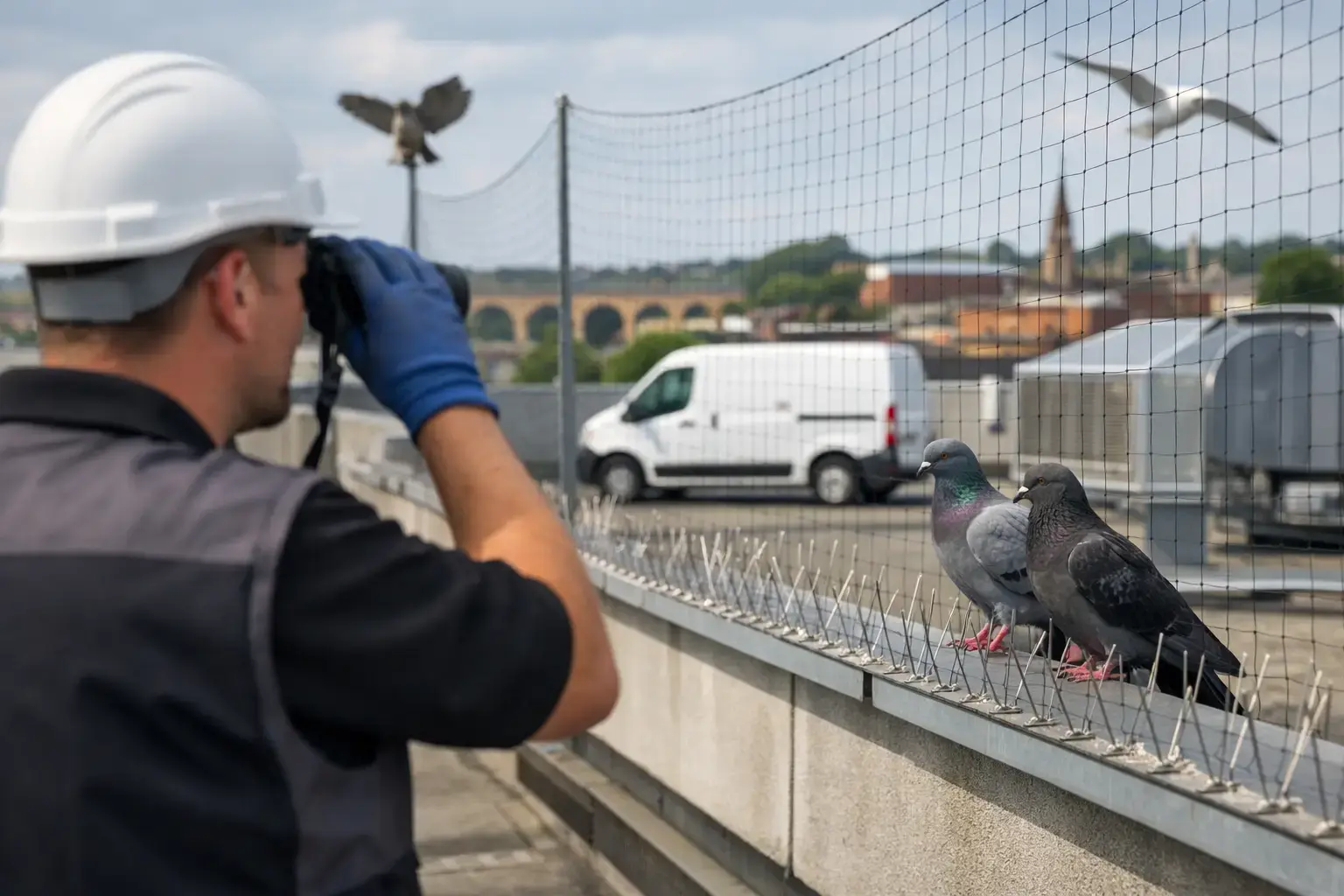
A few pigeons on a roofline can look harmless until the mess starts building on entrances, staff walkways and customer areas. For businesses, commercial bird control Stockport is not just about tidiness. It is about protecting buildings, reducing health risks, avoiding damage and keeping your site presentable without disrupting day-to-day operations.
Bird activity around commercial premises tends to start small. A ledge above a loading bay, the top of a shopfront sign, an unused corner of a warehouse roof or the framework around solar panels can all become regular roosting points. Once birds settle in, the problem usually escalates. Droppings become more frequent, nesting materials block gutters and drain points, noise becomes a nuisance and the overall condition of the site starts to suffer.
Why commercial bird control in Stockport matters
For many businesses, bird problems are first noticed when they become visible to customers or create a complaint. By that stage, there is often already an established roosting or nesting pattern. Pigeons, gulls and smaller nuisance birds can all create issues, but pigeons are the most common commercial bird control concern on local premises.
The impact is wider than appearance. Bird fouling is acidic and can damage paintwork, stone, metal finishes and signage over time. Walkways become slippery, creating a risk for staff and visitors. Air conditioning units, rooftop plant areas and drainage systems can also be affected by nesting debris. In food-related environments, hospitality settings and public-facing buildings, the reputational risk is just as serious as the physical damage.
There is also a compliance issue to consider. Businesses have a duty to maintain safe premises. If birds are creating slip hazards, hygiene concerns or recurring property damage, ignoring the problem can become costly. Quick fixes rarely hold up for long, especially where birds have already established a habit of returning to the same structure.
What effective commercial bird control Stockport businesses actually need
The right solution depends on the building, the bird pressure and how the site is used. There is no single method that works for every property. A retail frontage needs a different approach from a warehouse, school, office block or industrial unit. The job is to stop access, discourage repeat activity and do it in a way that is safe, lawful and proportionate.
This is where a proper survey matters. Without understanding where birds are landing, nesting and entering, it is easy to install the wrong system in the wrong place. That leads to wasted cost and a problem that soon returns. A thorough site assessment should identify pressure points such as parapets, roof edges, beams, signs, plant equipment, gullies and sheltered voids.
On some buildings, bird spikes are suitable for narrow ledges and sign tops. On others, netting is the more reliable option where larger areas need excluding, such as service yards, canopies or roof structures. Post and wire systems can work well on certain architectural features where visual impact needs to be kept to a minimum. Proofing around solar panels may also be needed if birds are nesting underneath and causing debris build-up or cable damage.
The important point is that bird control should not be guessed. It needs to be designed around the property and installed correctly. Poorly fitted netting, badly spaced spikes or incomplete proofing often causes more frustration than the original problem.
The value of a professional survey
Commercial properties are not always easy to inspect from ground level. Rooflines, high signage, cladding details and elevated plant areas can hide the true extent of the problem. In those cases, professional access methods and UAV surveys can provide a clearer picture without unnecessary disruption.
That matters because bird activity is often more extensive than it first appears. A business may only notice fouling above the front entrance, while the main nesting area is actually at the rear of the building or behind rooftop equipment. Treating the visible symptom without addressing the source rarely solves the issue.
A professional survey should also take account of species, nesting behaviour and legal responsibilities. Bird control must be wildlife-conscious and carried out properly. Timing can affect what action is appropriate, especially during nesting periods. A dependable contractor will explain what can be done immediately, what may need scheduling and which control measures are best suited to the building.
Discreet bird control for commercial premises
For many commercial clients, discretion matters nearly as much as the result. If you manage a customer-facing premises, office, school, healthcare setting or hospitality site, you do not want unnecessary attention drawn to a pest issue. Service should be organised professionally, with minimal interruption to staff, tenants, visitors or trading hours.
That is why commercial bird control needs to be planned around the realities of the site. Access may need to be arranged outside peak times. Installation work should be tidy and safe. The finished system should look neat rather than improvised. On visible parts of a property, appearance matters. The best outcome is one where the building is protected and the control measure blends into the structure as much as possible.
Prevention is usually cheaper than repeat clean-up
Some businesses spend heavily on repeated cleaning, only to find the problem returns a few days later. While cleaning has its place, especially where fouling has created an immediate hygiene or slip issue, it does not stop birds returning to the same ledge or roof feature. Without proofing or exclusion, the cycle continues.
Prevention is usually the more cost-effective route. Once birds identify a safe roosting point, they tend to come back repeatedly unless something changes physically. Installing the right deterrent or exclusion system early can save ongoing cleaning costs, reduce maintenance issues and protect the building over the longer term.
It also helps preserve reputation. Customers notice dirty entrances, fouled signage and neglected building exteriors. If your premises need to project professionalism, bird control is part of property management, not a minor add-on.
Where bird problems are commonly found
In and around Stockport commercial sites, bird pressure often builds in predictable areas. Retail units see issues around fascia signs, canopies and rear service alleys. Warehouses and industrial buildings often have problems along roof beams, loading bays, external pipework and cladding edges. Offices and flat blocks can experience persistent roosting on window ledges, plant decks and upper-level architectural features.
Schools, healthcare premises and public buildings need particular care because safety, access and appearance are all under greater scrutiny. In these settings, the right solution has to work technically while remaining tidy, low-profile and safe for the people using the site every day.
Choosing a contractor for commercial bird control
Not every pest issue calls for specialist bird work, but established bird problems on commercial premises usually do. The difference comes down to experience, survey quality and installation standards. A contractor should be able to explain why a particular system is suitable, what limitations exist and how the work will be carried out.
It is also worth looking for a provider that understands broader pest management, not just the visible bird issue. Nesting materials and fouling can attract insects and create wider hygiene concerns. A joined-up approach is often more useful than treating bird activity in isolation.
Local knowledge helps as well. Commercial buildings across Stockport vary from older town centre properties to newer retail and industrial units, and each type brings different access challenges and proofing needs. A local specialist is more likely to recognise those practical differences and respond quickly when the issue needs urgent attention.
AZ Environmental Service Pest Control works with commercial clients that need a clear plan, discreet attendance and a proper fix rather than a temporary patch. That means surveying the site properly, recommending suitable control measures and carrying out work with long-term prevention in mind.
When to act
If birds are already nesting, fouling entrances or gathering daily on the same part of the building, the right time to act is now. Waiting rarely improves the situation. Nesting activity expands, damage worsens and the cost of putting things right usually increases.
Equally, if you are refurbishing a property, installing solar panels or taking on management of a site with known bird activity, early prevention can make a big difference. It is often easier and more cost-effective to proof vulnerable areas before bird pressure becomes established.
A well-managed commercial site should not have to tolerate avoidable bird damage, hygiene issues or repeated clean-up costs. The right bird control approach protects the building, supports compliance and helps your premises reflect the standards your business wants to project. If the problem has started, dealing with it properly is always better than getting used to it.