

Blog
7 Cockroach Signs in Kitchens to Spot Fast
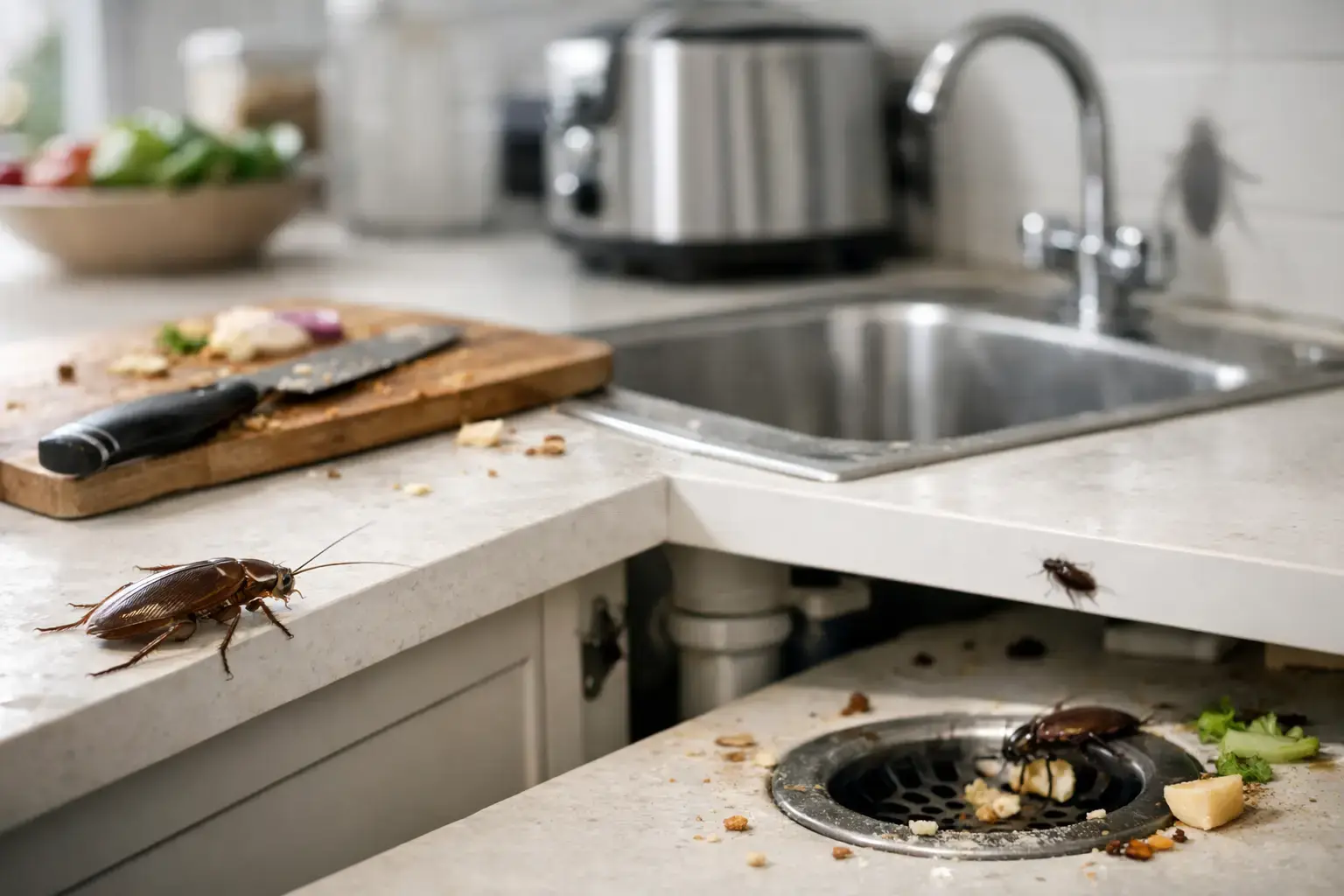
You usually do not see the first cockroach when the problem starts. You notice the small clues it leaves behind - a pepper-like scatter in the corner of a cupboard, a stale oily smell near the sink, or brown smears along a kickboard. Spotting cockroach signs in kitchens early matters because kitchens give roaches exactly what they need: warmth, moisture, shelter and regular access to food.
For homeowners, landlords and commercial premises, early action can stop a minor issue turning into a persistent infestation. Cockroaches are not just unpleasant to find around food preparation areas. They can contaminate surfaces, spread bacteria and quickly establish themselves in hidden voids behind units, appliances and pipework.
Why cockroach signs in kitchens are often missed
Most cockroach activity happens out of sight. They are nocturnal, fast-moving and highly effective at staying close to dark harbourage points. In a kitchen, that often means behind fridges, under sinks, inside cupboard hinges, beneath plinths and around boiler cupboards or service penetrations.
The challenge is that the signs can look harmless at first. Droppings may be mistaken for dirt. An unusual smell may be blamed on drains. A smear mark near the wall may be wiped away without a second thought. By the time live insects are seen regularly in daylight, the infestation is often more established.
1. Droppings that look like ground pepper or coffee
One of the clearest signs is cockroach droppings. In smaller species, these can resemble black pepper, coffee grounds or fine dark grains. In heavier infestations, they collect along shelf edges, inside cupboards, under the sink and behind appliances.
Larger roaches may leave more cylindrical droppings, but in many UK kitchen infestations the debris is small enough to be overlooked. Fresh droppings appearing again after cleaning are a strong indicator of ongoing activity. If the same area repeatedly shows black specks, especially near heat and moisture, it should not be dismissed as general kitchen grime.
2. An unpleasant musty or oily smell
A well-established infestation often produces a distinct odour. People describe it in different ways, but musty, stale, greasy or oily are common. In enclosed kitchen areas, the smell can become stronger inside cupboards, around boxed-in pipework or behind fitted units.
Odour on its own is not proof, because drains, food waste and damp issues can create similar smells. But if that smell sits alongside droppings, smear marks or insect sightings, the picture becomes much clearer. In commercial kitchens, where hygiene standards are critical, this is one of the signs that should trigger a proper inspection rather than a quick clean-down.
3. Smear marks along walls, corners and surfaces
Cockroaches tend to travel the same routes, especially where surfaces are slightly greasy or damp. As they move, they can leave dark smear marks on skirting boards, wall edges, cupboard corners and around cracks or gaps.
These marks are more likely in areas with high traffic and limited disturbance. Around the back of a fridge, under a sink unit or along the wall-floor junction behind kitchen equipment are typical locations. The issue is not one isolated mark. It is a pattern of repeated staining where insects are using the same harbourage and travel lines.
4. Egg cases or shed skins
Cockroaches do not simply appear overnight. As they breed and grow, they leave behind evidence. Egg cases, known as oothecae, may be found in hidden areas such as cupboard backs, drawer runners, appliance voids or under loose flooring edges. Depending on species, they can be small, brown and capsule-shaped.
You may also find shed skins as immature cockroaches moult through their life stages. These are often mistaken for dead insects or bits of dry debris. In reality, they tell you the infestation is active and developing on site. That matters because breeding activity changes the treatment approach. It is no longer about one or two stray insects. It points to an established population.
5. Live sightings, especially at night
Seeing a live cockroach is an obvious warning sign, but the timing matters. Roaches are primarily nocturnal, so activity after dark is common. If you switch on the kitchen light late at night and see one dart behind a unit or appliance, take it seriously.
Daytime sightings can be more concerning. While a single daytime sighting does not always mean a severe infestation, it can suggest overcrowding in harbourage areas or disturbance from cleaning, heat or recent movement of appliances. In flats, takeaway premises, restaurants and shared buildings, cockroaches can also move between units, so one sighting may be part of a wider building issue rather than an isolated kitchen problem.
6. Damage to food packaging and contamination risk
Cockroaches are scavengers. They will feed on crumbs, grease, food residues and poorly stored dry goods. You may notice damaged packaging, unusual holes in thin packets, or contamination inside food cupboards.
The greater concern is hygiene. Roaches move through drains, voids, service ducts and contaminated areas before crossing food preparation surfaces. That is why any sign of activity in a kitchen should be treated as a health risk, not just a nuisance. For landlords and food businesses, this is where delay becomes costly. The problem affects tenant confidence, compliance and reputation as well as sanitation.
7. Activity around heat, water and hidden voids
If you are trying to confirm cockroach signs in kitchens, focus on where conditions favour them most. Behind fridges and freezers, under dishwashers, beneath sinks, around leaking pipe joints and inside warm service voids are common hotspots.
Roaches need access to moisture. Even a minor leak, condensation point or standing water under an appliance can support activity. They also thrive where crumbs and grease build up in hard-to-reach places. This is why surface cleaning alone rarely solves the problem. A kitchen can look tidy and still support an infestation behind fitted units.
What these signs usually mean
Not every sign points to the same level of infestation. A single insect may have entered from a neighbouring property, a delivery route or a drain defect. Repeated droppings, odour, egg cases and multiple sightings suggest something more established.
This is where experience matters. Effective pest control depends on accurate identification, knowing where harbourage is likely to be, and understanding how far the issue may extend. In domestic properties, the source may be a single kitchen void. In commercial settings, it may involve storage areas, plant rooms, waste zones and adjoining units.
What to do if you spot cockroach signs in kitchens
Start by avoiding the common mistake of relying on off-the-shelf sprays. These can scatter insects deeper into the structure, make monitoring harder and fail to deal with breeding sites. They may kill visible roaches while leaving the main infestation untouched.
Instead, keep the evidence. Do not scrub everything immediately if you are arranging an inspection, as fresh signs help confirm activity areas. Reduce easy access to food by sealing dry goods and clearing crumbs and grease deposits. Deal with leaking taps or pipework if possible, and check under appliances and sink units for moisture.
Most importantly, arrange a professional survey. Proper treatment is usually a combination of identification, targeted control, monitoring and proofing advice. In some cases, follow-up visits are essential because eggs and hidden harbourages mean one treatment may not be enough on its own. A professional approach is also more discreet and far more reliable where hygiene and reputation matter.
For homes and businesses in Stockport and surrounding areas, the value of a local specialist is speed, practical knowledge and a treatment plan built around the property rather than a generic fix. That is especially important with cockroaches, because the visible signs are only part of the story.
When to act immediately
If cockroaches are present in a kitchen used by children, vulnerable residents, tenants or food staff, there is no benefit in waiting to see if the issue settles down. The same applies if you are finding droppings repeatedly after cleaning, noticing smells from concealed kitchen areas, or seeing activity near food stock and preparation surfaces.
Prompt action is usually cheaper, cleaner and easier than dealing with a well-established infestation weeks later. By then, harbourage can spread, breeding continues and the disruption becomes greater.
A kitchen should be one of the safest and cleanest areas in any property. If something feels off, trust the signs and get it checked properly. Fast action now can spare you a much larger problem later.