

Blog
Cockroach Control for Takeaways That Works
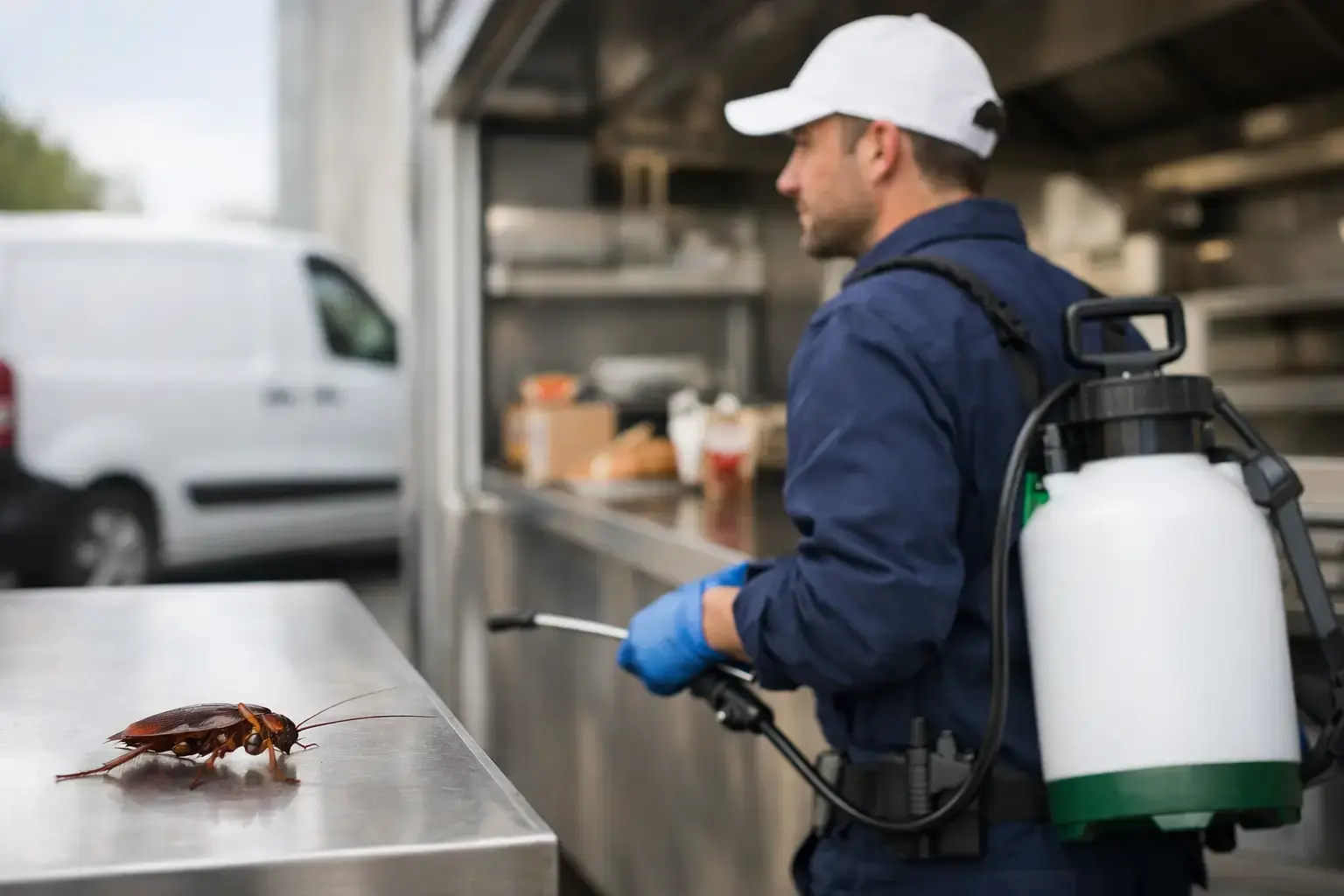
A cockroach seen during service is rarely the whole problem. In a hot, busy food premises, cockroach control for takeaways needs to deal with the hidden harbourage, food sources and entry points that allow activity to continue after the first sighting. Fast action protects your customers, your hygiene standards and the reputation you have worked hard to build.
Cockroaches are particularly well suited to takeaway kitchens. They favour warmth, moisture, grease and tight gaps around equipment - all common conditions where food is prepared at speed. A professional response should be discreet, targeted and focused on stopping the infestation from returning, not simply treating what can be seen.
Why takeaways are vulnerable to cockroaches
The most common species found in commercial kitchens are German cockroaches and Oriental cockroaches. German cockroaches are small, light brown and often found in warm areas such as motor housings, fridge compressors, wall voids and beneath worktops. They breed quickly, which means a small number can become a serious infestation in a short period.
Oriental cockroaches are darker, larger and more likely to be associated with drains, damp storage areas, bins and external access points. Their presence can indicate a drainage issue, a gap around pipework or poor exclusion at ground level. The treatment approach depends on the species, the level of activity and how the premises operates.
Takeaway kitchens create several conditions cockroaches exploit. Heat from cooking appliances, water around sinks and dishwashing areas, food debris beneath equipment, cardboard deliveries and overnight quiet periods all make harbourage easier. Even well-run businesses can be affected, particularly in shared buildings, older units or premises connected to other food operators.
Cockroach control for takeaways starts with the survey
A proper inspection is the foundation of effective control. Treating without understanding where cockroaches are breeding can reduce visible activity briefly while leaving the main problem untouched.
A technician should inspect behind and beneath cooking equipment, refrigeration units, sinks, shelving, electrical points, pipe runs, drains, staff areas, storage rooms and waste handling areas. Monitoring points may be used to establish the scale of activity and identify the routes cockroaches are using. Evidence such as droppings, egg cases, shed skins and musty odours can reveal infestation areas that are not immediately obvious.
For a takeaway, the survey also needs to consider the working pattern of the premises. Is cleaning possible behind the fryer? Is stock delivered in cardboard and stored close to heat sources? Are bins collected frequently enough? Does a neighbouring unit have a known pest issue? These details determine the right treatment plan.
What an effective treatment plan looks like
There is no single treatment that works for every infestation. The best results usually come from a combination of targeted professional treatments, monitoring, hygiene improvements and proofing work. The goal is to break the breeding cycle and remove the conditions that support it.
Professional gel treatments can be highly effective where applied correctly in cracks, voids and harbourage areas. They are not a substitute for cleaning, but they allow activity to be targeted in locations where spraying would be unsuitable or ineffective. In heavier infestations, an insecticidal treatment may also be required, with follow-up visits planned around the cockroach life cycle.
Follow-up is essential. Cockroach eggs can survive an initial treatment, and newly emerged nymphs need to be controlled before they mature and reproduce. The number of visits depends on the infestation, species and site conditions. A reputable pest professional will explain what has been found, what treatment is being used and what your team needs to do between visits.
At AZ Environmental Service Pest Control, treatment programmes are tailored to the premises and delivered discreetly, including attendance in unmarked electric vans where required. For food businesses, that discretion matters, but so does clear reporting and evidence that the issue is being actively managed.
The cleaning and proofing work that makes treatment last
Pest treatment alone cannot compensate for persistent food, water and harbourage. Staff do not need to turn a working kitchen into a laboratory, but a consistent closing routine makes a real difference.
Pay particular attention to grease and debris beneath appliances, the undersides of worktops, floor-wall junctions, cracks around skirting, and the areas behind fridges and freezers. Food should be kept in sealed containers where practical, and spillages dealt with promptly. Cardboard should not be allowed to build up in warm storage areas, as its folds create excellent harbourage.
Water control is equally important. Repair dripping taps, investigate persistent moisture beneath sinks and avoid leaving mop buckets or wet cloths overnight. Drains should be cleaned and maintained appropriately, especially if Oriental cockroaches have been identified.
Proofing closes off routes into the building and between rooms. Gaps around pipework, damaged door seals, broken air bricks and poorly fitting utility covers can all provide access. In some units, cockroaches may be moving through shared service voids or from an adjoining property. Where this is suspected, the problem needs to be addressed beyond one cupboard or one kitchen wall.
Protecting food hygiene, staff and your reputation
Cockroaches can contaminate food preparation areas and carry bacteria picked up from waste, drains and dirty surfaces. Their droppings and shed skins can also aggravate allergies in sensitive individuals. For a takeaway, the commercial risk is immediate: a customer sighting, staff concern or environmental health inspection can disrupt trading and damage confidence.
Keep a clear pest control record. This should include inspection findings, treatment details, monitoring results, recommendations, proofing actions and follow-up dates. Good records show that you have identified a risk and taken proportionate action to control it. They also help managers spot patterns, such as recurring activity around a particular appliance or delivery area.
If cockroaches are found during service, avoid panic and avoid moving equipment unnecessarily. Protect exposed food, clean affected surfaces using your food safety procedures, and arrange a professional inspection promptly. Do not rely on shop-bought aerosols in food preparation areas. They can drive cockroaches deeper into voids, contaminate surfaces if misused and make it harder to assess where the infestation is concentrated.
When to call a professional pest controller
One cockroach is enough reason to investigate in a food business. Cockroaches are mostly active at night, so daytime sightings can suggest a larger population or disturbed harbourage. Other warning signs include small dark droppings around hinges and equipment, egg cases, unexplained smells, activity near drains and repeated sightings in the same location.
A qualified pest controller can identify the species, assess the risk, apply suitable products safely and set out the practical actions needed from your team. This is especially valuable where activity keeps returning, where the premises is part of a shared building, or where previous treatments have failed to resolve the source.
For takeaways in Stockport and across Greater Manchester, a prompt, professional survey gives you a clear starting point. The right response is not just about removing cockroaches from sight. It is about restoring control of the environment they depend on, so your kitchen can keep operating with confidence.