

Blog
Can Pest Proofing Stop Mice for Good?
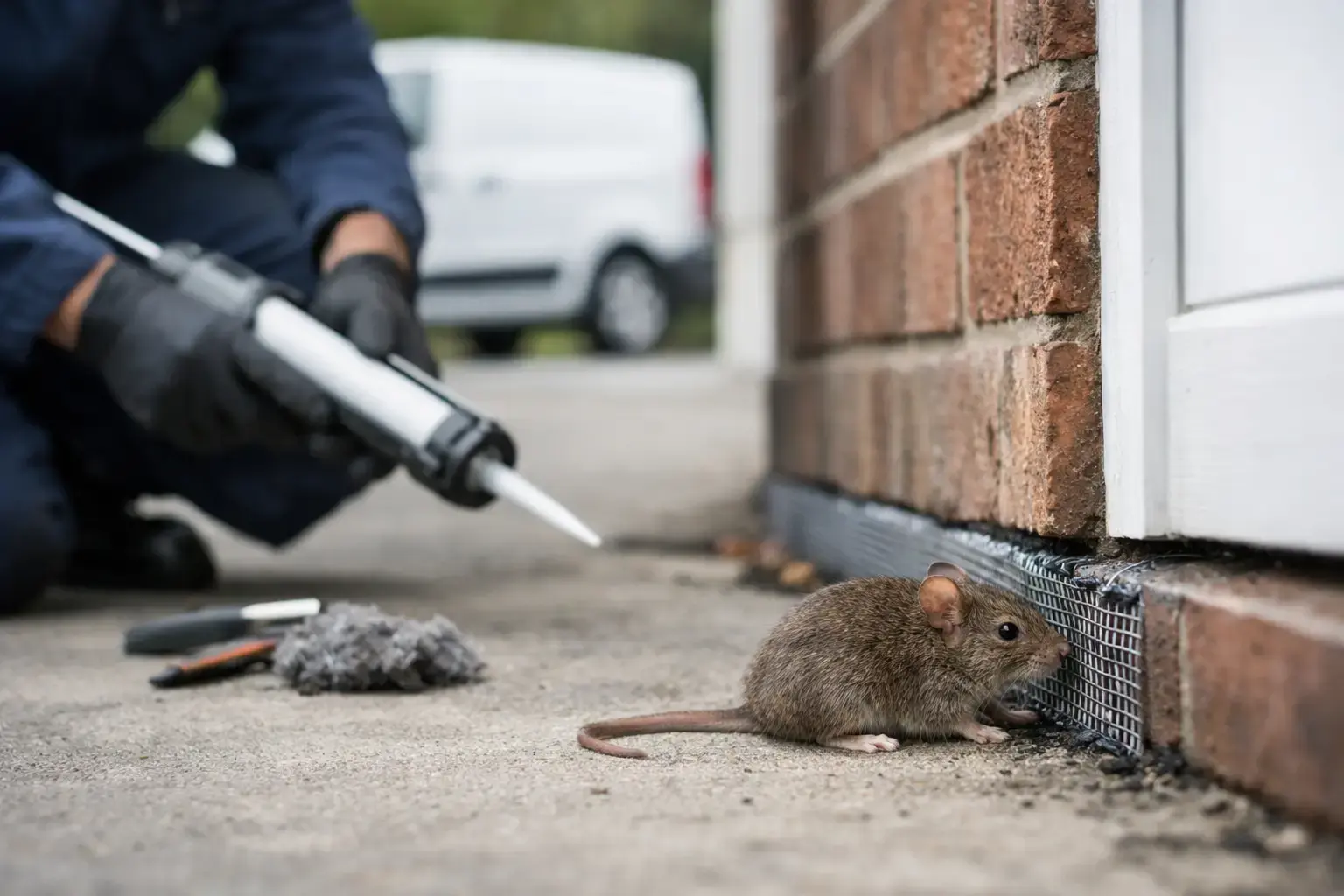
If you have heard scratching behind the skirting at night, this question becomes urgent very quickly: can pest proofing stop mice? The short answer is yes, pest proofing can make a major difference, but only when it is done properly and at the right stage of the problem. If mice are already active inside a property, proofing alone is rarely the full answer.
That matters because mice do not need much of an opportunity. A gap around pipework, a damaged air brick, a poorly fitted door or a broken drain cover can be enough to let them in. Once inside, they breed quickly, contaminate food areas, damage insulation and wiring, and settle into lofts, cavity walls, kitchens and storage spaces with very little disturbance.
Can pest proofing stop mice on its own?
Sometimes, but not often. Pest proofing is designed to block access points and remove the routes mice use to enter a building. If the issue is limited to occasional visitors from outside, good proofing can stop the problem before it develops into an infestation.
The difficulty comes when mice are already established indoors. Sealing every hole without addressing the live activity can trap mice inside wall voids, under floors or in loft spaces. That often leads to more noise, more contamination and a longer clear-out process. In practical terms, proofing is most effective when it is part of a wider pest control plan rather than treated as a stand-alone fix.
For homeowners and businesses, the real question is not whether proofing works. It is whether the proofing has been matched to the level of infestation, the structure of the building and the behaviour of the mice involved.
Why mice keep getting back in
Mice are persistent, highly adaptable and capable of squeezing through remarkably small gaps. What looks insignificant to a property owner can be a reliable access route to a rodent. They also tend to follow warmth, shelter and food sources, which is why kitchens, boiler cupboards, storerooms, suspended ceilings and service risers are such common problem areas.
In older properties, there may be multiple entry points that have built up over time through wear, movement and past repairs. In commercial premises, service penetrations, delivery doors and external storage areas often create repeated vulnerabilities. A single visible hole is rarely the whole story.
This is why surface-level DIY sealing often falls short. Expanding foam on its own is not enough. A quick patch over one gap does nothing if mice are entering two metres away through another defect, climbing behind cladding or moving through linked roof spaces.
What good pest proofing actually involves
Effective pest proofing starts with inspection, not materials. Before any sealing is carried out, the entry points need to be identified properly and the movement patterns understood. That includes looking at low-level gaps, utility entry points, air vents, drainage defects, damaged brickwork, roof junctions and hidden voids.
The right proofing method depends on the location and the type of pressure the area will face. Metal mesh, rodent-resistant fillers, brush strips, bristle seals, concrete repair and joinery work can all play a part. The key is to use materials that mice cannot chew through easily and install them in a way that does not create another weak point.
There is also a difference between proofing for a domestic house and proofing for a business. A family home may need focused sealing around kitchens, garages and loft access points. A restaurant, warehouse, office block or care setting may require a broader programme that considers compliance, ongoing monitoring and operational disruption.
Where proofing works best
Pest proofing is especially effective in situations where the source of entry is reasonably clear. A mouse issue linked to a damaged rear door sweep, open pipe chase or broken air brick can often be brought under control quickly once treatment and sealing are combined.
It is also highly effective as a prevention measure. If a property has had a previous infestation, proofing reduces the chance of repeat problems by closing the routes that made the building vulnerable in the first place. That is often where the best long-term value lies. Treating mice without proofing can remove the immediate activity, but it leaves the building open to the next wave.
For landlords and property managers, this is particularly important between tenancies. It is far more cost-effective to inspect and proof a property before new occupants move in than to deal with complaints, damaged stock or emergency call-outs later.
Where proofing has limits
There are cases where proofing helps but cannot solve the entire issue on its own. Terraced properties, flats and commercial units with shared structural voids are a good example. If mice are moving between adjoining spaces, sealing one unit in isolation may reduce activity but not eliminate the wider source.
The same applies where there is a strong attractant still in place. Poor waste handling, bird feeding near the building, cluttered storage, spillages or drainage issues can continue to support mouse activity even after access points are reduced. Proofing closes doors, but it does not remove food, shelter or nesting material already available inside.
This is why any honest answer includes a degree of it depends. Pest proofing is essential, but the outcome depends on what is driving the infestation and how thoroughly the whole problem is assessed.
The best approach is proofing plus treatment
When mice are active, the most reliable route is a combined programme. First, confirm where the mice are travelling, nesting and feeding. Then reduce the live population with appropriate treatment. After that, carry out targeted proofing to prevent re-entry.
That sequence matters. It deals with the immediate risk while protecting the property against recurrence. In some situations, monitoring technology can also be useful, especially in commercial settings where evidence, trend tracking and discreet management are important.
A professional survey often reveals issues the occupier has not noticed, such as lifted drain covers, unsealed service holes behind fitted units, damaged sub-floor vents or roofline defects. Those details make the difference between a temporary improvement and a proper result.
Signs your property needs proofing for mice
If you are seeing droppings under sinks, hearing movement at night, finding gnaw marks on food packaging or noticing a strong stale odour in enclosed spaces, the problem is already beyond simple prevention. Equally, if you have had mice before and the issue keeps returning each autumn or winter, there is likely to be an unresolved structural access point.
Commercial premises should also pay attention to lower-level warning signs, such as repeated bait take, activity around waste areas, sightings near stock rooms or evidence around electrical cupboards. Waiting for the issue to become obvious usually means the infestation is more established than first assumed.
In both domestic and commercial properties, recurring activity is a strong indicator that treatment has happened without enough attention to proofing.
Can pest proofing stop mice long term?
Yes, when it is carried out properly and supported by the right control measures. Long-term mouse prevention depends on three things working together: sealing entry points, reducing attractants and addressing active infestations before they spread.
There is no magic material that guarantees mice will never return. Buildings age, gaps open up, usage changes and external pressure varies with season and surroundings. But professional proofing dramatically lowers the risk and gives treatment a much better chance of lasting.
For many properties, especially those with repeat issues, proofing is the part that has been missing all along. It turns pest control from repeated reaction into proper prevention.
If you are asking can pest proofing stop mice, the practical answer is this: it can stop them getting in, but it works best when the current infestation is dealt with at the same time. That is how you move from short-term relief to a property that is properly protected.
A mouse problem rarely improves by waiting, and the longer access points stay open, the easier it is for activity to build again. The right action is to find the entry routes, deal with the infestation properly and close the building back up with purpose.