

Blog
Bird Netting Versus Spike Systems Compared
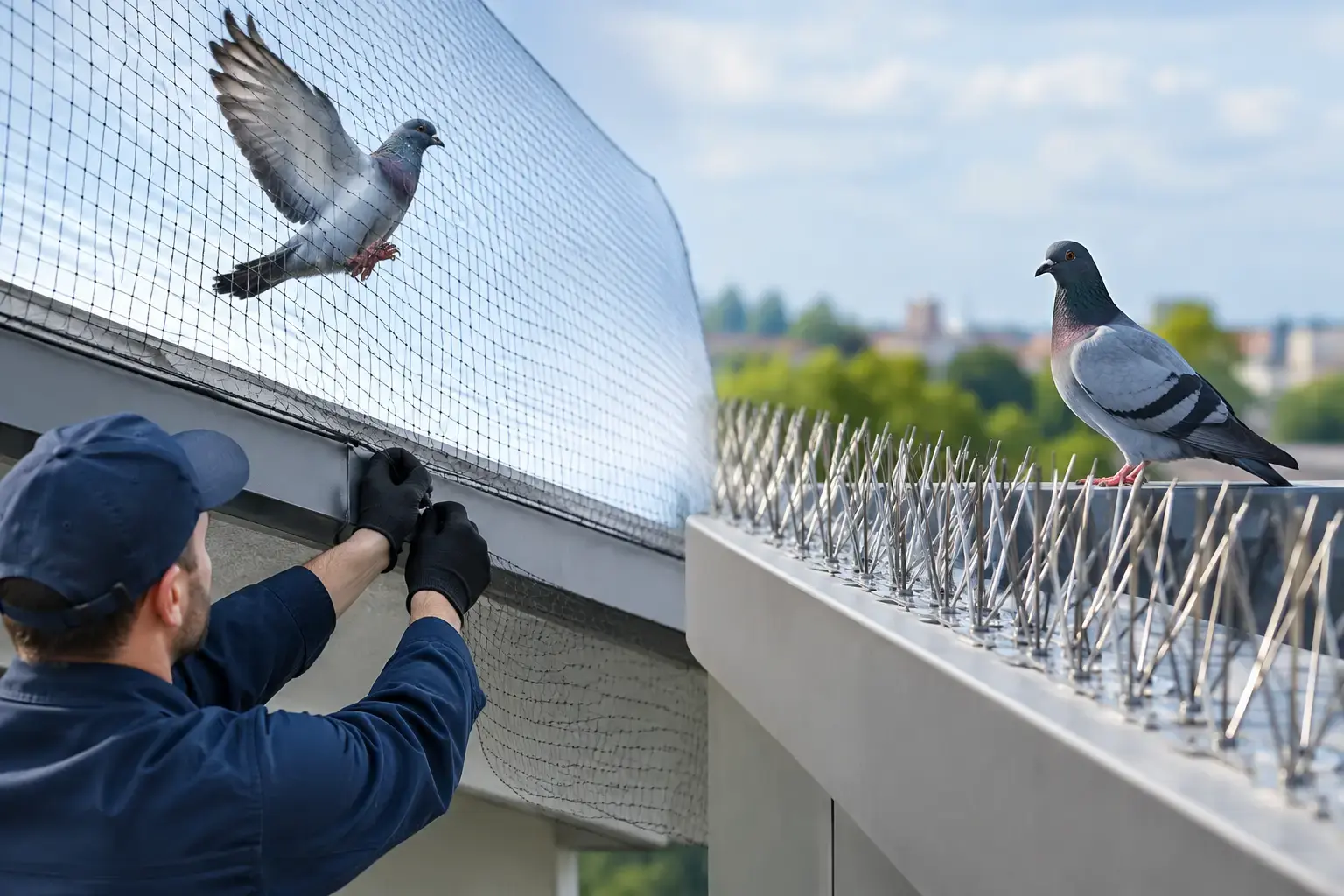
Pigeon droppings on an entrance canopy, nesting material in a loading bay or gulls gathering on a roofline can quickly become more than an appearance issue. When deciding between bird netting versus spike systems, the right answer depends on where birds are landing, roosting or nesting - and on how the building is used. A system that looks suitable from ground level can fail if it does not address the bird species, access points and pressure on the site.
For homes, landlords and commercial premises, effective bird proofing should prevent repeat problems without creating unnecessary maintenance or harming wildlife. The best installations are planned around the structure, not selected as a one-size-fits-all product.
Bird Netting Versus Spike Systems: The Core Difference
Bird netting creates a physical barrier. It is fitted across an opening or around a vulnerable area to prevent birds entering or reaching it. It is commonly used for balconies, loading bays, roof voids, plant areas, canopies, courtyards and sections beneath solar panels where birds have established access.
Bird spikes do something different. They make a narrow ledge, pipe, sign, parapet or gutter edge uncomfortable for birds to land on. They do not block an entire space, and they are not designed to stop birds flying into an area. Their purpose is to remove a perching or roosting point.
That distinction matters. If pigeons are entering a covered service yard, spikes around its edge will not solve the issue. If pigeons are repeatedly sitting on a 150 mm window ledge, installing netting around the whole elevation would usually be excessive. The control measure must match the behaviour.
When Bird Netting Is the Better Option
Netting is generally the most dependable choice where exclusion is required. It can protect large, awkward or enclosed areas where birds are nesting, sheltering or gaining repeated access. Properly installed netting prevents the problem at source by denying entry rather than simply discouraging birds from one landing point.
This makes it particularly useful on commercial premises where hygiene, stock protection and operational continuity are at stake. Warehouses, food-related sites, schools, retail service areas and communal residential blocks can all have spaces that attract pigeons because they offer warmth, shelter and ledges away from predators.
A correctly specified net should be tensioned and fixed using suitable perimeter cables and clips, not loosely attached in a way that sags over time. The mesh size must suit the bird being excluded. Pigeon netting, for example, is different from netting intended for smaller species. Poorly fitted netting can trap debris, look untidy and create gaps that birds soon find.
Netting also has a visual consideration. From close range it is noticeable, particularly against pale walls or open sky. On many buildings, however, a professionally fitted black net recedes significantly when viewed from below or at a distance. For highly visible heritage features or premium façades, the appearance should be assessed before installation rather than treated as an afterthought.
Netting requires access and inspection
Installation often involves working at height, particularly around roof structures and upper-floor openings. This is not a job for improvised fixes from a ladder. The fixings, cable runs and access method need to be appropriate for the building fabric and safe for those using the property.
Netting should also be inspected periodically. High winds, building works, accumulated debris and accidental damage can affect its tension or leave gaps. A routine check is a modest requirement when compared with the cost and disruption of recurring bird fouling or nesting activity.
When Spike Systems Are the Better Option
Spikes are an effective and discreet solution for narrow, defined landing surfaces. They work well on parapets, signs, external lighting, gutter edges, window ledges, CCTV housings, pipework and roofline details where pigeons regularly perch.
They are often quicker to install than netting and can be less visually intrusive on a small area. Quality stainless-steel systems are durable and suitable for exposed north-west weather when fitted securely to a clean, sound surface. Plastic spike systems may have a place in low-pressure locations, but they are usually less suitable for long-term protection on heavily used commercial buildings.
The limitation is coverage. Spikes only protect the surface they occupy. Birds may simply move to the next ledge, the rear edge of a parapet or an adjoining sign if the wider route has not been assessed. On broad ledges, multiple rows may be needed to prevent landing across the full width.
Spikes can also become less effective if leaves, nesting material or wind-blown litter build up between the wires. This is why preparation and follow-up matter. If the ledge is contaminated with droppings before installation, it should be cleaned safely so the area is properly assessed and the adhesive or fixings can perform as intended.
Spikes are not suitable for every bird problem
Spikes do not remove existing nests, stop birds accessing a roof void or prevent gulls from occupying large flat roofs. They should not be fitted over active nests or used as a substitute for a proper survey. If birds are finding food, water or a sheltered route into a building, those underlying attractants and access points need attention too.
For some sites, spikes are part of a wider programme that includes proofing gaps, managing waste storage and monitoring activity. They are a targeted tool, not a universal answer.
Cost, Appearance and Long-Term Value
Initial price should not be the only deciding factor. A small run of spikes is often less expensive than netting a large loading area, but the comparison is only meaningful if both options would actually solve the same problem. A cheaper system that leaves birds able to roost nearby will lead to ongoing cleaning, complaints and further call-outs.
Netting usually involves more materials, access equipment and installation time. In return, it offers broad and dependable exclusion for suitable spaces. Spikes can offer excellent value on limited ledges and architectural features, provided birds cannot simply settle beside them.
Appearance is equally site-specific. Spikes can look obvious when installed in prominent rows along a shopfront or residential balcony. Netting can alter the look of an open elevation. A professional survey considers sightlines, public-facing areas and the practical need for access to windows, signage, gutters and maintenance equipment.
For property managers, maintenance should be considered before work begins. Ask how future inspections will be carried out, whether drainage and cleaning access remain available, and what happens if a section is damaged. Good bird control should make a building easier to manage, not create a new access problem.
Bird Welfare and Legal Responsibilities
Humane exclusion is the correct approach. Bird proofing should prevent access without injuring birds, and any work must account for nesting activity. Wild birds, their active nests and eggs have legal protection. Where nesting is present or suspected, the timing and method of works must be assessed carefully.
A site survey helps identify whether the issue is pigeons, gulls or another species, where activity is concentrated and whether young birds or active nests are involved. It also prevents the common mistake of installing a deterrent after birds have already established themselves inside a void or behind cladding.
At AZ Environmental Service Pest Control, bird control recommendations are based on the actual structure and bird activity, not on selling the most visible product. For difficult or high-level areas, a professional survey, including UAV inspection where appropriate, can reveal access routes that are not visible from the ground.
How to Choose the Right System
Choose netting when birds need to be excluded from a larger space, enclosed section or sheltered access route. Choose spikes when the issue is limited to landing on narrow ledges, pipes or roofline features. In some cases, the strongest result comes from using both: netting to close the main entry point and spikes to protect nearby perches.
Before authorising work, make sure the contractor has identified the species, checked for nesting activity, measured the areas accurately and explained how the installation will be fixed and maintained. Bird problems rarely improve through guesswork. A well-planned system protects the property, reduces cleaning demands and stops a nuisance becoming a recurring operational issue.