

Blog
Bird Control That Actually Solves the Problem
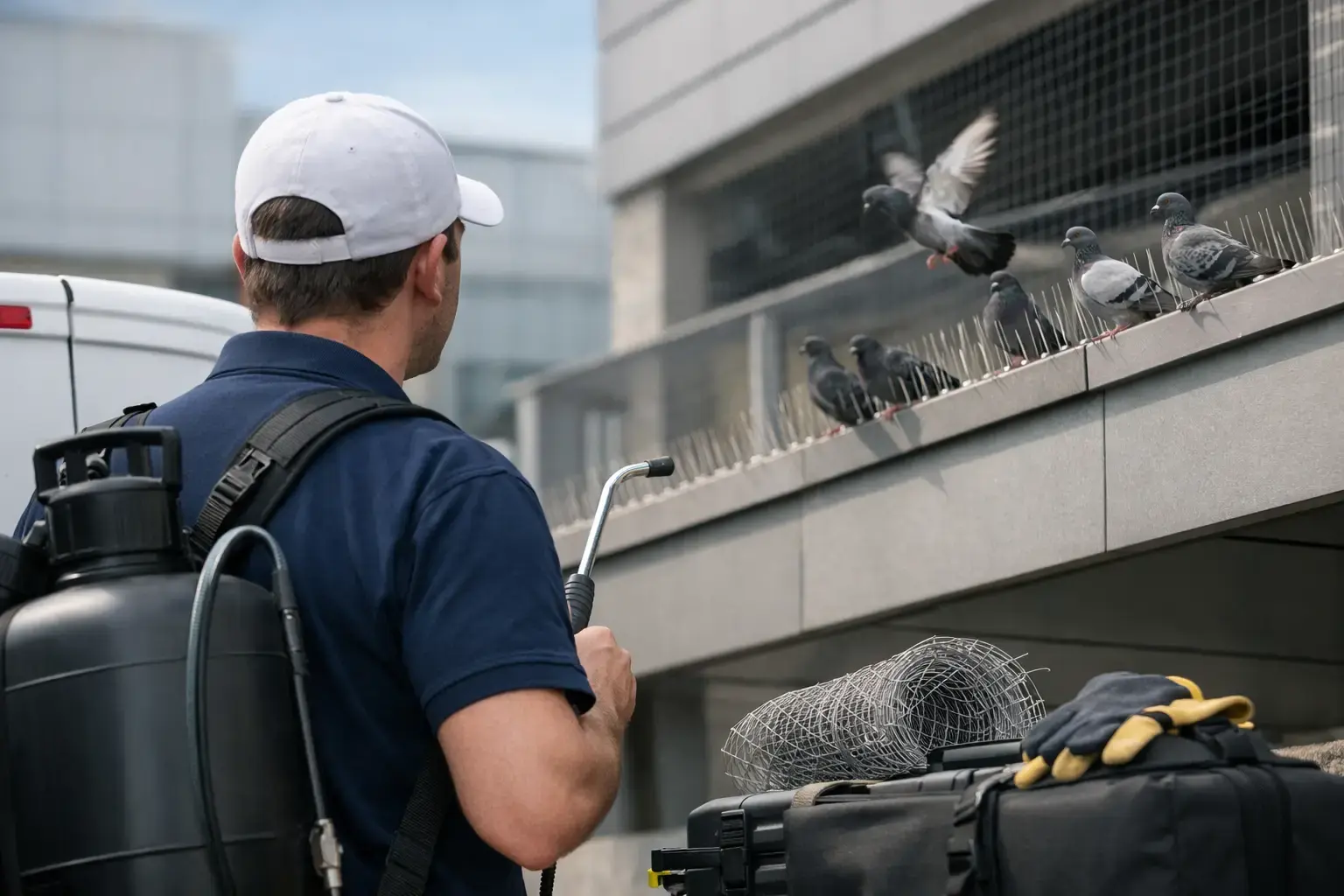
A few pigeons on a roofline can turn into a costly problem faster than most property owners expect. Bird control is not just about stopping mess. It is about protecting buildings, reducing health risks, preventing repeat nesting and keeping your property compliant, presentable and operational.
For homeowners, the issue often starts with noise at dawn, blocked gutters or droppings on patios, cars and solar panels. For commercial sites, it can quickly become more serious. Fouling near entrances, loading areas, signage, ventilation systems or food handling spaces affects hygiene, appearance and public confidence. Left alone, bird activity rarely stays the same. It usually spreads.
Why bird control needs more than a quick fix
The biggest mistake people make is treating bird activity as a minor nuisance. It is often a building maintenance issue, a hygiene issue and a long-term pest management issue all at once. Birds return to places that provide shelter, food, warmth and a safe perch. If those conditions stay in place, the problem comes back.
This is why basic deterrents bought off the shelf often disappoint. A plastic owl, reflective tape or a cheap sound device may have a short-term effect, but birds adapt quickly. Pigeons in particular are persistent. Once they have established a roosting or nesting point, they are unlikely to abandon it because of a visual gimmick.
Effective bird control starts with understanding the behaviour behind the problem. Are birds roosting overnight or nesting seasonally? Are they feeding nearby and using the site as a safe perch? Are architectural features giving them ideal ledges and access points? Without answering those questions first, treatment becomes guesswork.
Common bird problems on homes and commercial premises
Not every bird issue looks the same, and the right response depends on the property type.
On domestic properties, the most common problems are pigeons nesting under solar panels, birds fouling patios and driveways, nest material blocking gutters, and noise from roof spaces or chimneys. These problems can damage property over time and make outdoor areas unpleasant to use.
On commercial buildings, the risks increase. Warehouses, offices, retail sites, schools, industrial units and hospitality premises often suffer from persistent perching on roof edges, signs, beams and external plant equipment. Droppings create slip hazards, damage surfaces and can affect customer perception. In some environments, bird activity also raises compliance concerns.
There is also the issue of access. A two-storey home and a large warehouse roof present very different challenges. In many cases, a safe inspection requires specialist equipment or aerial survey methods to assess the full extent of nesting, access routes and vulnerable points.
What effective bird control looks like
Good bird control is practical, site-specific and built around prevention as much as removal. The aim is not to disturb birds for a few days. It is to make the property unsuitable for roosting and nesting in the first place.
Proofing and exclusion
This is usually the most reliable long-term approach. Bird spikes, post and wire systems, netting and solar panel proofing are all designed to deny access to favoured areas. The right system depends on where the birds are landing and how the building is constructed.
For example, spikes may work well on ledges, signs and beams where birds repeatedly perch. Netting is more suitable for covering larger voids or enclosed areas such as loading bays, canopies or roof spaces. Solar panel proofing stops pigeons getting underneath panels, where they often nest in warmth and shelter.
The important point is proper installation. Poorly fitted systems leave gaps, look untidy and often fail quickly. Bird control measures should be secure, discreet where possible and suited to the structure they are protecting.
Cleaning and hygiene treatment
If birds have been active for some time, proofing alone is not enough. Old nesting material and droppings can continue to attract birds back to the same location. Fouling also creates health and maintenance concerns.
Professional cleaning is often a key part of the process, especially on commercial premises or heavily affected domestic properties. This helps remove contamination, improves presentation and gives proofing systems the best chance of lasting. It also allows hidden damage to be identified.
Monitoring and follow-up
Some sites need more than a one-off visit. Larger commercial premises, repeat problem locations and properties with multiple access points may require ongoing monitoring. This is especially true where birds are being drawn by surrounding food sources, neighbouring buildings or waste handling areas.
A proper bird control plan should consider what happens after installation. If one access point is blocked, birds may test another. Follow-up checks help confirm the system is working as intended and catch any early signs of repeat activity.
What does not work well for long
There is a reason many bird problems become worse before a specialist is called. People often spend time and money on measures that sound easy but do very little.
Visual scarers can help in the very short term, but birds quickly learn whether there is any real threat. Sound deterrents can also lose impact, particularly in busy urban or commercial settings where birds are already used to noise. Food removal matters, but it rarely solves a problem on its own if there is already an established nesting site.
It also depends on timing. Once eggs or active nests are involved, your options become more limited. Bird management in the UK must take wildlife legislation into account. That means action needs to be lawful, proportionate and properly timed. Trying to handle nesting birds without the right knowledge can make the situation worse and put the property owner at risk of doing the wrong thing.
Why site surveys matter in bird control
No two buildings present the same pattern of bird activity. Roof design, nearby trees, food sources, guttering, signage, plant equipment and foot traffic all influence where birds settle. That is why a proper survey matters.
A survey identifies not just where birds are visible, but where they enter, perch, shelter and nest. On some properties, the main problem is obvious from ground level. On others, the real issue sits on hidden roof sections, behind signage or around solar panels. In these cases, modern survey methods such as UAV inspections can give a far clearer picture without unnecessary disruption.
This matters because the cost of doing the wrong work is often higher than the cost of doing the right work first time. If you only treat the visible area and miss the main harbourage point, the problem returns.
Bird control for businesses where reputation matters
Commercial bird control is rarely just about the birds. It is about protecting operations, maintaining standards and avoiding avoidable disruption.
If you manage a retail site, office block, warehouse, school, food premises or residential development, visible bird activity affects how people judge the site. Droppings on walkways, entrances and external seating areas create a poor impression straight away. On some sites, there are also health and safety implications, from slips to contamination risks around air handling units or storage areas.
Discretion matters too. Businesses often want the issue resolved without drawing attention to it. A professional service should be able to assess, treat and monitor the problem with minimal disruption to staff, customers or residents.
For landlords and managing agents, speed matters just as much. Bird complaints tend to escalate. What begins as a nuisance issue with one tenant can quickly become a wider maintenance and hygiene concern across the building.
When to call a specialist
If bird activity keeps returning, if nesting is already established, or if access is difficult or high-level, it is time for specialist help. The same applies if droppings are building up around entrances, solar panels, rooflines or commercial work areas.
A specialist can assess the real cause, recommend lawful and effective measures, and carry out work safely. That includes choosing the correct proofing system, identifying hygiene risks and dealing with the practical reality of working on roofs, high ledges and awkward structures.
For property owners in Stockport and surrounding areas, that local knowledge can make a difference. Building types, town centre pressure points, mixed-use sites and older housing stock all create different bird control challenges. A solution that works on a modern unit may not suit a period property or a busy residential block.
The right approach is clear, proportionate and built to last. Not every site needs extensive netting. Not every problem can be solved with spikes. And not every bird issue needs urgent treatment the same day. What matters is getting an honest assessment and a treatment plan that fits the property, the level of activity and the legal position.
AZ Environmental Service Pest Control deals with bird problems in a practical, results-driven way - surveying the site properly, using the right proofing measures and focusing on long-term resolution rather than short-term relief.
If birds are starting to claim your roofline, signage, solar panels or working areas, acting early usually means a cleaner, simpler and more cost-effective fix. The longer they settle in, the harder they are to shift.