

Blog
Best Ways to Keep Wasps Away From Your Home
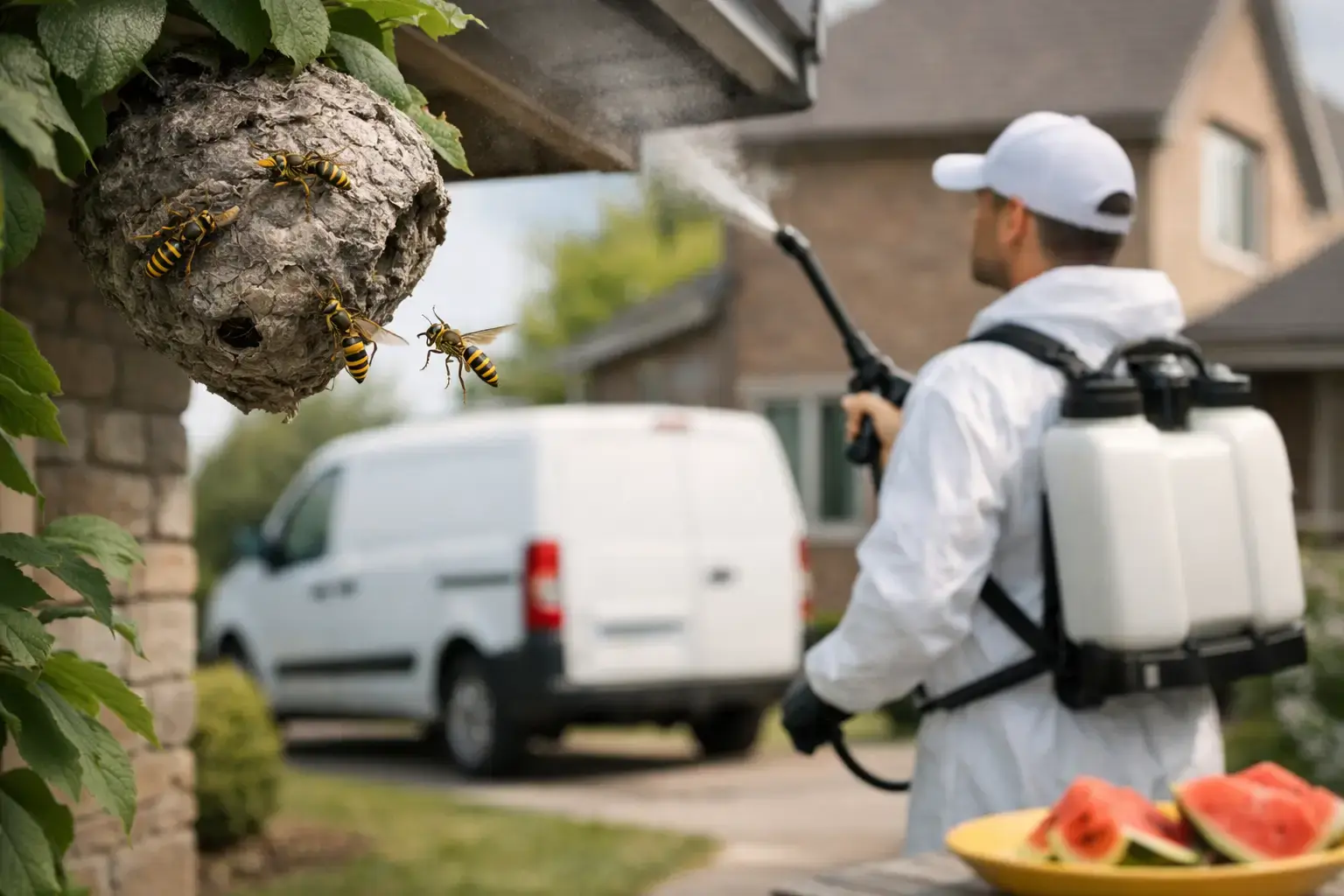
A single wasp around a patio table is usually searching for food. Regular wasp activity around the same roofline, shed or air brick is different - it can indicate an established nest nearby. The best ways to keep wasps away begin with making your property less attractive to them, while recognising when prevention is no longer enough and professional nest treatment is the sensible next step.
Wasps are most noticeable from late spring through to early autumn. Their behaviour changes as the season progresses: early on, they focus on building nests and finding protein for larvae; later in summer, they are drawn to sugary drinks, ripe fruit and outdoor food. A practical prevention plan needs to account for both.
Remove the food and drink wasps are looking for
Food is one of the biggest reasons wasps return to gardens, bins, beer gardens, staff break areas and outdoor seating. Open cans, sweet drinks, jam, fallen fruit and barbecue leftovers are particularly attractive. One overlooked source can be enough to keep them circling a small area.
Keep rubbish bins closed and clean spills from their lids and surrounding ground. If your bin is sticky or has leaked, rinsing it out can make a real difference. Use covered containers for food when eating outdoors, and clear plates promptly rather than leaving them beside the barbecue until later.
In gardens, pick up windfall apples, plums and other fruit regularly. Compost bins should have a secure lid, especially if they contain fruit peelings or food waste. For commercial premises, this same principle applies to external waste stores, smoking areas, delivery yards and staff entrances. Waste management is pest prevention, not just housekeeping.
Avoid swatting at wasps around food. Sudden movements can make them defensive and increase the risk of a sting. Move food away, cover it, and allow the wasp a clear route away from the area.
Keep entry points and nesting sites under control
Wasps favour sheltered, undisturbed locations. Common nesting points include lofts, eaves, soffits, wall cavities, garages, sheds, under decking and gaps around pipework. A nest may not be visible from outside, particularly when the insects are entering through a small crack or ventilation opening.
Regularly inspect the outside of your property during spring and early summer. Look for repeat wasp traffic travelling directly to one point rather than random foraging. This is often the earliest useful warning sign. A small developing nest is generally easier and safer to deal with than a large late-summer colony.
Once you are certain there is no current activity, seal accessible gaps around damaged fascia boards, loose roof tiles, external pipe entries and cracks in brickwork. Fit suitable fine mesh to vents where airflow must be maintained. Do not block a hole while wasps are actively using it. Trapping insects inside can lead them to find another route into a loft, room or cavity.
Sheds and garden structures need attention too. Keep doors shut when they are not in use, repair broken panels, and avoid storing sweet-smelling products or open rubbish inside. If a shed is rarely used, inspect it before the warmer months rather than discovering activity when you need it most.
Make the garden less appealing without harming wildlife
You do not need to remove every flowering plant to reduce wasp activity. Wasps play a role in controlling some garden insects, and a sensible approach focuses on managing the places where people eat, work and relax.
Position flowering pots and heavily scented plants away from patio dining areas, doorways and children's play spaces where possible. Keep outdoor eating areas clear of food debris, and place bins at a sensible distance from doors and seating. A fan can also help when dining outside, as wasps are less comfortable flying in a steady airflow.
Be cautious with online advice that suggests strong scents, fake nests or homemade bottle traps as guaranteed solutions. Some smells may discourage individual wasps for a short time, but they do not remove the reason wasps are visiting or stop an active colony. Bottle traps can also catch beneficial insects and may attract wasps closer to the area you are trying to protect.
For homes with children, pets or anyone with a known sting allergy, avoid experimenting with sprays, powders or improvised treatments around a suspected nest. The risk is not worth it.
Best ways to keep wasps away from commercial premises
For businesses, wasp prevention protects more than comfort. Repeated activity near entrances, outdoor tables, food preparation areas or customer queues can affect hygiene standards, staff confidence and customer experience. Landlords and property managers also need to consider shared bin stores, communal gardens and building voids where a nest can affect several occupiers.
A planned inspection should cover waste areas, roof edges, external plant rooms, loading bays, signage, soffits and any gaps created by maintenance work. Record where activity is seen and when it is most frequent. This helps identify whether you are dealing with foraging wasps around food waste or a nest within the building fabric.
There are four practical controls that make the greatest difference on commercial sites:
- Keep external bins closed, cleaned and collected often enough for the volume of waste produced.
- Clean spillages around vending machines, outdoor seating and staff break areas quickly.
- Repair gaps in cladding, rooflines and service penetrations before they become nesting points.
- Arrange prompt treatment where direct flight paths show that a nest is already active.
The correct response depends on the site. A café terrace may need stronger food and waste controls during peak trading hours, while a warehouse may need pest proofing around loading doors and high-level roof areas. A recurring problem should be investigated properly rather than treated as an isolated nuisance each summer.
Know when there is likely to be a nest
A few wasps passing through the garden are normal in warm weather. Concern should rise when you see a steady stream entering and leaving one opening, hear buzzing from a wall, ceiling or loft, or notice activity increasing each day. Large nests can hold thousands of wasps by late summer, so leaving the issue in the hope it will settle is rarely a good plan.
Do not try to knock down a visible nest, flood it, burn it or block the entrance. These methods can provoke a mass response, cause wasps to enter the property, and leave the nest untreated within a cavity. Over-the-counter products can be useful for very limited, low-risk situations when used exactly as directed, but they are not a reliable answer for inaccessible nests, high-level locations or heavy activity.
Professional treatment is the appropriate route when the nest is in a loft, wall cavity, roofline, chimney, under decking, near a doorway, or on commercial premises. It is also strongly advised where someone at the property has a serious allergy to stings. A qualified technician can identify the access point, apply the suitable treatment safely and advise on follow-up proofing once the colony is no longer active.
At AZ Environmental Service Pest Control, treatments are tailored to the location and level of activity, with discreet service available for homes, landlords and businesses across Stockport and the surrounding area. The objective is not simply to remove the immediate problem, but to reduce the chance of it returning.
Do not forget the seasonal timing
Early action matters. In spring, a small amount of repeated activity around eaves or a shed may indicate a queen beginning a nest. By August and September, food-seeking workers can become much more persistent, particularly around fruit, sugary drinks and waste bins. Prevention work carried out before peak summer gives you the best chance of avoiding disruption later.
Even after a nest has been treated, wait for professional advice before sealing the access point. Wasps may remain active for a short period, and the correct timing prevents them from being diverted into another part of the building. In most cases, old nests are not reused, but the same sheltered location can attract a new queen in a future season if gaps and favourable conditions remain.
Start with the simplest checks this week: secure the bins, clear fallen fruit, inspect the eaves and watch for direct flight paths. Those small actions often stop a nuisance becoming a nest problem.