

Blog
Best Bird Proofing Solutions for UK Properties
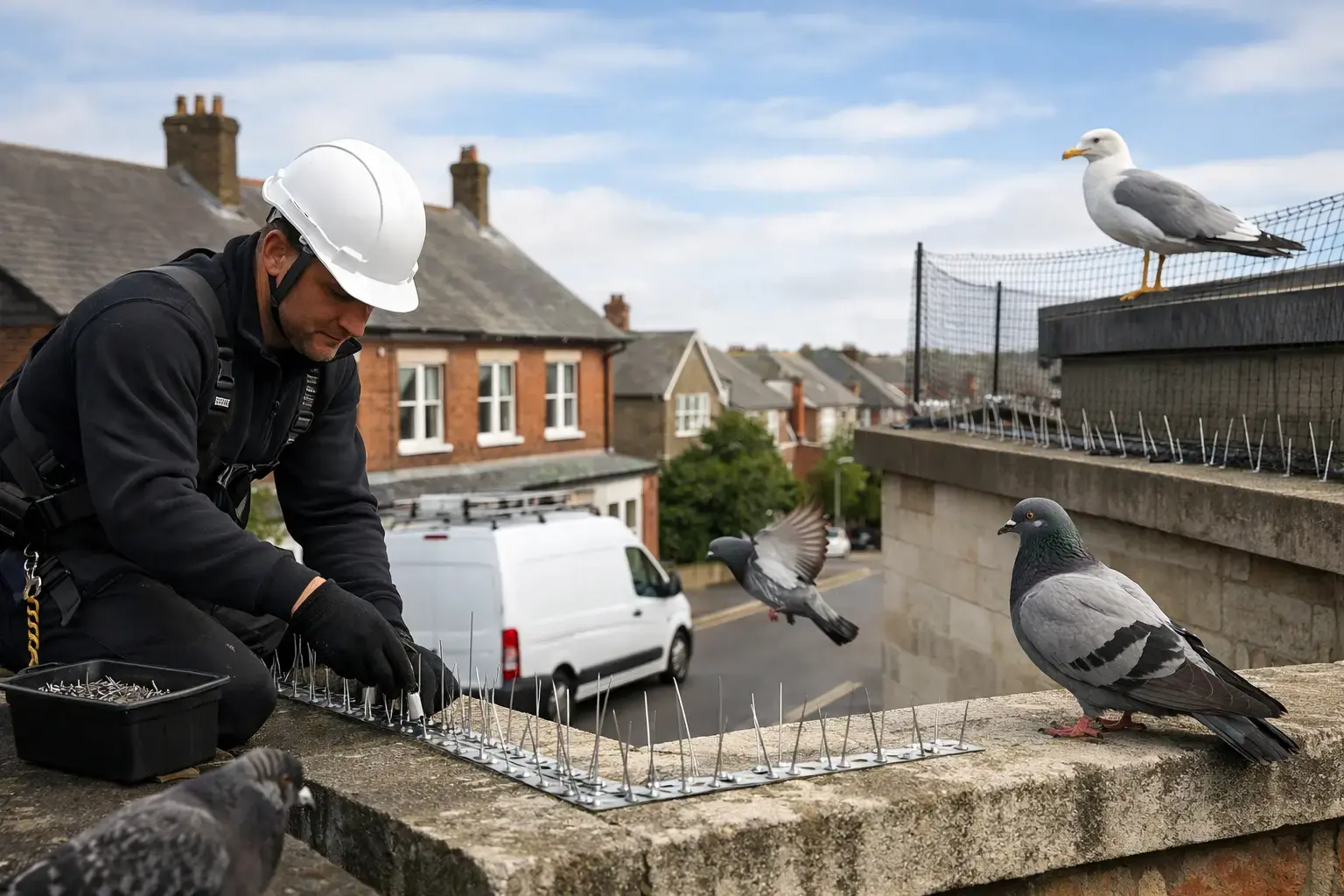
A small number of pigeons on a roof can quickly become a larger property problem. Droppings damage finishes, block gutters and create slip risks, while nesting material can obstruct vents, flues and solar panels. The best bird proofing solutions do more than move birds elsewhere for a few days. They remove access to the areas birds rely on and protect the building for the long term.
For homeowners, landlords and commercial property managers, the right approach depends on the bird species, the structure of the building and the risk involved. A neat-looking row of spikes may be effective on a narrow ledge, for example, but it will not protect an open loading bay, a rooftop plant area or the underside of solar panels. Effective bird control starts with an accurate assessment, then uses humane, durable proofing designed for the property.
Why bird proofing needs a tailored approach
Birds return to places that provide three things: shelter, a safe perch and a reliable food source. Pigeons favour sheltered ledges, eaves, signs, canopies and roof voids. Gulls often use flat roofs and high-level edges. Smaller birds may enter through gaps in fascia boards, air vents or damaged rooflines.
The consequences are more than cosmetic. Accumulated droppings can corrode metalwork, stain masonry and create hygiene concerns around food premises, schools, warehouses and communal entrances. Blocked guttering can cause damp problems, while nesting debris around equipment may increase fire and maintenance risks. On commercial sites, regular bird activity can also affect customer confidence and create health and safety issues for staff and visitors.
A professional solution considers how birds are entering, landing and nesting. It also considers what is happening around the property. Open waste, food spillages, unsecured bins and standing water can undermine even the best installed proofing measures.
Best bird proofing solutions for common problem areas
Bird netting for large or open spaces
Bird netting is one of the most reliable options for protecting large, open areas where birds roost or nest. It is commonly used beneath canopies, in courtyards, loading areas, roof voids, balconies and around commercial structures. When fitted correctly, it physically prevents access without harming birds.
Netting is especially effective where multiple ledges or beams create many possible perching points. Rather than attempting to cover every individual surface with spikes or wire, a properly tensioned net creates a complete barrier. The trade-off is that installation must be precise. Poorly fitted netting can sag, leave gaps or look untidy, and it may not suit every visible frontage. Correct mesh size, fixing points and tensioning are essential for a lasting result.
Bird spikes for ledges, pipes and signage
Bird spikes are a practical deterrent for narrow ledges, parapets, pipework, signs, lighting units and window sills. They make it difficult for larger birds, particularly pigeons and gulls, to land comfortably. Quality spikes are discreet from ground level and can be highly effective when the entire landing surface is covered.
Spikes work best where birds have a defined perch. They are not suitable for wide flat roofs, deeply recessed areas or locations where birds can simply land beside them. They also need to be installed on a clean, sound surface. Fixing spikes over existing droppings, loose paint or damaged masonry is a short-term measure that is likely to fail.
Bird wire for narrow architectural edges
Post and wire systems are often chosen for prominent buildings where appearance matters. A tensioned wire sits above a ledge or edge, making it unstable for birds to land. This can provide a less visible alternative to spikes on shopfronts, heritage features, office buildings and residential blocks.
Bird wire is a specialist installation. The posts must be securely fixed, correctly spaced and tensioned to suit the surface. It is a good option for straight runs and carefully defined perching points, but it is less useful on irregular structures or areas exposed to repeated impact and maintenance work.
Solar panel bird proofing
Solar panels create a sheltered, warm void that pigeons readily use for nesting. Once nesting material and droppings build up below the panels, rainwater may not drain as intended and maintenance becomes more difficult. Noise from birds beneath bedroom or loft spaces is also a common complaint.
Mesh edging is generally the most effective answer. It closes the gaps around the perimeter of the array while maintaining ventilation beneath the panels. The fixing method matters: panels should not be drilled or damaged, and the mesh should be fitted securely enough to withstand wind exposure. Before any proofing is carried out, the area must be checked for active nests and safely cleared where permitted.
Chimney, vent and roof access protection
Open chimneys, damaged air bricks, gaps beneath eaves and unprotected vents allow birds to enter areas where they can become trapped or build nests out of sight. Appropriate guards, mesh and purpose-made covers prevent entry while allowing the building to ventilate as designed.
This work needs care. Blocking an active flue, restricting a required air vent or using unsuitable mesh can create serious problems. Proofing should be selected for the specific opening and fitted without compromising ventilation, drainage or safe operation of the property.
Start with a survey, not a product
The most effective bird proofing is based on evidence. Before recommending a treatment, a technician should identify the bird activity, inspect access points and assess the condition of the structure. On larger buildings, elevated rooflines and hard-to-reach areas, a UAV survey can provide a clear view without unnecessary access equipment or disruption.
A proper survey also identifies previous failed proofing. Loose netting, missing spike sections, broken clips and unsealed gaps often explain why birds have returned. Cleaning and removal of old nesting debris may be needed before new proofing is installed. If droppings are left in place, they can attract birds back to familiar roosting areas and conceal defects in the surface beneath.
Bird welfare and legal responsibilities must be part of the assessment. Wild birds, their nests and eggs have legal protection. Active nests must not be disturbed, damaged or destroyed. Timing is therefore important, particularly during nesting season, and any work should be planned around the species present and the condition of the nest.
Choosing the right solution for your property
There is no single product that suits every bird problem. Netting is usually the strongest choice for excluding birds from broad, open areas. Spikes and wire work well on individual ledges and architectural edges. Mesh guards are often the right answer for solar panels, vents and roof gaps.
The property itself should guide the decision. A domestic property may need discreet solar panel mesh and eaves proofing, while a warehouse may require netting below canopies alongside improved waste management. A restaurant or food site may need proofing that supports hygiene standards without affecting trading areas or customer access.
Durability should also be considered. Cheap plastic deterrents, imitation predators and sound devices may provide temporary disruption, but birds quickly become accustomed to them when food and shelter remain available. Physical exclusion is normally more dependable because it changes access to the site rather than relying on a bird being frightened away.
Installation quality determines the result
Even the right product will fail if it is poorly installed. Every edge, overlap and fixing point matters. Birds are persistent and will use surprisingly small gaps, especially where a proofing system has been fitted around awkward corners, drainpipes or service cables.
Professional installation should include safe access planning, secure fixings suited to the building material and consideration for future maintenance. Proofing must not prevent access to gutters, solar equipment, roof plant or fire safety systems. For commercial premises, work should also be planned to minimise disruption to staff, customers and daily operations.
AZ Environmental Service Pest Control provides tailored bird control surveys and proofing for properties across Stockport and the surrounding area. The aim is not to apply a standard product, but to identify why birds are using the site and install a practical measure that keeps them out.
If birds are repeatedly returning, treat it as a building access issue rather than a nuisance to be chased away. A well-planned survey and correctly installed proofing can protect the property, reduce cleaning and maintenance costs, and give you confidence that the problem has been dealt with properly.