

Blog
Best Bird Deterrents for Shops That Actually Work
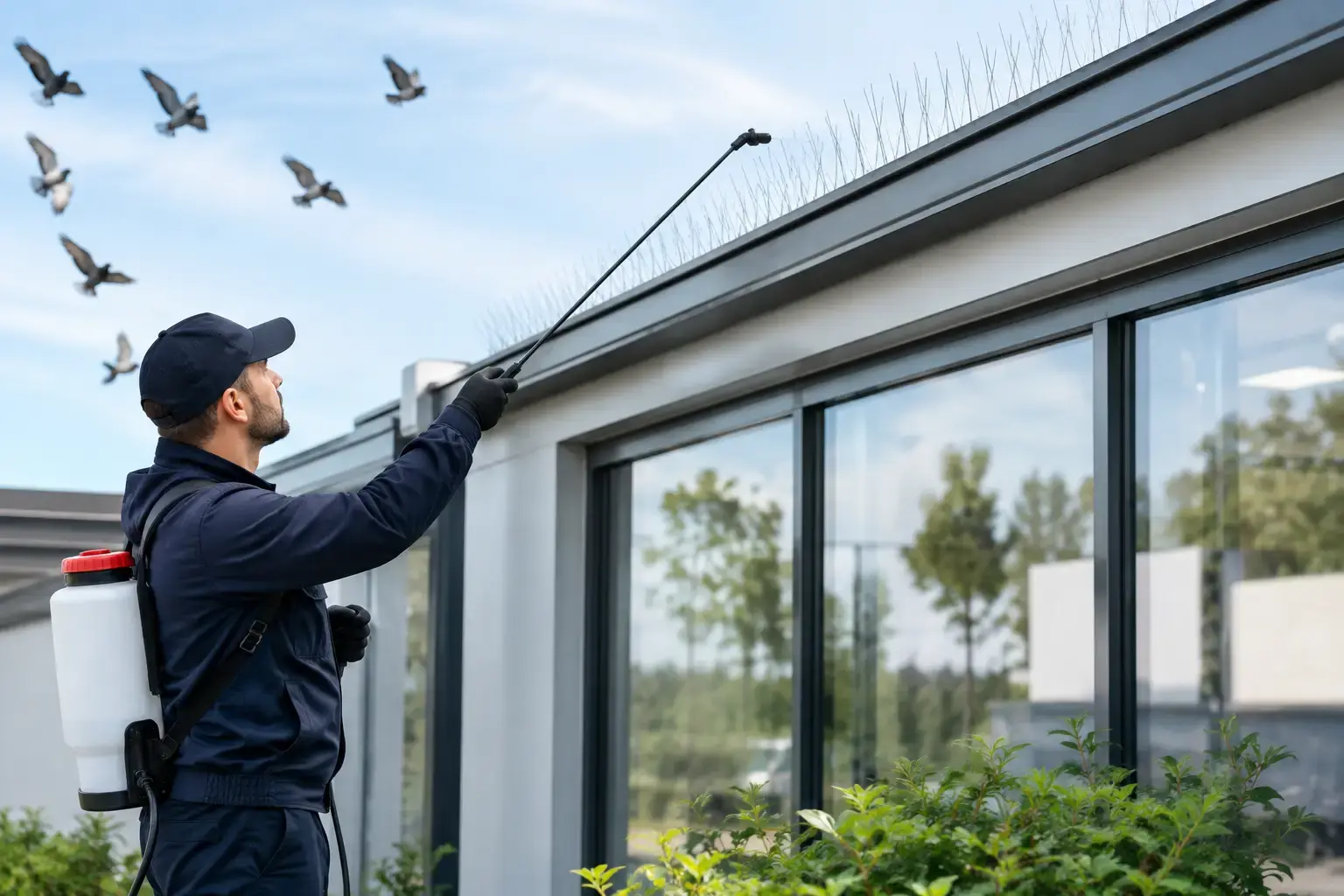
A pigeon perched above a shop entrance can quickly become more than an untidy nuisance. Droppings on signs, windows, seating areas and walkways affect first impressions, create slip risks and can damage surfaces over time. For food premises, convenience stores, warehouses and retail units, bird activity can also raise serious hygiene concerns. The best bird deterrents for shops are the ones matched to the species, the building and the way customers and deliveries move through the site.
A few plastic owls or a noisy gadget may appear to be a quick fix, but birds are highly adaptable. If there is reliable shelter, warmth or food available, they will often return once they realise there is no real threat. Effective commercial bird control focuses on removing access, reducing the reasons birds stay and preventing them from returning without disrupting day-to-day trade.
Why shops need a proper bird-control plan
Birds commonly target shopfronts, loading bays, rooflines, canopies, external plant areas and covered storage spaces. Pigeons in particular favour ledges and sheltered gaps that protect them from the weather. Gulls may cause problems around food waste and open bins, while smaller birds can enter premises through damaged vents, open roller shutters or roof defects.
The visible mess is only part of the issue. Bird droppings can make entranceways unsafe, block gutters and damage paintwork, signage and stonework. Nesting materials can obstruct drainage or ventilation, while fouling around food deliveries, outdoor seating and waste areas can create avoidable hygiene concerns. A recurring bird problem can also undermine the professional appearance of a shop that relies on customer trust.
The right response depends on where birds are landing, roosting or nesting. Deterring a pigeon from a narrow sign ledge requires a different method from keeping birds out of a warehouse loading canopy. This is why an on-site survey is more valuable than fitting a generic product across the building.
The best bird deterrents for shops
Bird netting for larger or enclosed areas
Netting is often the most reliable long-term option for loading bays, service yards, covered walkways, roof voids and large open-fronted storage areas. Correctly installed netting creates a physical barrier that stops birds accessing the space, rather than relying on them choosing to stay away.
For shops with frequent deliveries, the system needs to account for vehicle movement, fire safety, access routes and maintenance requirements. Poorly fitted netting can sag, leave entry gaps or become unsightly. A professionally specified installation should be taut, suitably fixed and designed for the target species, while avoiding harm to birds.
Netting is not always appropriate for a prominent heritage frontage or a small decorative canopy. In those cases, less visible ledge-based measures may be the better choice.
Bird spikes for ledges, signs and pipework
Spikes work well on narrow, predictable landing points such as fascia signs, light fittings, window ledges, parapets, pipework and air-conditioning units. They prevent pigeons and larger birds from settling comfortably without causing injury when they are properly selected and fitted.
Their limitation is simple: spikes only protect the area they cover. They will not solve a problem on a deep ledge, beneath a canopy or inside a roof void. If the protected strip is too narrow, poorly positioned or installed over existing nesting material, birds may land beside it or build around it. Cleaning and preparation are therefore just as important as the spikes themselves.
Tensioned wire systems for discreet protection
Where appearance matters, tensioned bird wire can be a more discreet alternative to spikes. Fine wires are installed at a set height above a ledge or building edge, making it unstable for pigeons to land. This approach is particularly useful on shopfronts, decorative stonework and visible rooflines where a lower-profile finish is required.
Wire systems need accurate spacing and secure fixings to remain effective. They are generally best suited to regular ledges and edges, not complex structures with many sheltered recesses. When designed around the building properly, they can provide effective protection with minimal visual impact.
Proofing gaps, vents and roof access points
Not every bird issue starts on an external ledge. Sparrows, starlings and feral pigeons can enter stock rooms, roof spaces and service areas through gaps around cladding, broken roof sheets, open eaves and damaged vents. Once inside, they may nest, foul stock or create an ongoing maintenance problem that is difficult to see from ground level.
Proofing identifies and closes those access points using suitable mesh, seals, brush strips or purpose-made vent guards. It is especially valuable for shops with older buildings, warehouse units or extensions where several trades have altered the structure over time. Any proofing should preserve essential ventilation and allow for safe inspection of the area later.
Waste management and food-source control
Physical deterrents work better when the site is less rewarding for birds. Overflowing bins, unsecured refuse sacks, food debris around rear entrances and regular spillage near delivery areas can attract birds repeatedly. If they are being fed, intentionally or otherwise, they have a strong reason to return.
Secure bin lids, regular cleaning, prompt removal of food waste and clear staff procedures can reduce that attraction. For cafés, bakeries and food retailers, it may also mean reviewing outdoor seating, customer waste stations and delivery schedules. This will not remove an established roost by itself, but it supports every other control measure.
Specialist deterrent methods where needed
Some sites need more than a physical barrier, particularly where bird pressure is high or the building layout prevents conventional proofing. Professionally managed bird-control programmes may use carefully selected visual, acoustic or other species-specific deterrents as part of a wider plan.
These methods should not be treated as standalone products. Birds can become used to repeated sounds, reflective items and imitation predators, especially in busy urban areas. Their best use is often temporary, targeted or combined with proofing that removes the roosting opportunity for good.
What usually fails, and why
The cheapest option is often the most expensive when it has to be replaced repeatedly. Plastic predator decoys, loose reflective tape and off-the-shelf sound devices can occasionally disrupt birds for a short period, but they rarely resolve a settled roost at a commercial property. Birds learn quickly when a deterrent is harmless and food or shelter remains available.
Another common problem is treating only the visible area. A shop may protect the front sign with spikes, only to find birds move to the canopy, gutter or rear loading bay. A site-wide inspection reveals how birds approach the property, where they shelter and what is drawing them there. It also prevents money being spent on a partial measure that simply shifts the issue a few metres away.
Cleaning droppings without proofing the roost is equally short-lived. It is still necessary to clean affected areas safely, but birds will continue to foul the same surfaces if access is unchanged.
Legal and welfare considerations for commercial bird control
Bird control must be planned responsibly. Wild birds, active nests, eggs and dependent young can be protected by law, and the rules vary depending on the species and circumstances. Work around nesting sites needs assessment before any action is taken, particularly during the breeding season.
A professional contractor will identify the species, inspect for active nesting and recommend a lawful, welfare-conscious method. The objective is prevention and exclusion wherever possible, not unnecessary harm. This approach also protects shop owners from taking action that could create legal or reputational problems.
For high or difficult-to-reach areas, UAV surveys can help assess rooflines, gutters, signage and inaccessible ledges without immediately requiring costly access equipment. The survey findings can then be used to specify only the work the property genuinely needs.
Choosing the right solution for your premises
Start with the evidence: the type of bird, the locations used, the level of fouling and the time of day activity is highest. Consider how customers use the entrance, where deliveries arrive, whether food is handled on site and how visible the affected area is from the street. A solution for a quiet industrial unit may not be suitable for a customer-facing shop in Stockport or Manchester.
The most effective programmes combine cleaning, proofing and prevention. They also allow for access to gutters, signs and building maintenance after installation. A deterrent that blocks a contractor from safely maintaining a light fitting or roof edge may create a new problem later.
AZ Environmental Service Pest Control provides tailored commercial bird-control surveys and discreet treatment plans for shops and managed premises. The focus is on identifying the cause of the activity, selecting a practical deterrent and protecting the building without compromising its appearance or operation.
Birds do not need long to establish a regular roost. Addressing the first signs of fouling, nesting material or repeated perching gives you more options, lower repair costs and a cleaner, safer welcome for every customer who walks through the door.